


Bohemian Ruby Overlay Glass
Bohemian ruby overlay glass pieces are striking layered vessels that bring rich colour and intricate cut detail to any interior.
Bohemian Ruby Overlay Glass
When you search for bohemian ruby overlay glass, you are looking at decorative and functional vessels formed from layered molten material. These items range from scent bottles and decanters to vases, goblets, and dining glasses.
You are most likely to meet Victorian and nineteenth century examples on this page, alongside occasional pieces from the eighteenth and twentieth centuries. Forms vary from panelled ovoid vases to pairs of ringing bells and wine glasses.
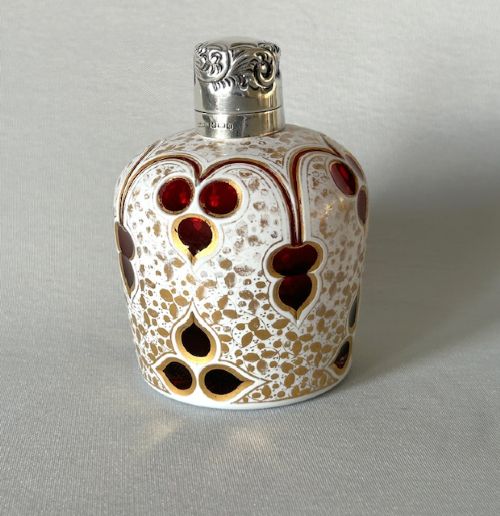
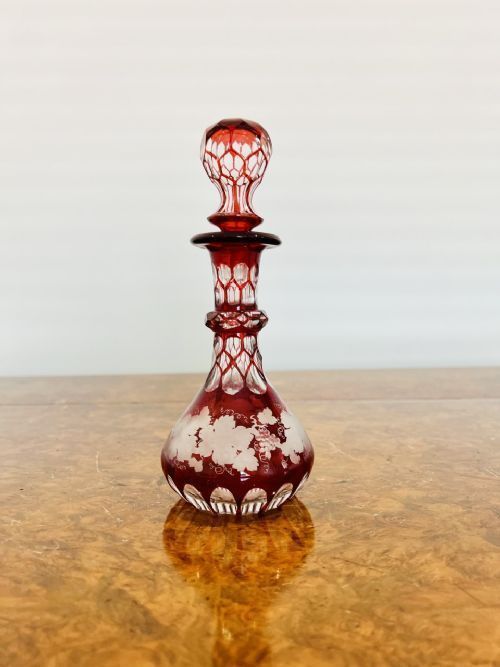
Many of these objects combine deep ruby or cranberry hues with clear crystal underneath. Some pieces incorporate silver mounts or delicate gilt decoration upon the outer surfaces.
How bohemian ruby overlay glass was made
Makers produced these vessels by fusing a thin layer of ruby or cranberry glass over a clear crystal core before shaping the piece. Artisans then cut through the outer coloured layer to reveal the clear glass beneath, creating sharp geometric or floral patterns.
Further decoration often involved the application of gold leaf gilding or hand-painted enamel details onto the exterior. Certain scent bottles and glassware items were finished with fitted sterling silver mounts or stoppers.
What varies in quality
The sophistication of the wheel cutting separates standard items from finer examples in this glassware. Crisp, deep facets that cleanly expose the underlying clear glass demonstrate greater technical skill than shallow or softened cuts.
The precision of the gilding and enamel work also defines the grade of a piece. Intricate gold leaf patterns applied by hand hold their definition and visual weight far better than worn or simple linear decoration.
The Bohemian Ruby Overlay Glass Glossary
- Overlay glass
- A technique where a layer of coloured glass is fused over a base of clear crystal. This allows craftsmen to cut through the top layer to create contrasting patterns.
- Ruby glass
- A deep red decorative glass coloured with gold compounds during production. It forms the primary vibrant exterior hue seen on these pieces.
- Cranberry glass
- A transparent pinkish-red glass variant often associated with Victorian decorative wares. It shares visual similarities with deeper ruby glass.
- Gilding
- The application of gold leaf or gold paint to highlight specific areas of a design. On these pieces, it frequently outlines panels or motifs.
Bohemian Ruby Overlay Glass: Frequently Asked Questions
What is bohemian ruby overlay glass?
These items are decorative vessels made by fusing a coloured red layer over clear crystal. Artisans then cut through the exterior skin to reveal contrasting patterns underneath.
Such pieces include vases, scent bottles, decanters, and goblets produced primarily during the nineteenth century.
How do I date these glass pieces?
Dating relies on examining the object form, the style of the cutting, and any accompanying mounts. Victorian examples often feature heavy facet cutting and Victorian silver mounts.
Earlier eighteenth-century items and later twentieth-century variations display shifts in proportion and decorative techniques recorded in the listings.
Were these items used daily?
Many pieces served practical functions in period homes, such as holding perfumes, serving wine from decanters, or ringing for attention. Scent bottles were carried or kept on dressing tables for personal grooming.
Other items, like large ovoid vases and decorative bells, served primarily as ornamental displays in drawing rooms.
How should I clean my glassware?
Careful cleaning involves using lukewarm water and a mild detergent to protect delicate surface gilding and enamel work. Submerging pieces for extended periods or using harsh abrasives can damage the historical finishes.
Silver mounts require specific non-abrasive polishes kept well away from the surrounding crystal surfaces.