





Antique Covered Tureen Stand
These antique covered tureen stand pieces are serving vessels and their accompaniments designed to protect table surfaces, representing the finest dining traditions across the nineteenth and early twentieth centuries.
Antique Covered Tureen Stand
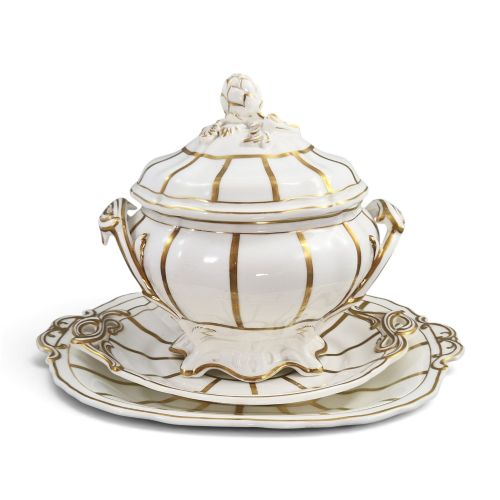
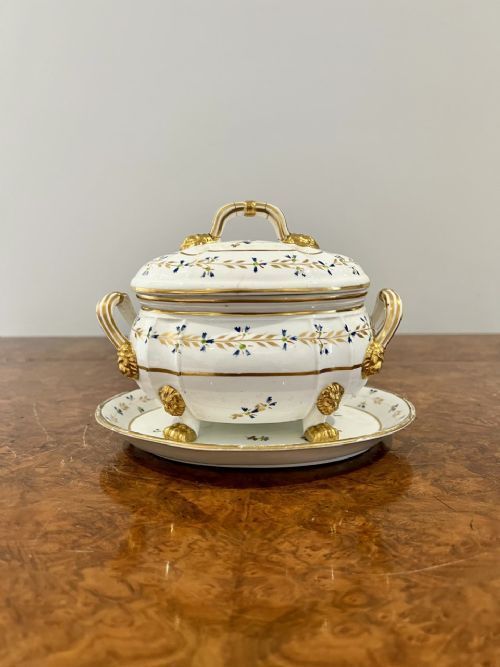
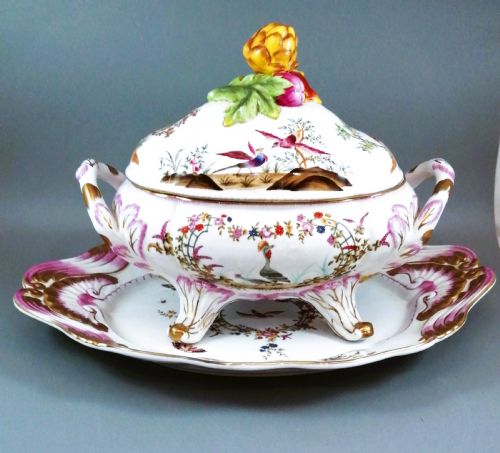
An antique covered tureen stand provides a stable base for soup or sauce tureens while protecting fine dining tables from heat and spills. These items appear across the nineteenth and early twentieth centuries in forms ranging from intimate dessert cream vessels to large soup servers.
The pieces on this page span several distinct periods including Regency, Victorian, and the early twentieth century. Common styles include English Chinoiserie, Rococo Revival, and Chinese Export designs.
Makers and factories represented here include Davenport, Coalport, Crown Derby, Mintons, Doulton Burslem, and Mason's Ironstone. Collectors will also find continental porcelain alongside blue and white transfer printed earthenware.
Materials and construction
Potters utilised bone china, porcelain, earthenware, and ironstone to form these sturdy table vessels. Many examples incorporate intricate transfer printing techniques, notably blue and white designs featuring elephants, bamboo, or Japanese basket patterns.
Finishing touches often include hand-applied gilding, gold leaf highlights, and coloured glazes over moulded ceramic bodies. Cut glass is also utilised for specific punch bowl forms from the early twentieth century.
Materials across these listings range from earthenware and ironstone to fine bone china, porcelain, enamel, and cut glass.
Evaluating craftsmanship and condition
The quality of an antique covered tureen stand is determined by the crispness of the moulded detail and the precision of the hand-painted or transfer-printed decoration. Finer ceramic bodies display greater translucency and more refined potting techniques.
The survival of matching covers, lids, and original stands together as a complete set elevates the standing of a piece. Superior examples preserve their original gilding and enamel colours without excessive wear from historical use.
Davenport Bone China·Coalport or Coalbrookdale·Crown Derby·Mintons·Doulton Burslem·Mason’s Ironstone China
The Antique Covered Tureen Stand Glossary
- Tureen
- A deep serving dish with a cover used for holding soups, sauces, or gravies at the dining table.
- Stand
- A matching dish or tray placed underneath a tureen to catch drips and protect the tablecloth.
- Ironstone
- A durable type of heavy earthenware patented in the nineteenth century to imitate Chinese porcelain.
- Transfer printing
- A method of decorating ceramics by applying a design from an engraved copper plate via tissue paper.
- Gilding
- The application of gold leaf or gold powder to ceramic surfaces for decorative emphasis.
Antique Covered Tureen Stand: Frequently Asked Questions
What is an antique covered tureen stand used for?
These pieces served as protective underplates and matching serving vessels for soups, sauces, or gravies during formal dining. They prevented hot dishes and spills from damaging polished wooden tables.
Today, collectors often display them as decorative cabinet pieces or utilise individual stands as small serving dishes.
How do I identify a Regency tureen?
Regency pieces often display neoclassical influences, classical forms, and refined hand-painted or transfer-printed motifs typical of the early nineteenth century.
Makers from this era frequently employed crisp earthenware and early bone china compositions.
What materials were used for these tureens?
The listings feature porcelain, bone china, ironstone, earthenware, and cut glass. Decoration commonly involves blue and white transfer printing, enamel colours, and gold leaf gilding.
Certain pieces also incorporate moulded details such as lion head covers or pumpkin-inspired glass body shapes.
How should I care for my tureen stand?
Display these ceramic and glass items away from direct sunlight to protect hand-painted enamels and delicate gilding. Gentle dusting with a soft cloth is usually sufficient for routine maintenance.
Avoid washing antique pieces in modern dishwashers, as harsh detergents and high temperatures can damage the historical glaze.