

Antique Country Elbow Chair
An antique country elbow chair brings robust vernacular charm and practical seating into a room through honest timber construction.
Antique Country Elbow Chair
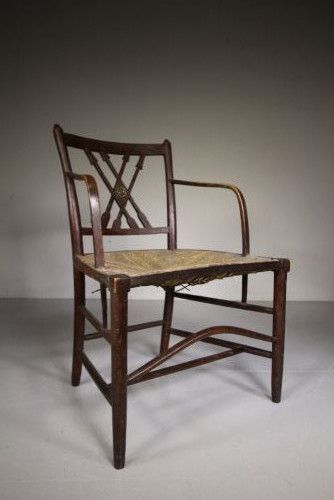
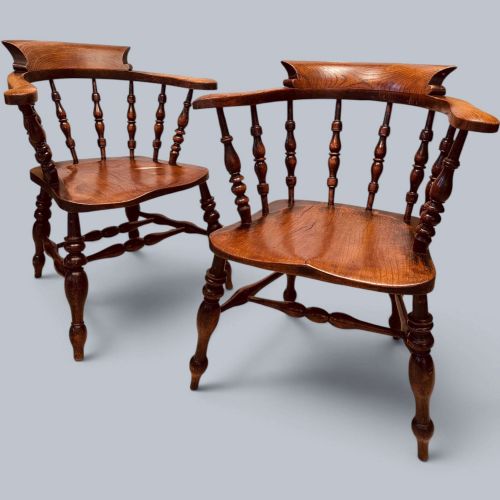
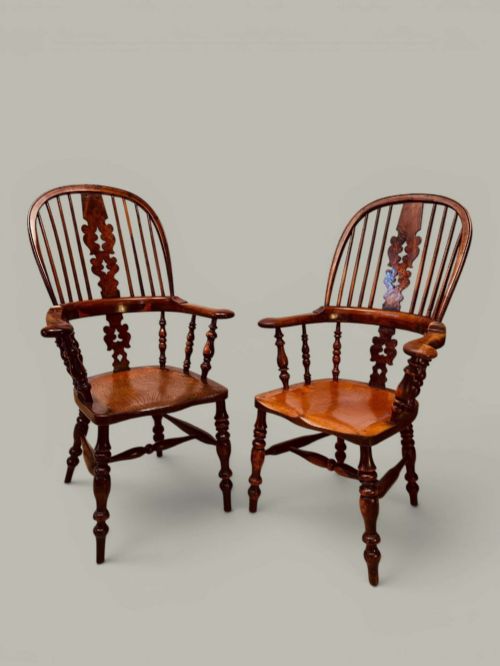
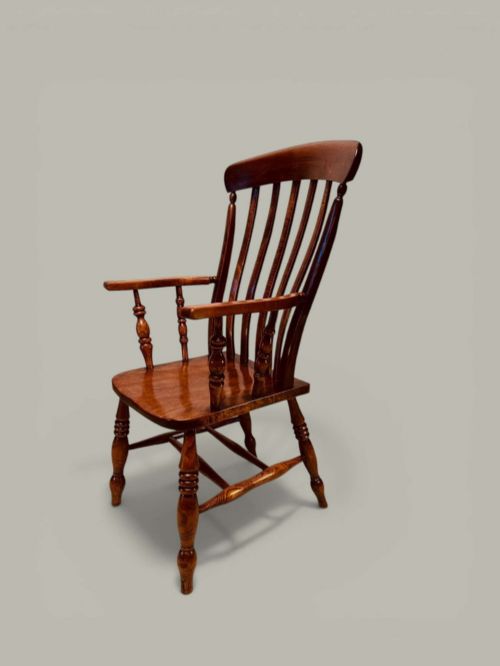
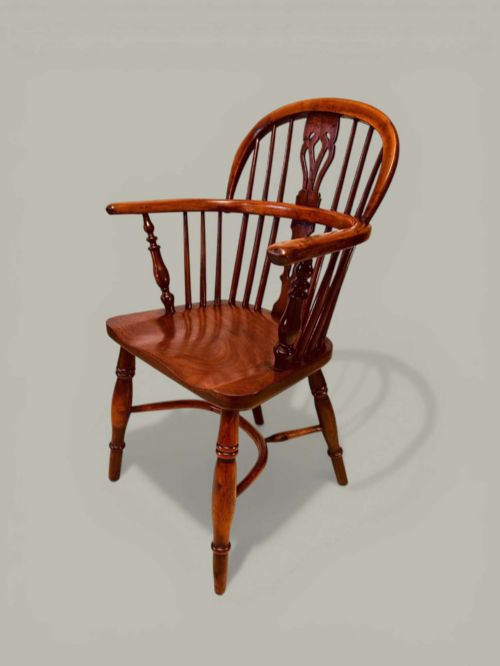
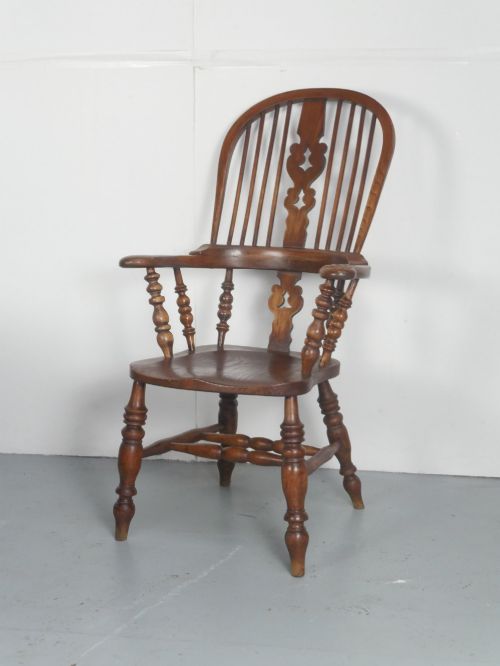
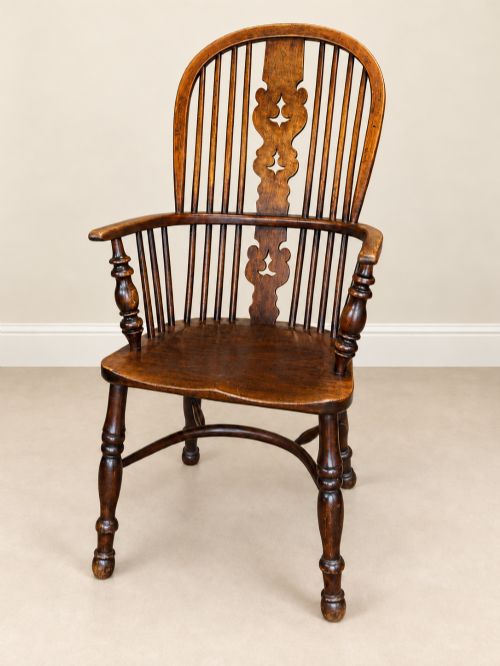
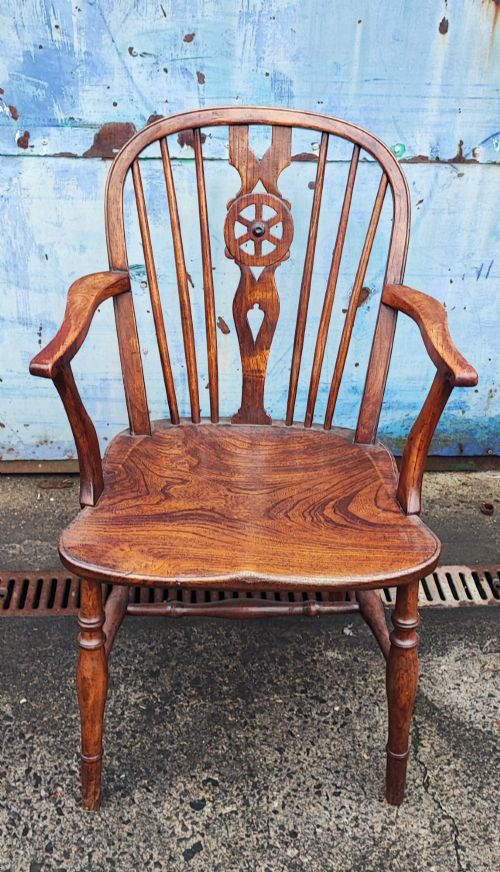
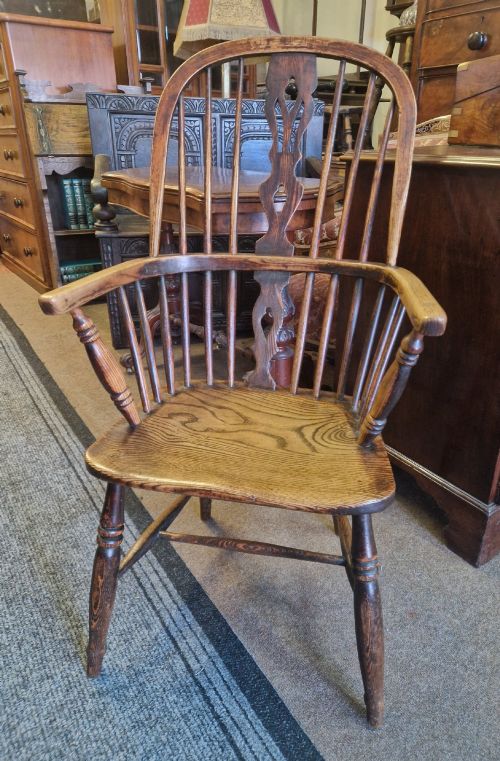
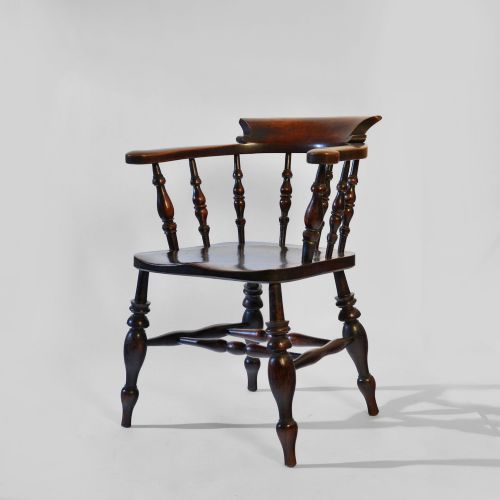
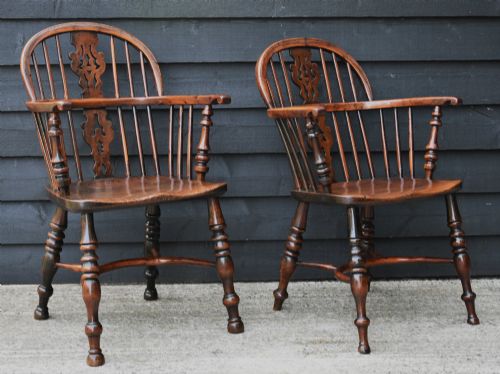
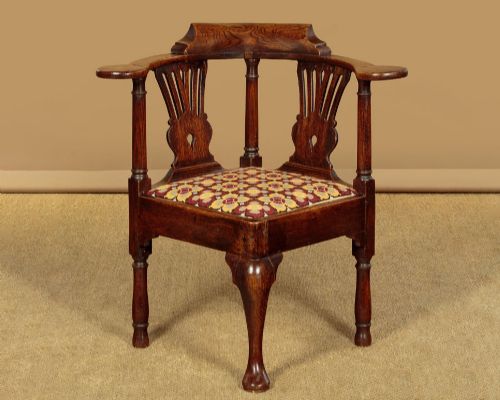
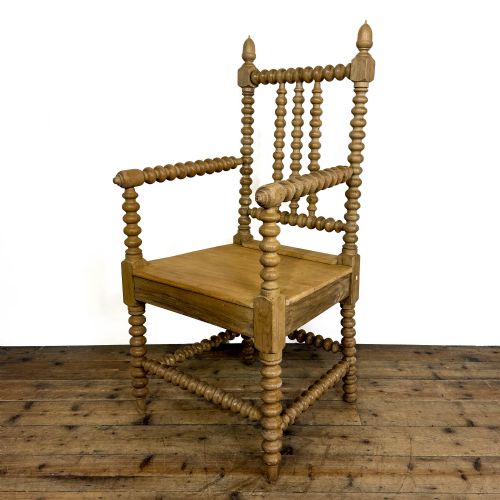
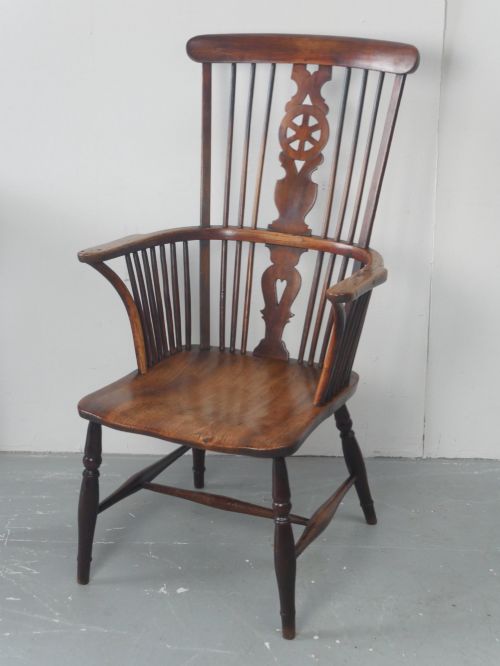
An antique country elbow chair represents a diverse group of domestic seating pieces designed for everyday use in rural homes, farmhouses, and cottages. Buyers searching for an antique country elbow chair will most frequently encounter Windsor armchairs, stick backs, and ladderbacks originating from the eighteenth and nineteenth centuries. These forms vary from comb-back and high-back Windsors to smokers' bows and rush-seated ladderbacks reflecting distinct regional British traditions.
The materials utilised in these rural armchairs emphasise domestic timbers such as elm, ash, oak, and yew, often combined within a single frame for structural strength. Regional variations range from Thames Valley and Mendlesham designs to Scottish and Welsh vernacular pieces. Alongside standard armchairs, the selection includes child-sized versions and pairs suited for farmhouse kitchens and country house studies.
How they were made
Makers constructed these elbow chairs by combining turned wooden spindles, solid elm seats, and bentwood bows utilising traditional green woodworking techniques. Hardwoods such as ash and oak formed the structural undercarriages and arm supports, whilst flexible yew or fruitwood allowed for steam-bent crest rails.
Seats were typically carved from single thick slabs of elm to prevent splitting, into which legs and back spindles were wedged and pegged. Surface treatments varied from original painted finishes and waxed patinas to uncovered natural grain.
Antique Country Elbow Chair Retail Price Guide 2026
Typical asking prices for country elbow chair among the pieces listed under this phrase on Sellingantiques today, from the lower quarter to the upper quarter. They describe what is for sale here now, not the wider market.
A primitive child's stick-back armchair proves that even the smallest family members required a proper seat by the hearth.
What varies in quality
The quality of an antique country elbow chair rests upon the selection of timber, the balance of proportions, and the integrity of the original construction. Superior examples display thoughtful combinations of contrasting woods like yew and elm, paired with well-turned spindles and deep saddle-sculpted seats.
Lesser pieces exhibit heavy repairs, mismatched replacement components, or overly utilitarian joinery that lacks the refined ergonomics found in designated regional workshops.
The Antique Country Elbow Chair Glossary
- Windsor chair
- A wooden chair constructed with a solid timber saddle seat into which the back and legs are independently inserted. This form relies on a stout undercarriage for rigidity.
- Comb back
- A Windsor chair variation featuring a high backrest topped by a horizontal crest rail that resembles the teeth of a comb. Vertical spindles rise through this rail to support the top.
- Smokers bow
- A low-backed Windsor armchair featuring a continuous curved arm rail supported by turned spindles. These chairs were common in country kitchens and public houses.
- Ladderback
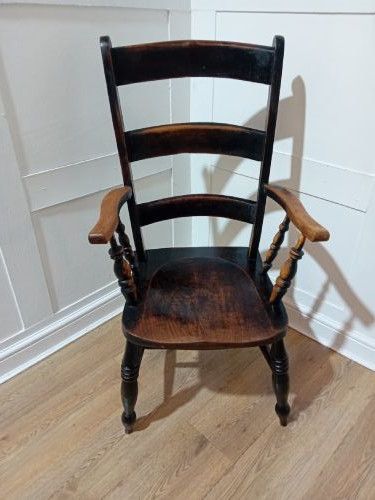
- A chair style characterised by horizontal wooden slats or rails set between the vertical uprights of the backrest. These frames frequently incorporate woven rush seats.
- Vernacular
- An architectural and craft descriptor denoting objects made by local artisans using regional materials and traditional methods rather than following formal academic design styles.
Antique Country Elbow Chair: Frequently Asked Questions
How were these chairs used historically?
These armchairs served as primary seating in farmhouse kitchens, cottages, and country house studies for daily tasks and relaxation.
Sturdy construction allowed them to withstand heavy domestic use near hearths and dining tables.
How do I live with an antique elbow chair?
Integrating one of these armchairs into a modern interior provides a durable, functional seat with a strong sculptural silhouette.
Positioning the chair away from direct heat sources helps preserve the antique timber and its original waxed or painted finish.
How do I tell different periods apart?
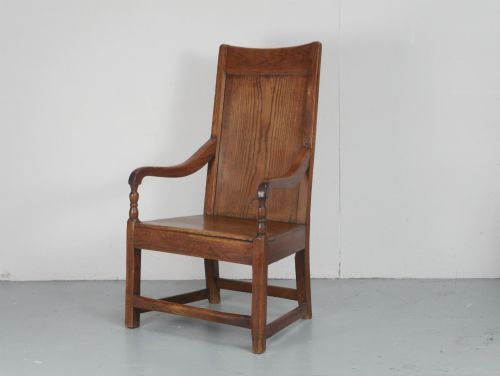
Early eighteenth-century pieces often feature heavier joined oak construction and high panelled backs, whilst nineteenth-century examples lean towards lighter Windsor stick-back forms.
Turnings on legs and spindles also shift from robust seventeenth-century proportions to more slender nineteenth-century profiles.