


Antique Counter Display Cabinet
An antique counter display cabinet turns the merchandise of an earlier shop into a centrepiece for the home.
Antique Counter Display Cabinet
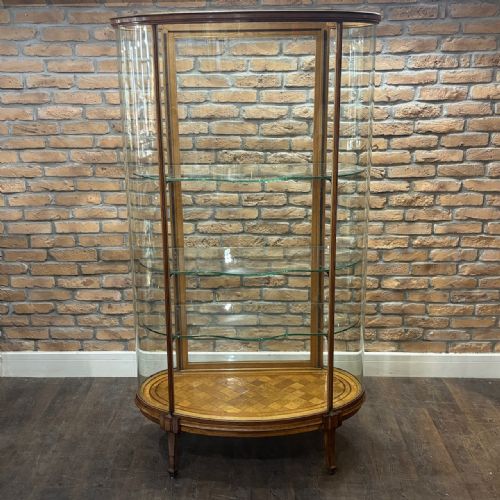
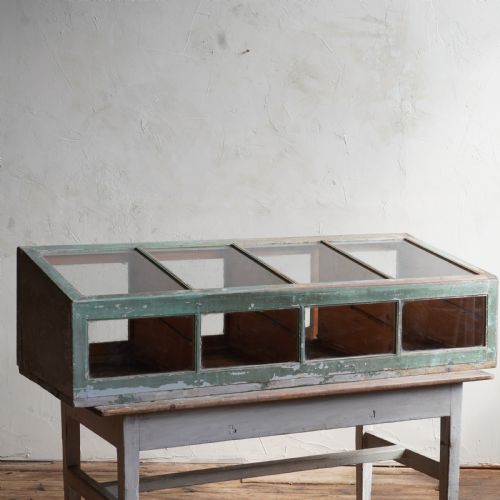
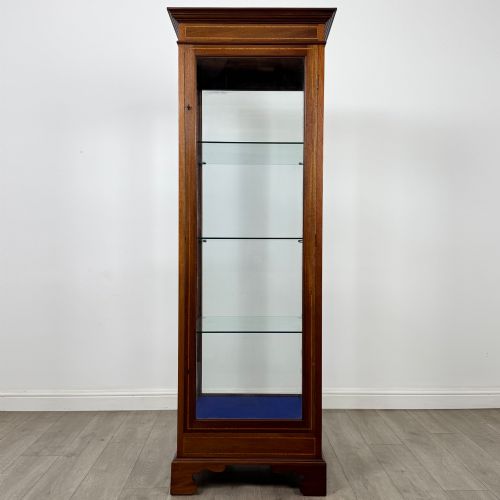
An antique counter display cabinet is a piece of commercial shop furniture designed to showcase goods to retail customers. The selection spans the nineteenth century through the 1930s, encompassing Edwardian, Victorian, and Art Deco commercial forms.
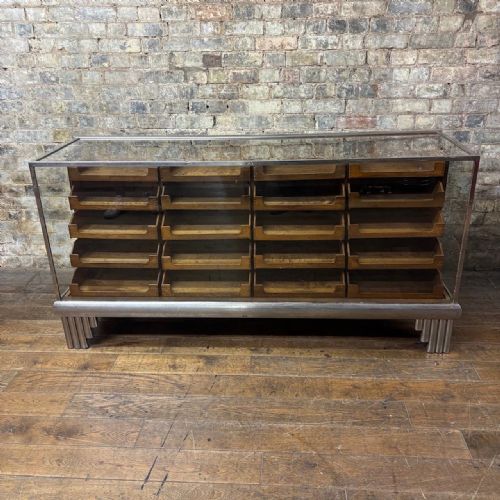
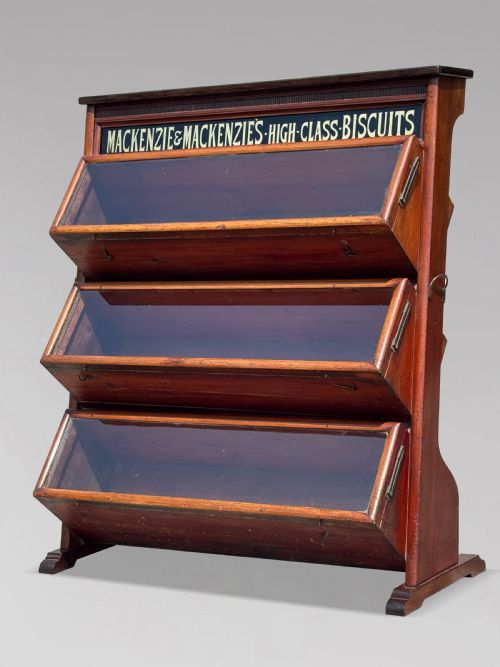
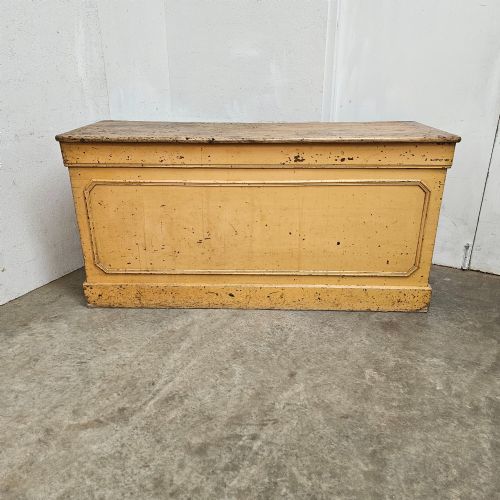
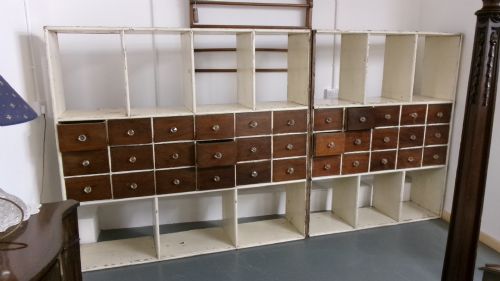
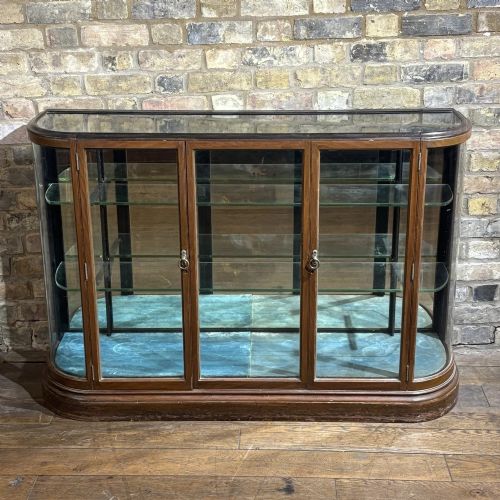
Buyers meet countertop glazed cases, tall freestanding display units, large shop counters, and haberdashery drawer units. These pieces originated in chemists, draperies, jewellers, and general stores.
Mahogany and oak predominate, often paired with extensive glass panels, brass hardware, and occasional painted finishes. The forms serve to protect small wares while maintaining full visibility for the purchaser.
How they were made
Makers constructed these cabinets primarily in solid timber frames of mahogany, oak, and pine, glazed with large sheets of plate glass to maximise light and visibility. Brass or chrome elements provide structural support and operational hardware for doors and framing.
Interior fittings frequently include mirrored backs to enhance the sense of space, alongside velvet linings and multi-drawer banks built with traditional dovetail joinery. Painted surfaces, from distressed white pine to ebonised finishes, reflect the utilitarian demands of Victorian and twentieth-century shop fitters.
Chocolate and paint advertisements once shared counter space with haberdashery and pharmacy supplies.
What varies in quality
Quality rests in the architectural ambition of the timber framing and the proportion of the glazing relative to the woodwork. Finer pieces demonstrate specialist joinery, such as curved bow ends, integrated mirrored interiors, and maker plaques from notable shop fitters.
The integrity of the original glass, the weight of the hardware, and the retention of authentic painted or polished surfaces distinguish standard utilitarian fittings from bespoke commercial showcases built for high-end retail premises.
F. Sage & Co·Dudley & Co·Manoah Rhodes & Sons Ltd·John Stow Ltd
The Antique Counter Display Cabinet Glossary
- Vitrine
- A glass display cabinet used primarily for safeguarding and exhibiting delicate objects. These cases rely heavily on transparent panes held within timber or metal framing.
- Haberdashery cabinet
- A set of shallow drawers, frequently fronted with glass or pull handles, designed for sorting small sewing notions and textiles. They typically form part of a shop counter or dedicated retail bank.
- Chemist shop fitting
- Commercial cabinetry originating from a Victorian or Edwardian pharmacy. These fixtures often incorporate numerous small drawers and labelled compartments for apothecary items.
- Bow end
- A curved glass or timber termination at the corner or edge of a display counter. This shape softens the profile of a shop fitting and broadens the viewing angles for merchandise.
- Bijouterie case
- A glazed tabletop or countertop showcase intended for jewellery and small valuables. The contents sit close to the viewing pane for detailed inspection.
Antique Counter Display Cabinet: Frequently Asked Questions
Where should I place a counter display cabinet?
These cabinets suit hallways, living rooms, and kitchens where their glass panels can catch natural light. Freestanding counters function well as kitchen islands or room dividers.
Smaller countertop versions sit comfortably on sideboards or tables to hold collections of small objects.
How do I clean the glass safely?
Use a mild glass cleaner applied to a soft cloth rather than directly onto the glass. This prevents moisture from seeping into aged timber frames or lifting historic finishes.
Take care around brass or chrome hardware during wiping.
Can I store heavy items inside?
Most countertop and tabletop cabinets are built for lighter retail goods like jewellery, stationery, or small sewing supplies. Larger freestanding floor counters possess sturdier timber bases capable of holding heavier tableware or books.
Check the internal shelving construction before loading substantial weight.
How do I identify the period?
Examine the timber species, handles, and construction marks underneath or inside the drawers. Victorian examples often feature dark mahogany and hand-cut joinery, while 1930s pieces introduce chrome framing and Art Deco lines.
Maker plaques and original shop labels offer the clearest guide to exact dating.