
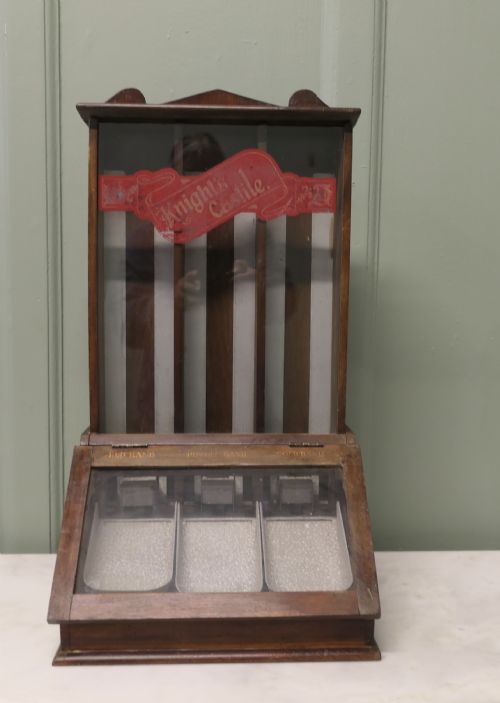


Antique Mahogany Counter Top
These antique mahogany counter top pieces are commercial shop fittings designed to display wares on retail counters.
Antique Mahogany Counter Top
An antique mahogany counter top item provides sturdy display space or housing for retail goods in Edwardian and Victorian shops. The material offers a deep reddish brown tone suited to commercial interiors of the period.
Most examples take the form of glazed display cabinets, shop counters, or till housings designed to sit upon existing furniture. Surviving pieces often bear the original lettering of chemists, drapers, or confectioners.
The selection ranges from small countertop display cases to larger drapers counters and sideboards. These items reflect the practical needs of turn of the century commerce and trade.
How they were made
Makers constructed these frames using solid mahogany and other hardwoods, jointed to withstand daily use in busy shops. Glazing panels allowed customers to view goods while keeping them secure behind glass.
Brass fittings, metal fixings, and gold leaf lettering frequently completed the exterior design of these commercial pieces. Felt linings were sometimes added to protect delicate items placed inside the display cases.
Cabinets often incorporated hinged doors or open backs for the shopkeeper to reach stock easily from behind the counter. Signwriting was applied directly to the glass or wood to advertise specific brands like Fry's or Cadbury's.
Some cabinets spent their working lives holding pencils or haberdashery before retiring to domestic tabletops.
What varies in quality
The sophistication of the timber framing and the clarity of original glass panes set the standard for these commercial pieces. Finer examples retain intact gold leaf signage and well preserved maker details.
Proportion and execution distinguish standard utility fittings from bespoke shop counters commissioned by prominent merchants. The integration of quality brass hardware and intact felt interiors elevates a piece.
G H Gledhill Halifax·Frys Chocolate·Cadbury·Turneys Needle Box·Venus Pencil Showcase
The Antique Mahogany Counter Top Glossary
- Mahogany
- A durable tropical hardwood known for its reddish brown colour and resistance to warping. It served as the primary timber for quality shop fittings throughout the Victorian and Edwardian eras.
- Glazing
- The installation of glass panes within a wooden framework to enclose a display space. This technique allowed shopkeepers to showcase goods while protecting them from dust and handling.
- Haberdashery
- A category of small wares and sewing goods sold in draper shops. Counter top cabinets designed for these items often featured shallow drawers or divided display compartments.
- Signwriting
- The hand painted lettering applied to glass or wood surfaces to advertise shop names or brands. Surviving examples often promote period confectioners or chemists.
- Till
- A mechanical or wooden box used for holding money and recording cash transactions. In shop counters, dedicated housings were built to secure these payment devices.
Antique Mahogany Counter Top: Frequently Asked Questions
What is an antique mahogany counter top?
It is a commercial shop fitting, usually a glazed display case or counter section, made from mahogany timber during the Victorian or Edwardian periods.
These items sat upon larger shop counters to showcase goods to customers while keeping stock secure.
How were these cabinets used?
Shopkeepers used them to display small retail goods, confectionery, writing materials, or haberdashery close to the point of sale.
The glass protected delicate items from handling while keeping merchandise visible to buyers standing across the counter.
How do I date a piece?
Dating relies on the style of the mahogany framing, the type of brass hardware, and any visible maker details or signwriting.
Most surviving examples date from the late Victorian era through to the 1930s, reflecting active periods of high street retail development.
How should I clean the wood?
Maintenance requires gentle dusting and occasional application of appropriate furniture wax to nourish the antique mahogany surface.
Harsh chemical cleaners should be avoided to preserve the original finish and any aged patina.