
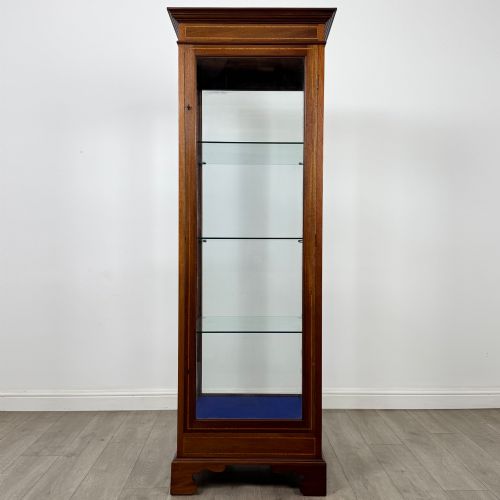
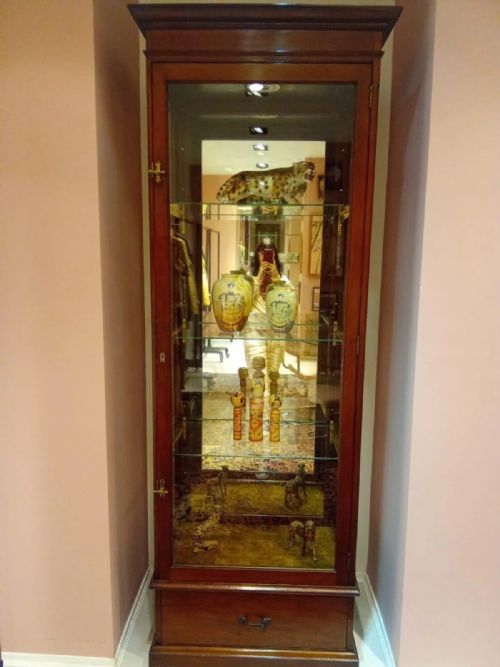
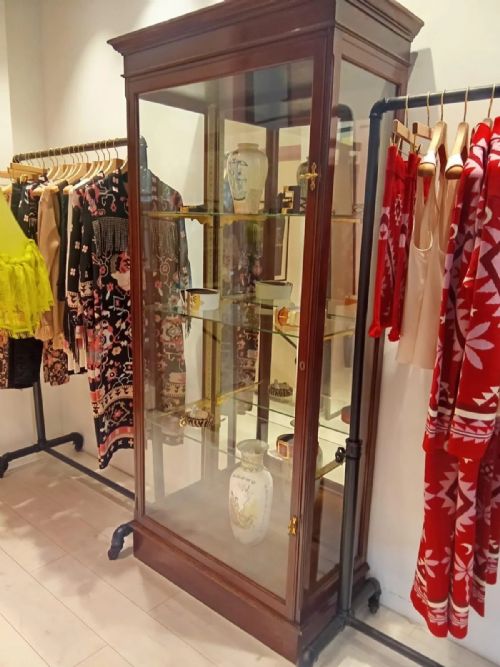


Glazed Retail Display Cabinet
A glazed retail display cabinet turns the presentation of small goods into an interior statement, bringing commercial heritage directly into domestic rooms.
Glazed Retail Display Cabinet
A glazed retail display cabinet encompasses commercial shopfittings designed to showcase merchandise, spanning formats from tall freestanding towers to low countertop cases and haberdashery units. The selection relies heavily on Edwardian and 1920s commercial origins alongside Victorian examples, reflecting the era of high street retail expansion.
Buyers encounter distinct configurations tailored for specific trades, including pharmacy and apothecary cabinets, chocolate advertising pieces, and jewellers' display cases. These functional origins mean many pieces incorporate adjustable glass shelves, mirrored interiors, or dedicated serving counters built for daily mercantile use.
Forms range from generous freestanding timber structures down to compact table top display cabinets and bijouterie tables. The style vocabulary stretches from standard Victorian and Edwardian commercial builds through to Adam style proportions and later Art Deco steel and leather framing.
What varies in quality
The degree of commercial specialisation dictates distinction, where purpose-built apothecary, jeweller, and branded advertising units display more complex internal arrangements than standard display boxes. The ambition of the joinery and timber selection, particularly the choice between solid mahogany, oak, or veneered surfaces, sets baseline execution.
Proportion and scale create significant divergence, moving from simple countertop boxes to imposing triple shop display cabinets or tall tower units. Original glazing integrity, operable adjustable shelving, and surviving period sign-written details separate standard utilitarian shopfittings from pieces with distinct retail character.
F. Sage & Co.·E. Pollard & Co. Ltd.·Siegel
The Glazed Retail Display Cabinet Glossary
- Bijouterie table
- A glass-topped display table specifically designed for small valuables, jewellery, and curiosities. These pieces lift contents into direct view while protecting them beneath hinged or fitted glass.
- Haberdashery cabinet
- A multi-drawer retail unit traditionally utilised for ribbons, buttons, and textiles. Many examples incorporate glass-fronted drawers or display sections intended for customer browsing.
- Countertop display cabinet
- A smaller scale showcase designed to sit directly upon a shop counter for point-of-sale merchandising. They bring goods to eye level for customers transacting across the shop counter.
- Ebonised wood
- Timber treated with a chemical stain or finish to imitate expensive ebony. This dark, uniform treatment appears frequently on commercial display furniture from the late nineteenth and early twentieth centuries.
Glazed Retail Display Cabinet: Frequently Asked Questions
Where were these cabinets used?
These cabinets originated in nineteenth and early twentieth-century shops, pharmacies, jewellers, and confectioners to protect goods while keeping them visible to customers.
Commercial interiors relied on these freestanding and countertop units to organise merchandise effectively across busy retail floors.
How do I style a shop display cabinet at home?
Use the adjustable glass shelves and mirrored interiors to showcase collections of ceramics, glassware, or small personal objects where light can circulate freely.
Tall freestanding models and countertop cases anchor a room while keeping delicate items dust-free and clearly visible from multiple angles.
How can I tell the period of a display cabinet?
Dating relies on timber choices, construction methods, and hardware styles that shift from heavy Victorian proportions to lighter Edwardian frames and 1920s ebonised or steel finishes.
Original trade branding, sign-written advertising, and maker plaques offer additional chronological markers tied to specific commercial eras.
Are the glass shelves original?
Many surviving commercial cabinets retain their adjustable glass shelving systems, which were engineered to bear the weight of retail stock.
Checking the edge finish and thickness of the glass helps determine whether the internal shelves match the manufacturing period of the outer case.