
Antique Couch Frame
An antique couch frame gives you the bones of a classic seat, waiting for the right fabric to bring it back to life.
Antique Couch Frame
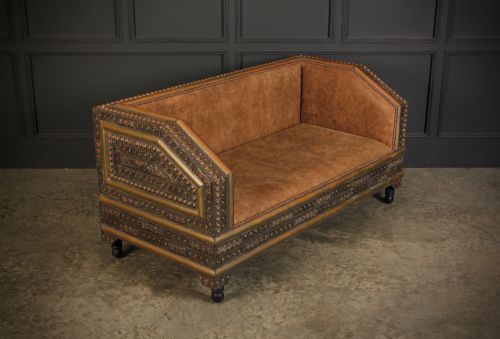
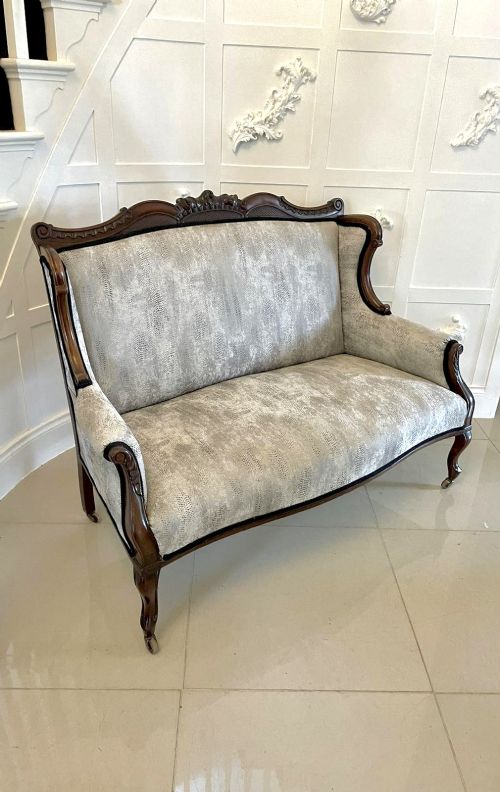
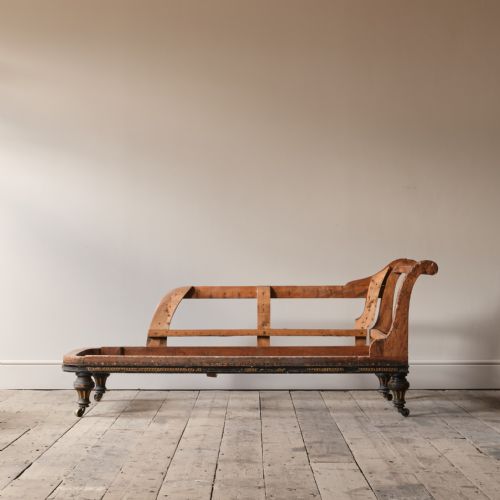
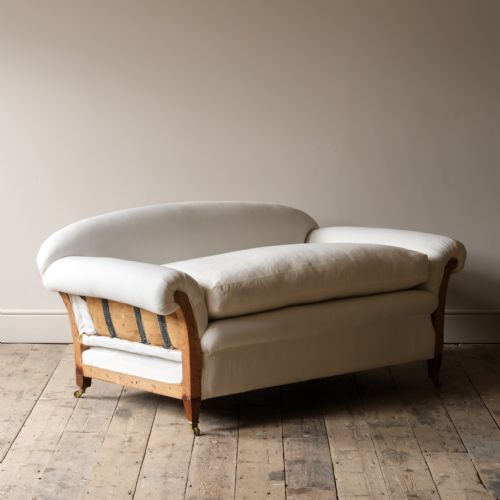
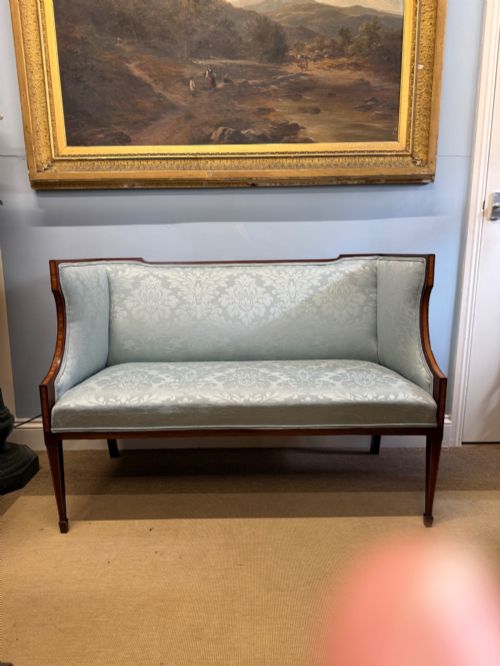
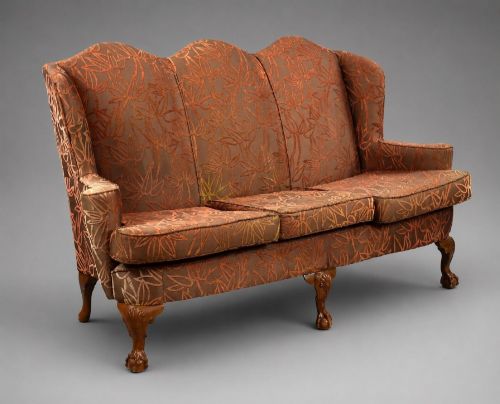
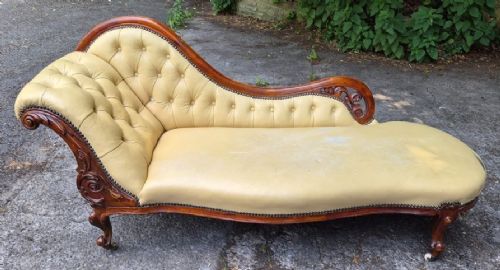
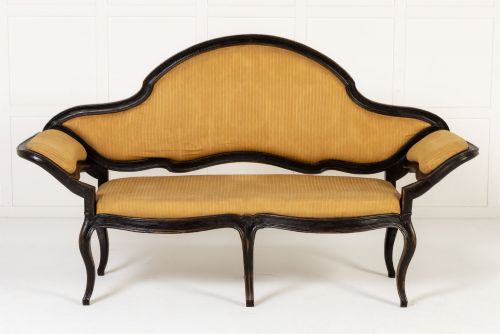
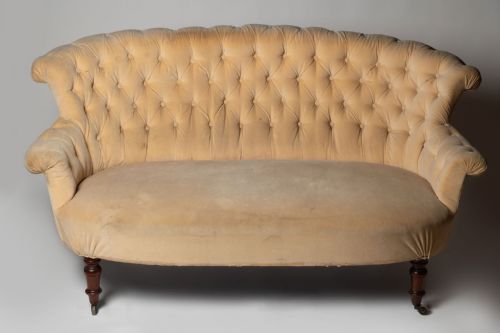
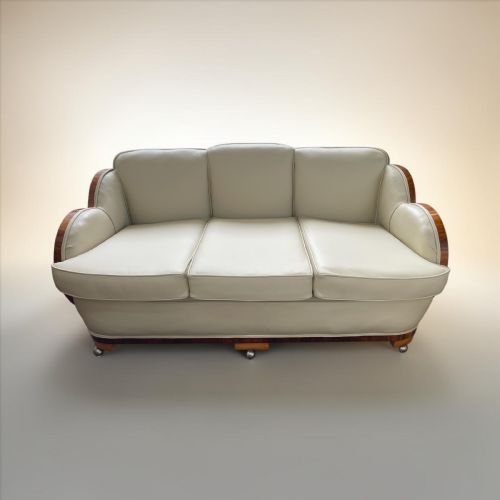
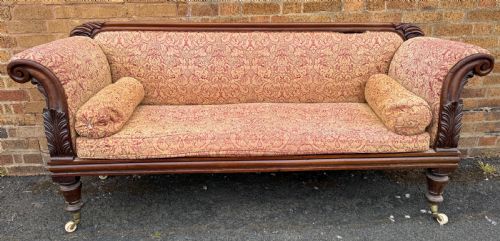
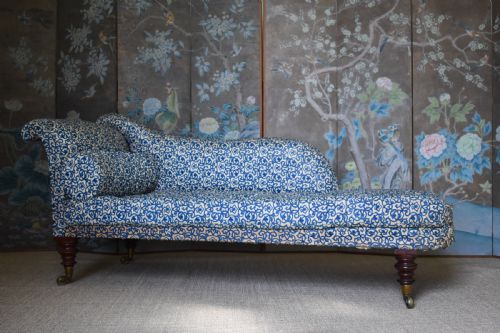
When you search for an antique couch frame, you look at the exposed wooden or brass skeletons of historical seating, ranging from deep-seated country house pieces to serpentine camel backs. These items include chaises longues, daybeds, and settees originating from the Georgian, Regency, and Victorian periods.
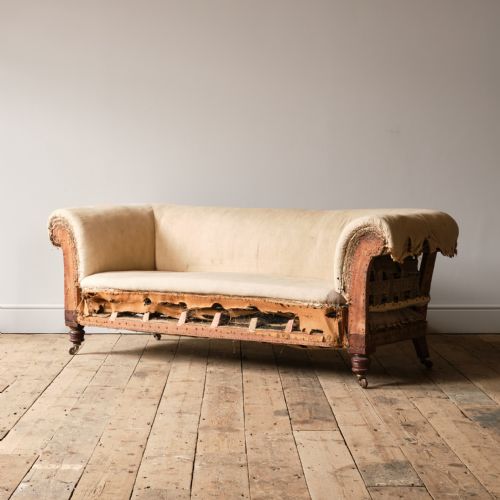
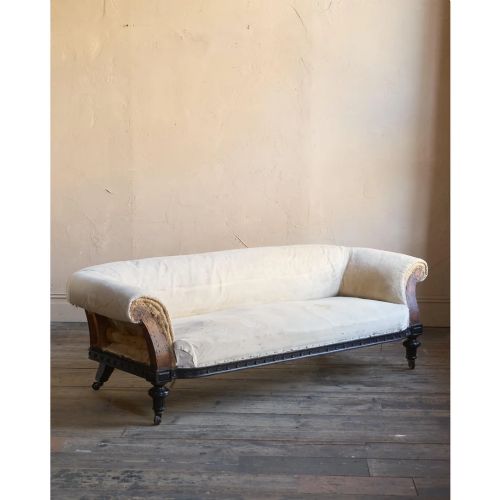
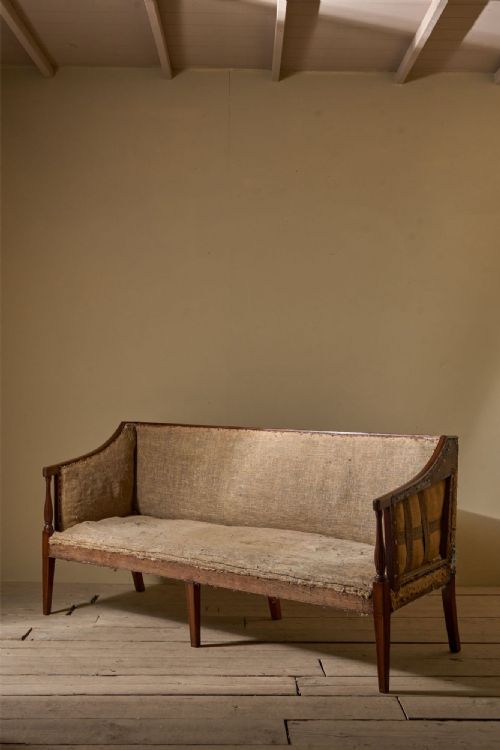
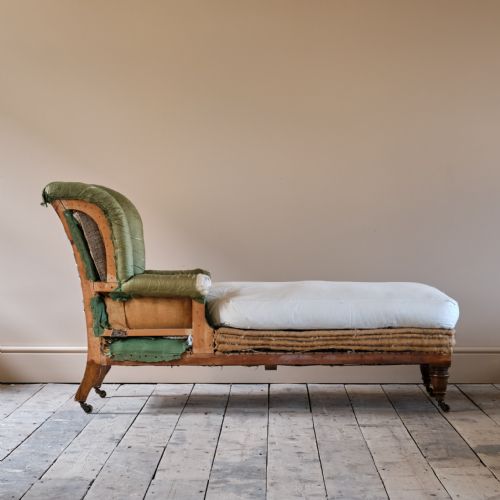
You are most likely to meet mahogany or walnut frames carved in the Victorian or Edwardian styles, often stripped down to hessian and calico. Many retain their original scrolled ends or show the marks of specific makers before heading to the upholsterer.
How they were made
Cabinet makers constructed these skeletons using dense timbers such as mahogany, rosewood, and walnut, frequently shaping the wood through steam or hand carving. Frames from the William IV and Georgian eras rely on robust joinery to support heavy sprung interiors.
Secondary layers of webbing, hessian, and calico were tacked directly to the wood to build up the shape before the final velvet or fabric cover went on. Brass mounts and gilt decoration appear on select daybeds and French imports.
The search results include nineteenth-century fish engravings by a chap literally named Jonathan Couch.
What varies in quality
The distinction between a standard frame and an exceptional one rests on the crispness of the timber carving and the weight of the underlying wood. Heavier rosewood and figured mahogany indicate a higher grade of manufacture from workshops that supplied prominent retailers.
Proportion and scale dictate the visual success of the piece, particularly in serpentine and camel back designs where the sweep of the back rail must balance the legs. Frames with intact maker stamps or distinctive structural styling command greater interest from restorers.
Holland & Sons·Howard & Sons·Hampton & Sons
The Antique Couch Frame Glossary
- Chaise longue
- An upholstered sofa in the form of a chair with a long seat for reclining. These frames feature a single raised headrest and an open or closed side.
- Camel back
- A sofa back with a continuous curving profile that resembles the hump of a camel. This style gained popularity during the Georgian period.
- Hessian
- A coarse woven fabric typically made from jute fibres, used as a foundation layer for webbing and stuffing on older seats. It protects the interior materials.
- Calico
- A plain-woven cotton fabric stretched tightly over the stuffing to contain the horsehair or wool before the decorative top cover is applied.
- Scroll end
- A wooden arm or terminal shaped into a tight outward roll, characteristic of Regency and William IV furniture.
Antique Couch Frame: Frequently Asked Questions
What is an antique couch frame?
An antique couch frame is the structural wooden or brass skeleton of a historical sofa, settee, or daybed, usually stripped of its outer textile cover.
These pieces showcase the craftsmanship of past eras, allowing buyers to finish the upholstery to their own taste.
How do I choose the right frame?
Look closely at the timber quality, the depth of the seat, and the elegance of the carved woodwork along the back and arms.
Consider whether you want a formal Regency scroll end or a relaxed Edwardian country house shape.
Can I use modern fabric on an old frame?
Upholsterers routinely fit modern textiles onto historical frames to suit contemporary interiors while preserving the antique timber structure.
Traditional stuffing materials like hessian and calico can be renewed during the process.
How do I date an antique couch frame?
Dating relies on stylistic clues such as cabriole legs, carved rosewood details, or specific proportions associated with the Georgian or Victorian periods.
Maker stamps on the wood provide the most precise indication of origin and date.