






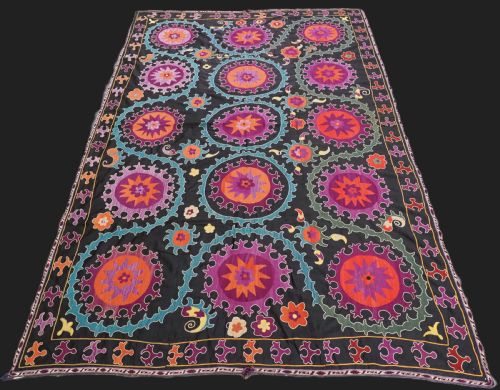


Antique Cotton Bedspread
An antique cotton bedspread brings tactile warmth and historic textile artistry into a modern interior.
Antique Cotton Bedspread
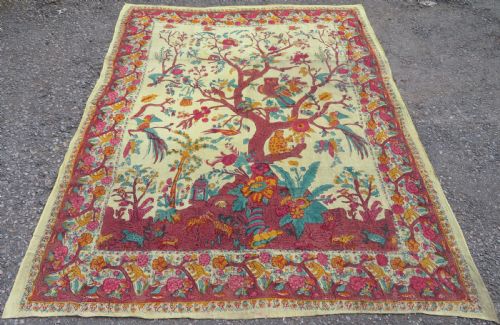
When you search for an antique cotton bedspread, you encounter hand-embroidered textiles originating primarily from Central Asia alongside Indian and Victorian examples. These historic coverings function as decorative bedcovers, wall hangings or tapestries rather than utilitarian bedding.
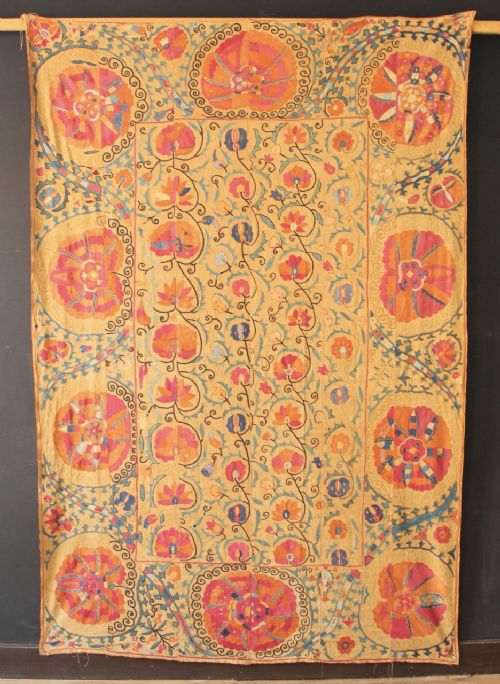
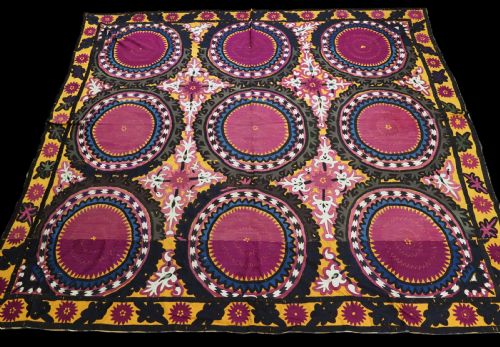
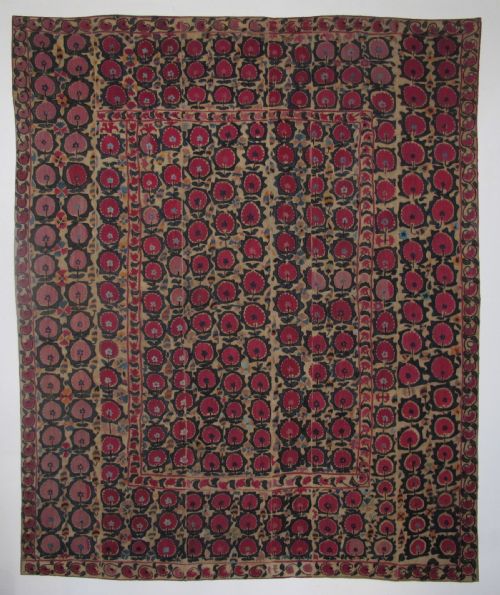
The most common examples on this page are Uzbek suzanis featuring dense silk embroidery upon a cotton or adras ground. Pieces range from the nineteenth century through to the nineteen thirties, encompassing regional variations such as Bukhara, Samarkand and Tashkent designs.
How they were made
Artisans constructed these textiles using foundational grounds of woven cotton, sometimes blended with silk in adras fabrics, which were then worked with vibrant silk embroidery threads. Natural dyes provided the rich red, yellow, black and white colour palettes seen across the nineteenth and early twentieth century pieces.
Embroidery techniques vary from full work covering the entire cotton ground to lighter nim suzani formats and medallion variants. Makers employed local needlework traditions, with tribal attribution often indicated by specific stitch patterns and regional motifs.
Antique Cotton Bedspread Retail Price Guide 2026
Typical asking prices for cotton bedspread among the pieces listed under this phrase on Sellingantiques today, from the lower quarter to the upper quarter. They describe what is for sale here now, not the wider market.
Some nineteenth century embroiderers hid small deliberate imperfections in their patterns to ward off the evil eye.
What varies in quality
The distinction between standard and exceptional pieces rests upon the density of the embroidery work and the vibrancy of the remaining natural dyes. Full work suzanis with intricate needlework command greater attention than sparser designs.
Condition and scale also differentiate the range, with larger dimensions and intact early grounds preserving more of the original textile integrity. The visual impact depends heavily on the harmonious survival of the historic colour palette.
The Antique Cotton Bedspread Glossary
- Suzani
- A type of embroidered tribal textile originating from Central Asia. These pieces typically feature floral and medallion motifs worked in silk on a cotton base.
- Adras
- A traditional hand-woven fabric made from a mixture of silk and cotton yarns. It serves as a textured ground for embroidery in specific regional examples.
- Nim Suzani
- A smaller or half-embroidered format of traditional suzani cover. These textiles feature less dense needlework coverage than full work pieces.
- Palampore
- A large hand-painted or embroidered Indian bed cover. These textiles display intricate tree of life or floral patterns.
- Lakai
- A distinct tribal group known for energetic and asymmetric suzani embroidery. Their works often utilise bold geometric elements on cotton grounds.
Antique Cotton Bedspread: Frequently Asked Questions
How do I care for a cotton suzani?
Protect antique textiles from direct sunlight to prevent natural dye fading. Professional textile conservation cleaning is recommended when necessary.
Displaying the piece as a wall hanging or draping it lightly over a bed minimises physical strain on the historic cotton and silk fibres.
Can I use these on a bed?
These historic textiles function best as decorative coverlets or throws rather than heavy daily bedding. Their delicate silk embroidery requires gentle treatment.
Placing them where foot traffic or heavy friction is avoided preserves the integrity of the nineteenth and early twentieth century needlework.
What is an adras ground?
An adras ground is a woven fabric combining silk and cotton threads. This hybrid material provides a sturdy yet lustrous foundation for heavy embroidery.
It distinguishes certain Central Asian pieces from plain cotton base fabrics through its subtle sheen and characteristic texture.
How do I date an antique textile?
Dating relies on examining the specific embroidery style, the composition of the cotton or adras ground, and the character of the natural dyes. Regional variations often point to particular decades between eighteen fifty and nineteen thirty.
Comparing motif structures with documented tribal examples helps establish the likely period of origin.