
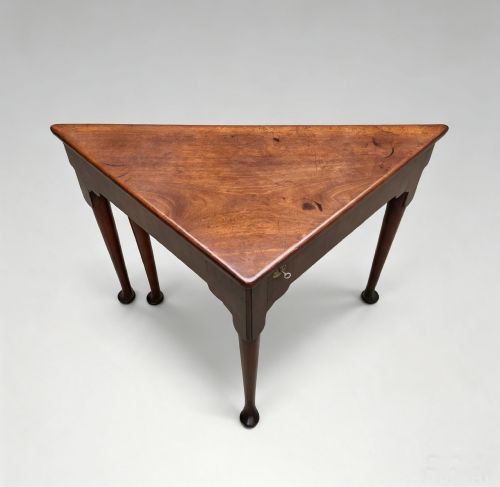


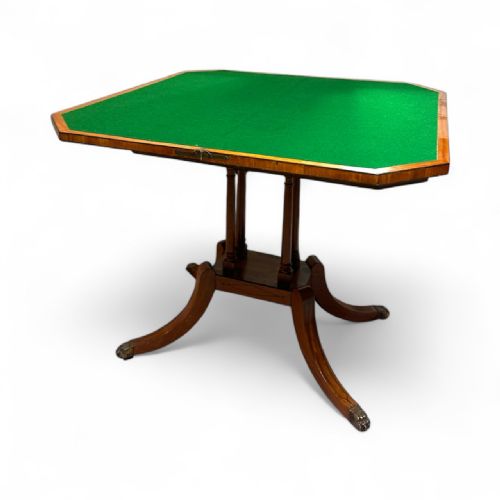


Antique Corner Games Table
An antique corner games table is a clever folding surface that fits snugly into a room while opening up for play.
Antique Corner Games Table
When you search for an antique corner games table, you are looking at folding furniture designed to save space while offering a spot for cards or tea. The pieces on this page span the eighteenth and nineteenth centuries, taking forms such as corner tables, card tables, and occasional tables.
The George II and George III periods dominate the selection, alongside Regency and Victorian examples. These pieces utilise mahogany, rosewood, satinwood, and walnut, often featuring clever fold-over mechanisms or envelope tops.
Materials and construction
Cabinetmakers built these tables primarily in solid timbers and veneers of mahogany, rosewood, and walnut. Artisans integrated contrasting woods such as satinwood, boxwood, and fruitwood for decorative banding and marquetry details.
Internal surfaces frequently feature wool baize to provide a suitable texture for card playing. Brass inlays and hardware appear on Regency examples, adding metallic contrast to the dark grains of rosewood and mahogany.
The listings span from the eighteenth century through the Victorian era, incorporating George II, George III, Regency, and Dutch Neoclassical styles.
Judging quality and execution
The distinction between standard examples and finer pieces lies in the precision of the timber selection and the execution of the inlays. Higher quality works employ figured Cuban mahogany, detailed satinwood marquetry, or crisp brass inlay rather than plain surfaces.
The complexity of the mechanism also marks the grade of the piece, from basic fold-over leaves to sophisticated envelope tops and integrated counter wells. Structural integration of the folding leaves demonstrates the skill of the original workshop.
The Antique Corner Games Table Glossary
- Fold-over
- A table top hinged to double its surface area when opened. This design reveals a baize-lined interior intended for gaming.
- Baize
- A coarse woolen material used to line the playing surface of card tables. It provides a soft texture that protects counters and cards.
- Marquetry
- Inlaid patterns of wood veneers applied to furniture surfaces. Craftsmen utilise different coloured timbers to create decorative motifs.
- Counter well
- A small recessed hollow carved into the corner of a games table top. These wells held gaming counters or coins during play.
Antique Corner Games Table: Frequently Asked Questions
What is an antique corner games table?
An antique corner games table is a specialised folding piece of furniture designed to fit into the angle of a room. It expands from a compact corner unit into a full playing surface for cards.
These tables date primarily from the Georgian, Regency, and Victorian eras. They combine practical space-saving utility with fine cabinetmaking in timbers like mahogany and rosewood.
How were these tables used?
These tables served primarily for evening entertainment, specifically card games, chess, or social conversation. When folded shut, they functioned as side or occasional tables against a wall.
Many examples feature specialised interior wells to hold gaming counters or coins during play. Some double as tea tables due to their finished wooden surfaces beneath the fold-over top.
How do I care for wool baize?
Wool baize requires gentle maintenance to protect the fibres from dust and moth damage. Regular light brushing keeps the nap clean without pulling the weave.
Keep these tables away from direct sunlight and excessive moisture to preserve both the fabric lining and the polished timber exterior.
How can I tell the period?
Period identification relies on the combination of timber choices, leg styles, and inlay techniques. Georgian pieces often display solid mahogany and straightforward proportions, while Regency examples incorporate rosewood and brass.
Victorian pieces show heavier turning and darker finishes. Examining the secondary woods and hinge construction also aids in dating the piece.