






Antique Corner Display Stand
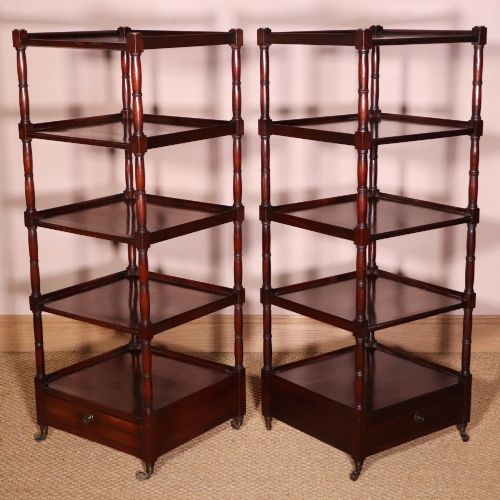
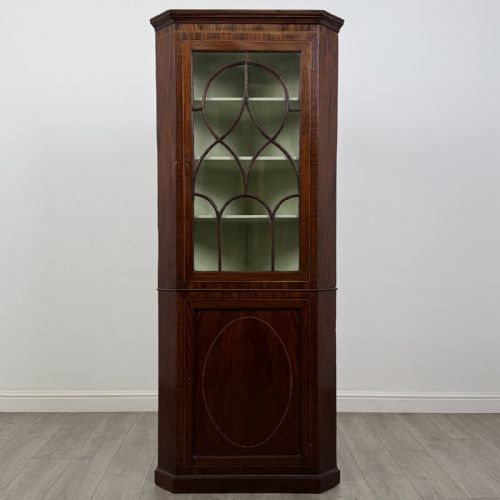
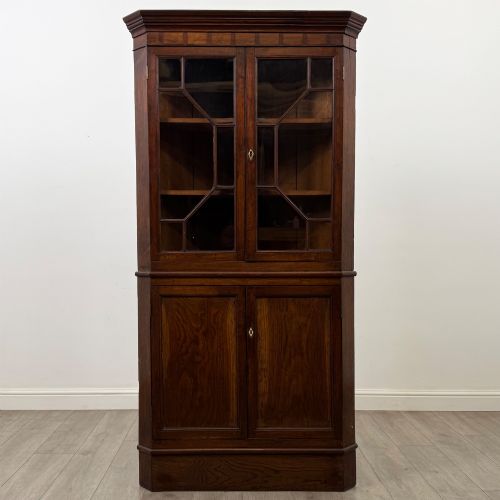
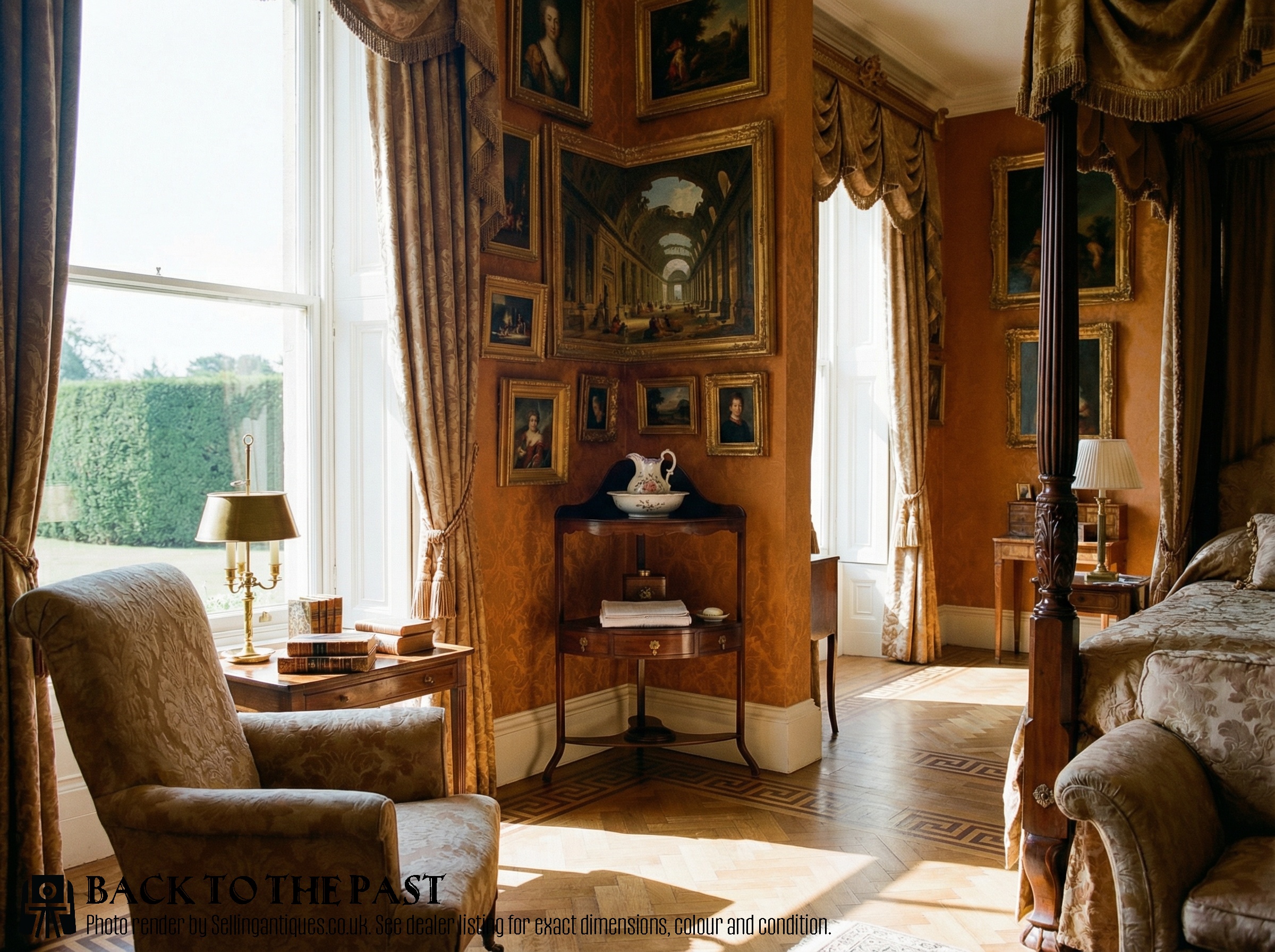
An antique corner display stand makes clever use of neglected angles, holding ceramics or books on tiered mahogany shelves.
Antique Corner Display Stand
An antique corner display stand is a floor-standing piece designed to fit neatly into the right-angled junction of a room, saving floor space while offering surface area. The items seen in the archive and current listings span the Victorian, Regency, and Georgian periods, showcasing a steady evolution in taste from utilitarian washstands to open tiers and glazed cabinets.
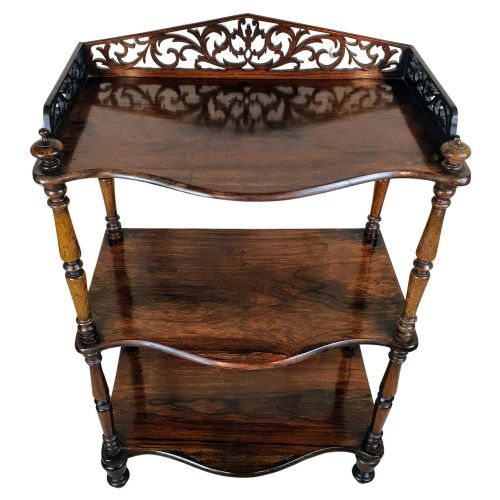
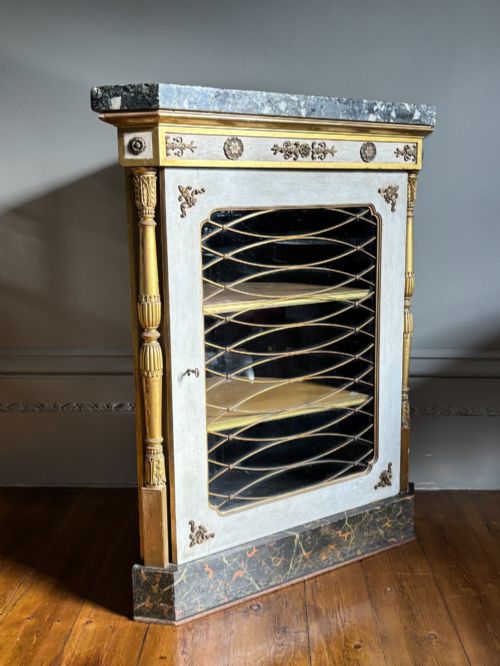
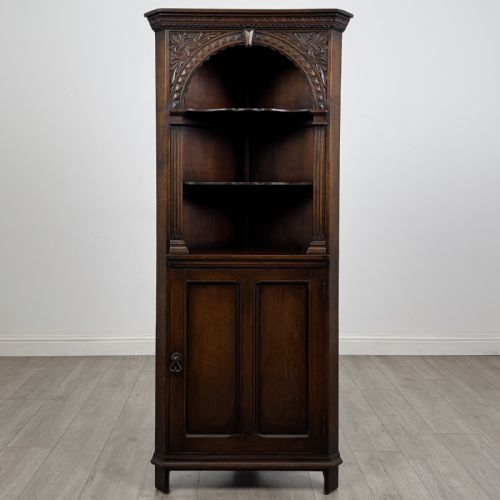
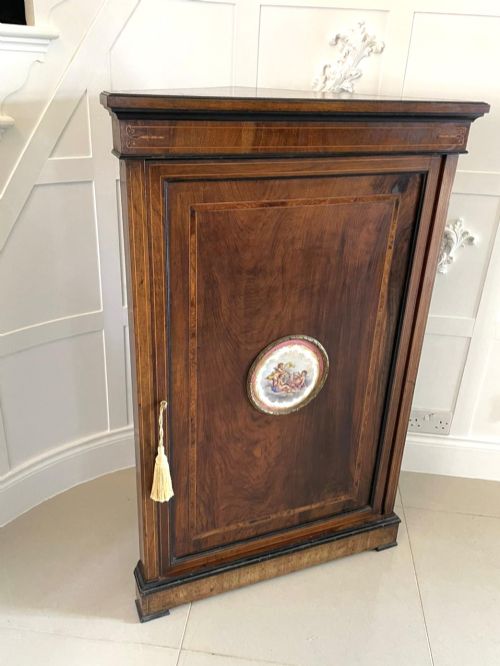
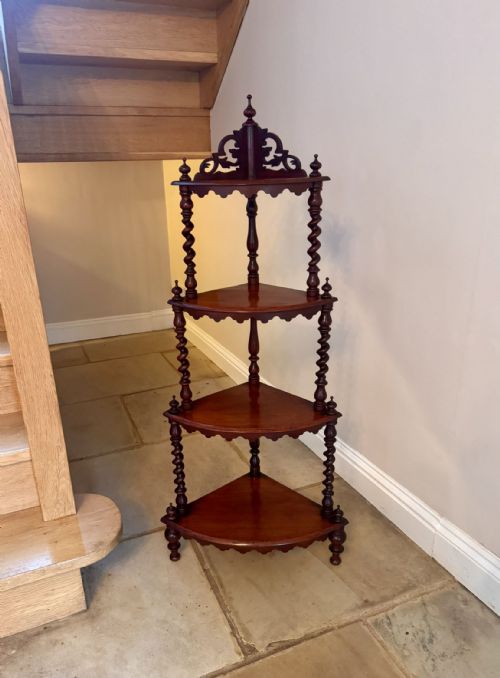
The most common forms encountered on this page include mahogany washstands with basin cut-outs, open four-tier whatnots, and tall standing cupboards with glazed doors. Woods such as burr walnut, rosewood, and oak appear frequently alongside mahogany, often finished with boxwood inlay or marquetry.
Makers adapted the triangular footprint to suit various domestic needs, producing double-height cabinets and bamboo étagères alongside traditional bow-front designs. This variety ensures that whether a buyer seeks open display shelves or a secure cupboard, the corner format provides a practical solution.
Materials and Construction
Cabinet makers relied heavily on timber selection, utilising solid mahogany, burr walnut, and oak for structural integrity and grain figure. Secondary timbers supported internal carcases, while brass fittings such as hinges and castors added functional detail.
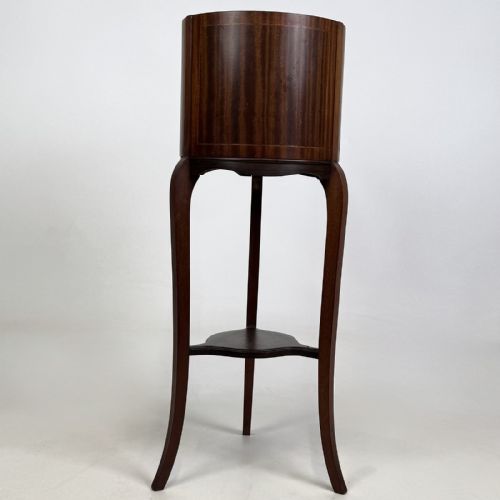
Inlaid pieces incorporated contrasting woods like boxwood to create delicate floral or geometric borders on drawer fronts and cornices. Turnery shaped the slender columns supporting multi-tiered whatnots, requiring precise lathe work to ensure balanced weight distribution across the shelves.
Antique Corner Display Stand Retail Price Guide 2026
Typical asking prices for corner display stand among the pieces listed under this phrase on Sellingantiques today, from the lower quarter to the upper quarter. They describe what is for sale here now, not the wider market.
Victorian makers occasionally experimented with exotic bamboo frames to satisfy a nineteenth-century fascination with imported taste.
Judging Quality and Execution
The distinction between ordinary and exceptional pieces lies in the choice of timber veneer and the crispness of the cabinet work. Finely figured burr walnut or rich mahogany grain elevates a simple tiered stand, whereas lesser items rely on plain, unselected planks.
Joinery execution defines the durability of these tall structures, particularly where curved or bow fronts meet tight angles. Cleanly executed marquetry inlay and well-fitted doors demonstrate the superior hand of the workshop that produced them.
Edwards and Roberts
The Antique Corner Display Stand Glossary
- Washstand
- A piece of furniture originally designed to hold a basin and jug for washing, often featuring cut-outs in the top tier and splashbacks. Many surviving examples have been repurposed for general display use.
- Etagere
- A set of open shelves for displaying small ornaments or books, standing on slender supports. The form originated in France and became popular in English homes during the nineteenth century.
- Whatnot
- A multi-tiered piece of freestanding furniture used for holding books, ornaments, or bric-a-brac. The tiers are supported by pillars or turned columns.
- Marquetry
- Decorative woodwork where small pieces of veneer are fitted into a ground material to form pictorial or geometric patterns. It differs from inlay by covering the entire surface rather than being set into recesses.
- Bow Front
- A convex curved front on a cabinet or chest of drawers that softens the rectangular geometry of a room. This technique requires considerable skill to curve timber and veneer accurately.
Antique Corner Display Stand: Frequently Asked Questions
What is an antique corner display stand used for?
These stands utilise empty room corners to display ceramics, books, and small ornaments without crowding the floor space.
They provide vertical storage in domestic settings where flat wall space is limited.
How do I date a corner display stand?
Dating relies on identifying timber choices, construction techniques, and stylistic markers associated with specific eras like the Georgian or Victorian periods.
Secondary woods and the presence of hand-cut dovetails or machine-made screws offer further clues to age.
Are these cabinets stable on uneven floors?
Tall standing corner cupboards and whatnots require careful placement, and many original pieces feature adjustable feet or were designed to be fixed to a wall.
Their triangular footprint inherently provides a sturdy base against two adjoining walls when properly positioned.
What is the difference between an etagere and a whatnot?
An etagere generally refers to light, open-shelved display furniture of French inspiration, while a whatnot is typically a heavier English tiered stand.
Both serve the same primary function of holding display items across multiple horizontal surfaces.