



Antique Corner Desk Chair
An antique corner desk chair brings compact comfort and a distinct architectural profile to a room, which is why collectors seek them out.
What an antique corner desk chair is
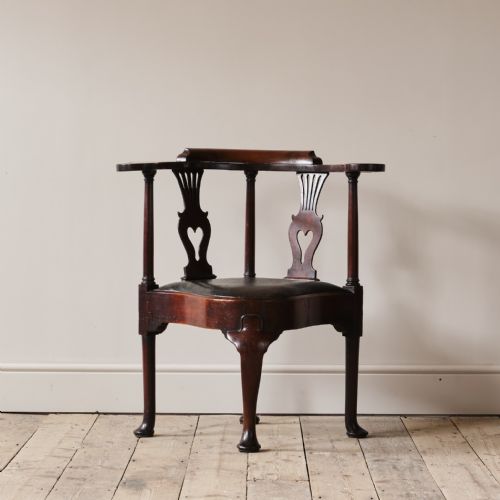
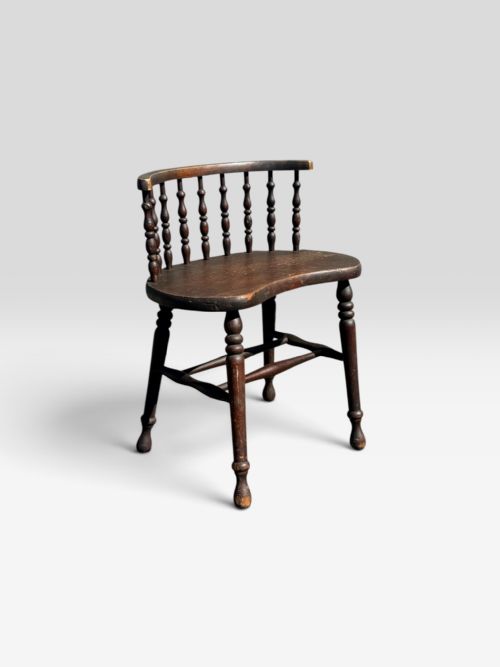
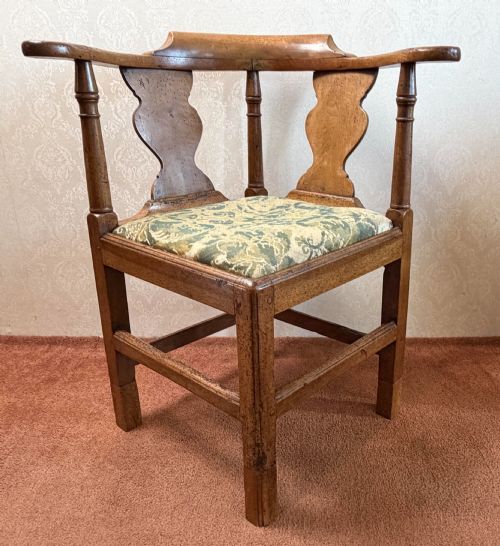
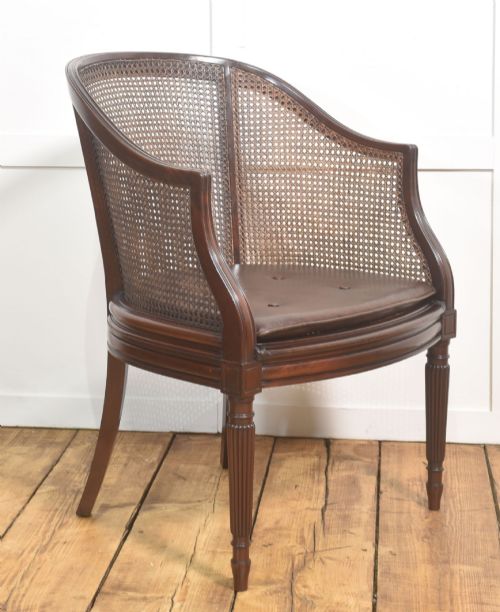
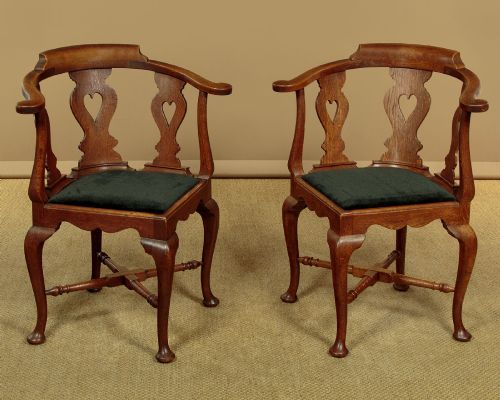
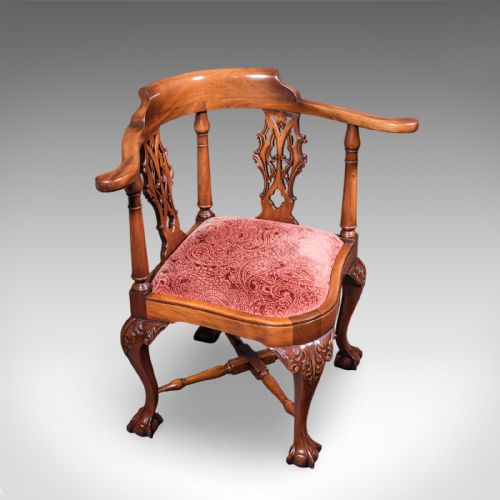
The construction typically involves a horseshoe-shaped backrest supported by turned or shaped pillars, leading down to a square or triangular seat base. Surviving examples demonstrate stylistic influences ranging from British country workshops to Chinese export traditions. These chairs combine functional workspace utility with decorative presence across different historic periods.
How they were made
Makers constructed these chairs using a variety of woods recorded in the evidence, including mahogany, walnut, oak, fruitwood, satinwood, hardwood, and marquetry inlays. Structural frames rely on traditional joinery methods suited to the angular demands of a corner seating design.
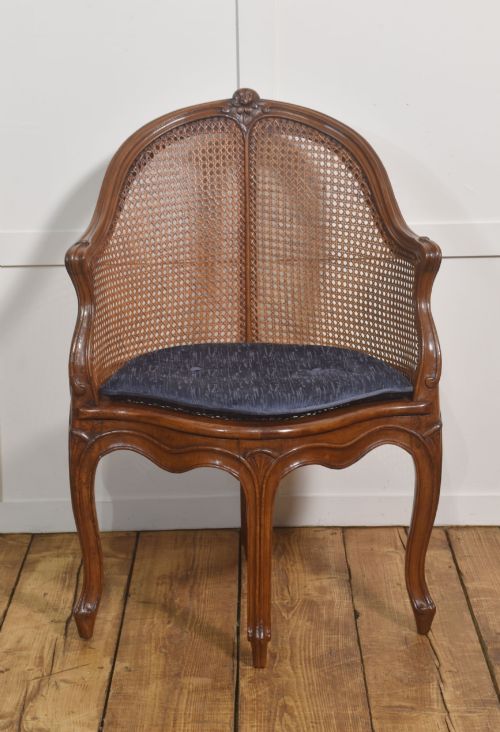
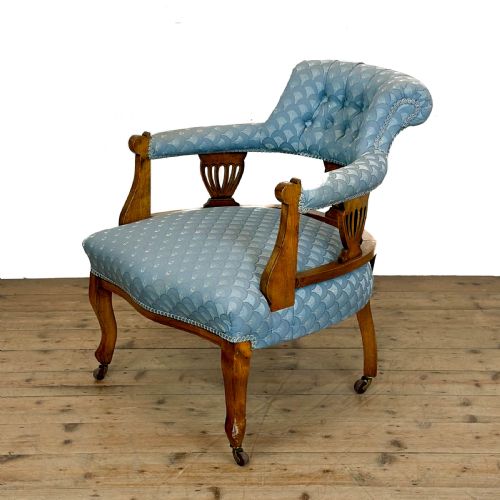
Upholstery and decorative elements incorporate fabric, textile, and tapestry treatments. These surface materials complement the polished timber frames found across 18th-century and Edwardian pieces.
Retail Price Guide 2026
Typical UK retail prices for corner desk chair, calculated from the Sellingantiques database of over a million retail prices indexed since 2003. This retail price guide relies exclusively on Sellingantiques data; no external sources or auction records are used, so the figures do not describe the wider market.
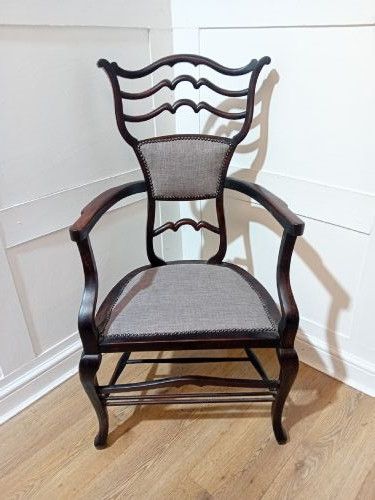
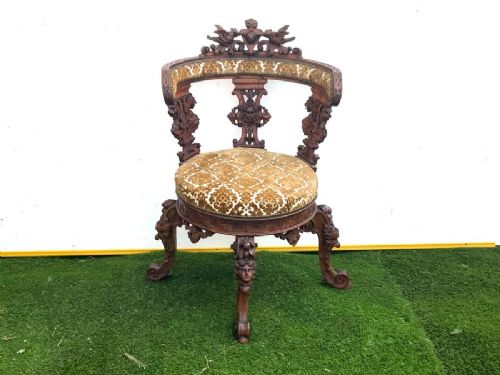
At least one maker decided that straight lines were overrated and built a Chinese export chair with delightfully eccentric curves.
What varies in quality
Quality in an antique corner desk chair rests on the refinement of the timber and the ambition of the design. Simpler country pieces utilise native oak and fruitwood with straightforward structural forms, whereas finer examples display figured mahogany, walnut, or intricate marquetry inlay.
The sophistication of the joinery and the curvature of the backrest dictate the piece's success. Eccentric proportions and specialised export origins elevate certain items, while standard Edwardian production focuses on domestic salon utility.
The Antique Corner Desk Chair Glossary
- Corner chair
- A seating form featuring a diagonal orientation designed to fit into the corner of a room or serve at a desk. It typically has a semicircular backrest supported by three or four upright posts.
- Marquetry
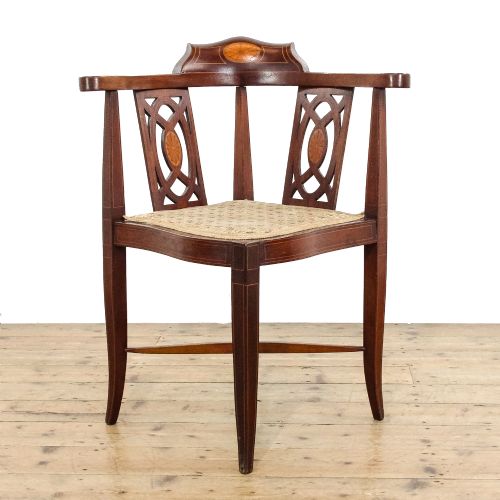
- Decorative inlay work using various tinted woods to create pictorial or geometric patterns on the surface. This technique appears on several Edwardian mahogany pieces.
- Chinese export
- Goods manufactured in China specifically for Western markets, often adopting European forms with distinct regional craftsmanship. An example in the record shows an eccentric and curvaceous hardwood design.
- Fruitwood
- Timber derived from fruit-bearing trees such as pear or apple, commonly used in vernacular furniture. It offers a dense, smooth grain seen in earlier country pieces.
Frequently Asked Questions
Where did people place these chairs?
These chairs were historically placed in the corner of a room to save space or positioned near a writing table where a compact seat was required.
The unique angled design allowed them to tuck neatly into architectural angles while providing a supportive backrest for writing or reading.
How do I date an antique corner chair?
Dating relies on identifying the timber species, construction methods, and decorative motifs such as inlay or turning style.
Earlier 18th-century examples often use fruitwood or oak with robust vernacular construction, while Edwardian pieces frequently feature mahogany with refined marquetry.
Are these chairs comfortable for daily use?
Many examples include upholstered seats covered in fabric, textile, or tapestry to provide adequate seating comfort.
Their supportive horseshoe-shaped backrests make them functional as occasional desk seats or decorative room accents today.
What woods were commonly used?
The recorded materials include mahogany, walnut, oak, fruitwood, satinwood, and general hardwood.
Cabinetmakers selected these timbers based on regional availability and the desired aesthetic refinement of the finished piece.