

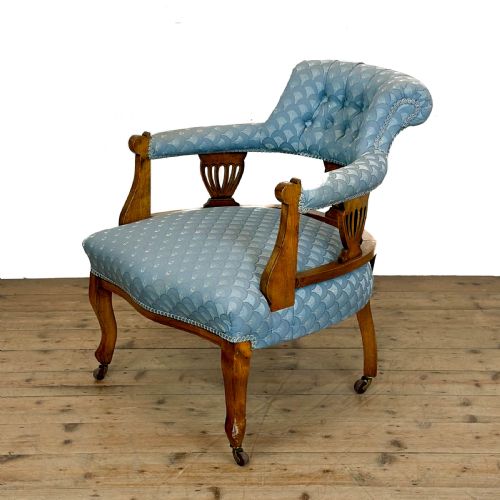


Antique Corner Accent Chairs
Antique corner accent chairs bring architectural shape to dead space, turning awkward room angles into purposeful seating.
Antique Corner Accent Chairs
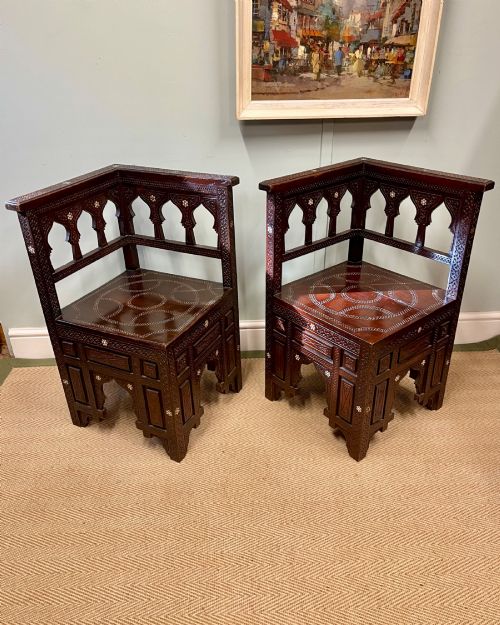
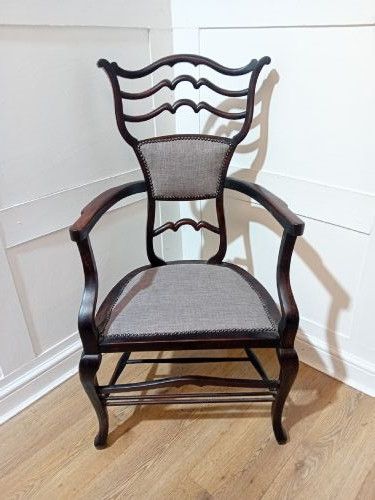
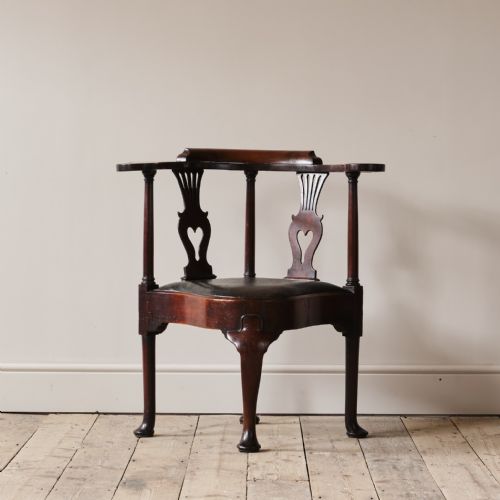
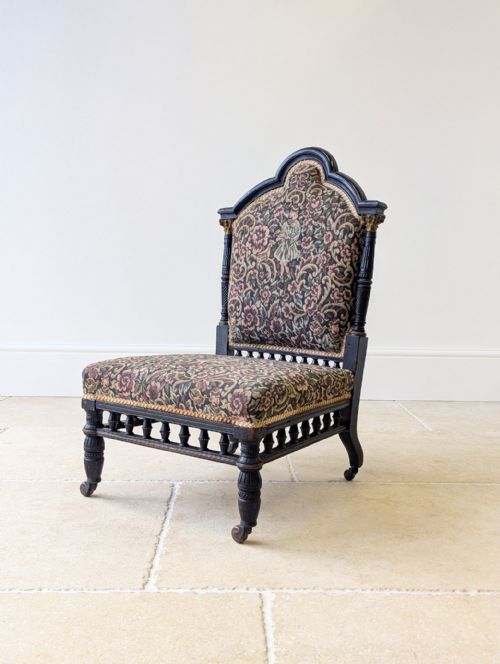
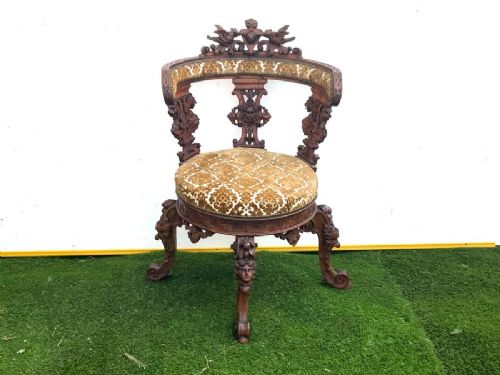
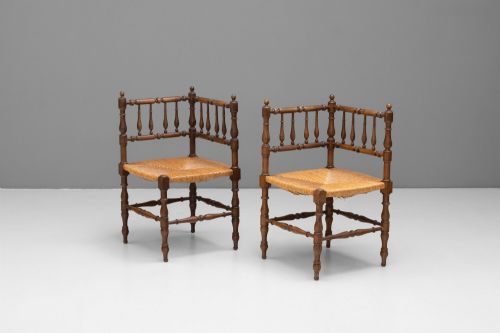
When buyers search for antique corner accent chairs, they encounter seating designed specifically to fit into ninety-degree room angles. The selections span from the eighteenth century through the Edwardian era, encompassing distinct forms like corner chairs, elbow seats, and low salon pieces.
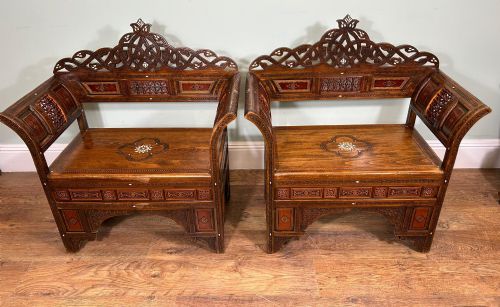
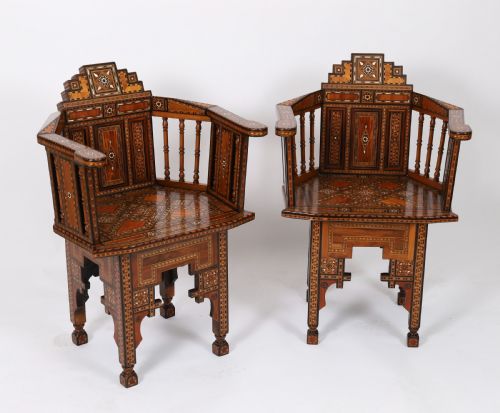
Mahogany and oak dominate the construction, accompanied by walnut, rosewood, and ebonised hardwoods. Pieces frequently exhibit stylistic influences ranging from Victorian Gothic and Aesthetic movements to Moorish and Levantine traditions.
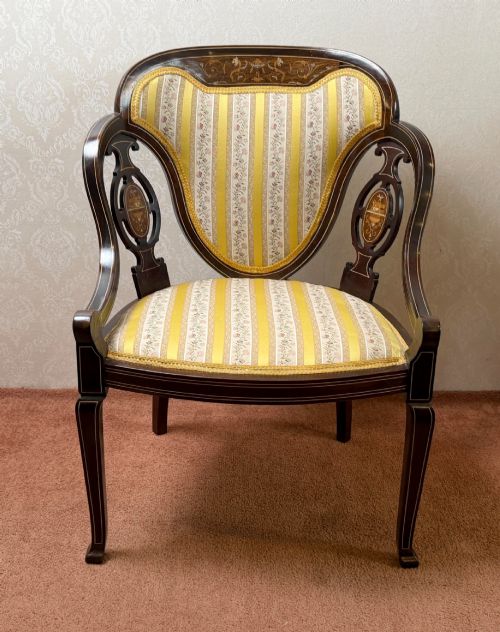
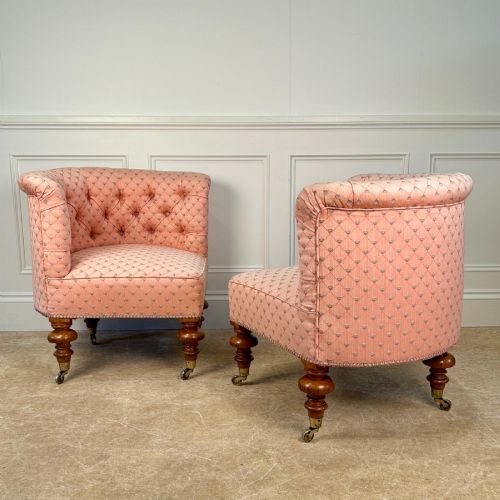
The most common variants on this page include mahogany examples with delicate wood inlay, sturdy oak turners chairs, and low upholstered bedroom chairs. These items serve both functional seating roles and decorative display functions within domestic interiors.
Distinguishing quality across pieces
The distinction between standard examples and exceptional pieces rests upon the precision of the joinery and the intricacy of the carved or inlaid ornament. Fine items display seamless wood joints and complex parquetry featuring materials like mother-of-pearl and bone without gaps.
Proportion and structural integrity dictate overall merit, particularly in seating designed for specific spatial angles. Superior specimens retain their original upholstery fabrics, distinctive turning, and crisp surface carving without excessive timber shrinkage or loose joints.
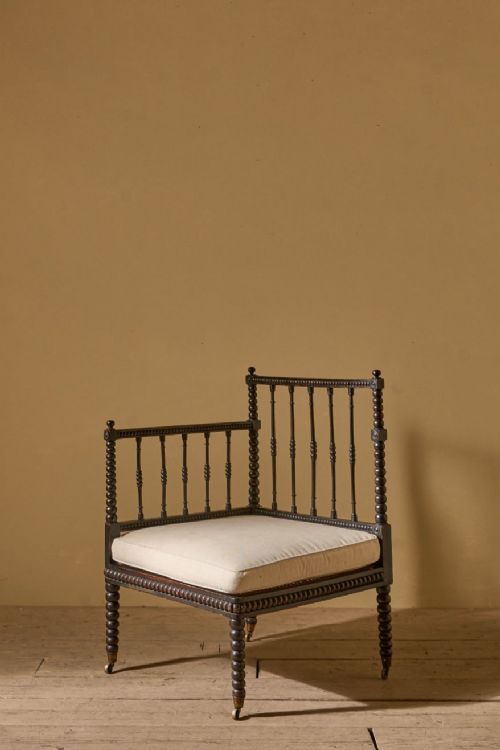
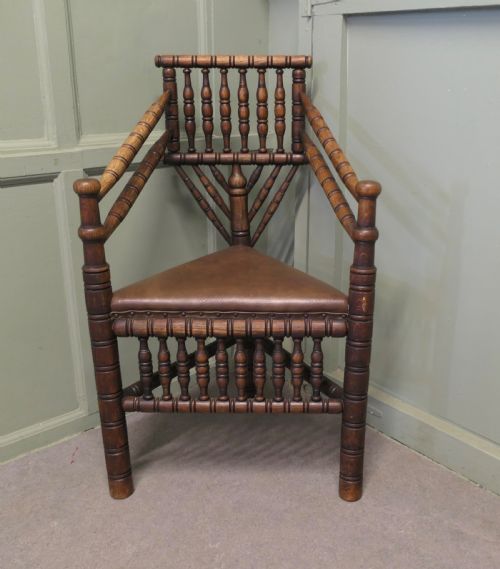
One unexpected turners chair arrived with such enthusiastic spindle work that counting the decorative balls requires deep patience.
Miles and Edwardes
The Antique Corner Accent Chairs Glossary
- Corner Chair
- A seat designed with a diagonal orientation to fit snugly into the intersection of two walls. These items typically feature a curved backrest supported by multiple upright spindles.
- Turned
- A method of shaping wood on a lathe to create symmetrical, rounded profiles such as columns, rings, and bobbin shapes. This technique provides structural support and visual rhythm.
- Parquetry
- A geometric mosaic of wood pieces used for decorative surface inlay on furniture. Craftsmen assemble contrasting timbers to form intricate patterns across the seat back or frame.
- Bergère
- An enclosed upholstered armchair with wooden framing exposed around the sides and back. These seats often incorporate cane panels or fitted loose cushions.
- Aesthetic Movement
- A late nineteenth-century design style emphasising visual beauty over narrative subject matter. Pieces from this period frequently utilise ebonised finishes and minimalist decoration.
Antique Corner Accent Chairs: Frequently Asked Questions
How do I place a corner chair in a room?
These chairs fit neatly into empty room corners where standard straight chairs obstruct walkways. They make effective additions to hallways, studies, and bedrooms without overwhelming the floor plan.
Positioning them beside a small side table creates an inviting reading nook or a deliberate focal point in an unused architectural angle.
What is a turners chair?
A turners chair, sometimes called an old Saxon or Warwick chair, is an armchair constructed entirely from turned wooden spindles and members. These sturdy pieces derive their name from the lathe-work technique used to shape every structural component.
They often feature triangular seats and substantial elbow rests, reflecting traditional vernacular furniture making from earlier centuries.
How can I date an antique corner chair?
Dating relies on examining the timber species, construction joinery, and decorative motifs present on the frame. Georgian versions often display restrained mahogany lines, whereas Victorian iterations favour ebonising, elaborate carving, or revived historical styles.
Edwardian examples frequently incorporate lighter mahogany frames with delicate marquetry inlay and subtle stylistic nods to earlier periods.
Are these chairs comfortable for daily sitting?
Many antique corner chairs function primarily as decorative accents or occasional seating rather than deep lounging furniture. Their upright backs and rigid wooden frames are structured for posture and spatial efficiency.
Upholstered variants and low salon seats offer softer padding, making them suitable for relaxed sitting in bedrooms or dressing areas.