


Dark Mahogany Corner Chair
A dark mahogany corner chair brings a handsome sweep of timber and deep grain into a neglected room angle.
Dark Mahogany Corner Chair
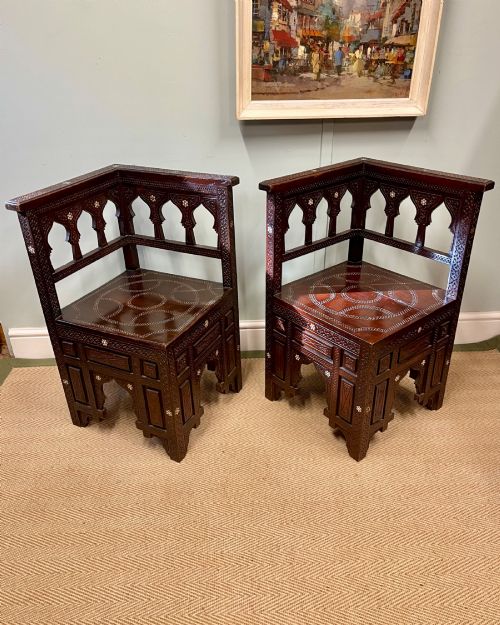
A dark mahogany corner chair occupies the intersection of two walls, offering a curved backrest supported by turned pillars and solid legs. These seating forms appear across the Georgian and Edwardian eras, utilising rich timbers suited to domestic studies and parlours.
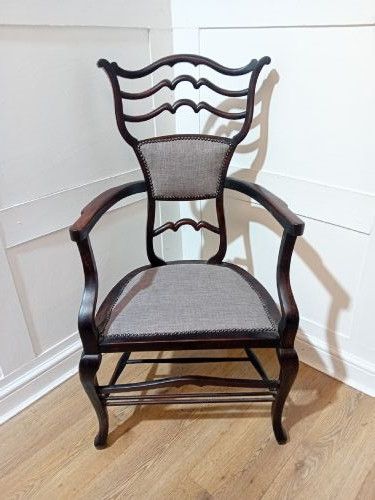
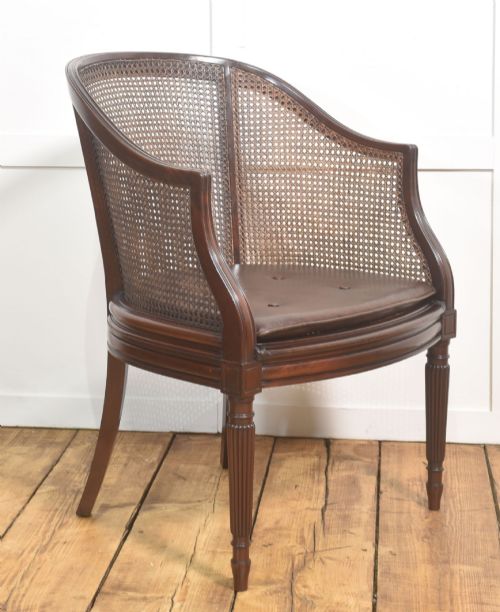
The versions met most often on this page date from the Georgian period through to the Edwardian revival styles. Makers shaped dark mahogany into sturdy corner armchairs, sometimes incorporating marquetry inlay or cane seating to vary the profile.
How they were made
Cabinetmakers shaped dark mahogany using traditional joinery, turning supporting spindles on a lathe and carving back splats by hand. Timber selection prioritised deep grain and rich colour, which was then polished to a subtle sheen.
Some examples integrate decorative elements such as bone inlay, mother of pearl, or marquetry into the wooden frame. Workshops constructed the seats from solid timber planks or wove cane into the wooden rails for lighter support.
Materials appearing across the current selection include brass accents, leather pads, bone inlay, and mother of pearl.
What varies in quality
The distinction between standard examples and finer pieces rests upon the crispness of the carving and the selection of the mahogany timber. Superior corner chairs display tightly fitted joints and smooth, unblemished turning on the structural pillars.
Detailing determines the standing of an individual piece within its period. Rich figuring in the wood grain and thoughtful integration of marquetry or subtle inlay elevate the visual weight of the furniture.
The Dark Mahogany Corner Chair Glossary
- Corner chair
- A seating form designed to fit directly into the angle of a room, featuring a continuous curved back rail supported by three or four legs.
- Marquetry
- The decorative technique of applying thin pieces of wood veneer to a structure to form geometric or floral patterns. This ornamentation appears on select Edwardian frames.
- Cane
- Plant material woven into an open mesh pattern to form supportive seating surfaces. Tub armchairs utilise this technique for lighter backrests and seats.
- Georgian
- A historical period spanning the eighteenth century, known for balanced proportions and the prominent use of mahogany in domestic seating.
Dark Mahogany Corner Chair: Frequently Asked Questions
Where should I place a corner chair?
These chairs fit neatly into empty room angles where standard seating blocks the flow of movement. They function well in hallways, studies, or bedrooms without dominating the floor space.
Positioning the piece in a corner highlights the curved backrail and makes practical use of an otherwise overlooked architectural space.
How do I care for dark mahogany?
Protect the wood by keeping the furniture away from direct sunlight and sudden temperature shifts. Regular dusting with a soft, dry cloth preserves the polished finish.
Apply a traditional wax polish occasionally to nourish the dark timber and maintain the subtle sheen built up over generations.
Are these chairs comfortable for daily sitting?
Most antique examples serve primarily as occasional seating rather than deep lounging chairs. The wooden back rails and firm seats offer upright support for reading or conversation.
Some variations incorporate upholstered pads or woven cane to soften the seat, though the rigid wooden frame remains the defining characteristic.
How can I tell the period of the chair?
Examining the construction methods, timber choice, and decorative motifs helps determine the age of the piece. Georgian examples often display simpler, robust joinery, while Edwardian revivals may feature delicate marquetry inlay.
Turned pillar styles and leg configurations also shift across the decades, offering clues to whether the item originates from the eighteenth or early twentieth century.