



Corner Accent Chair
A corner accent chair turns unused room angles into purposeful seating, blending woodwork from the eighteenth to twentieth centuries with period upholstery.
Corner Accent Chair
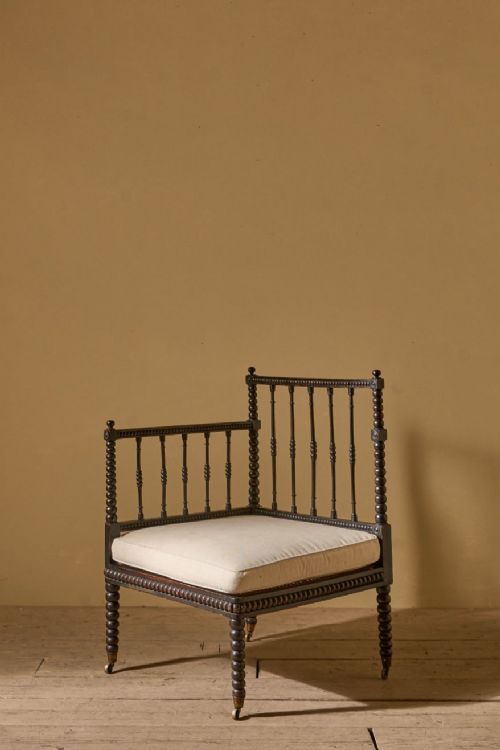
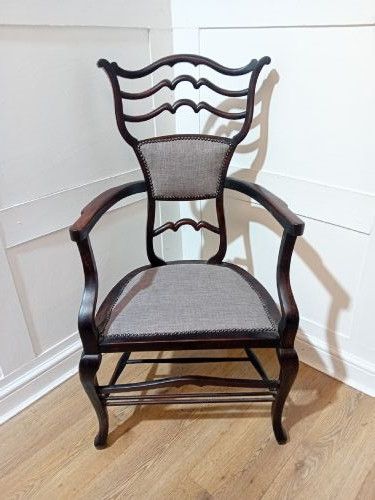
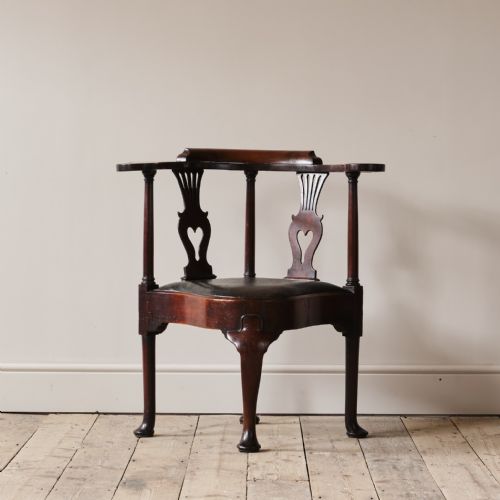
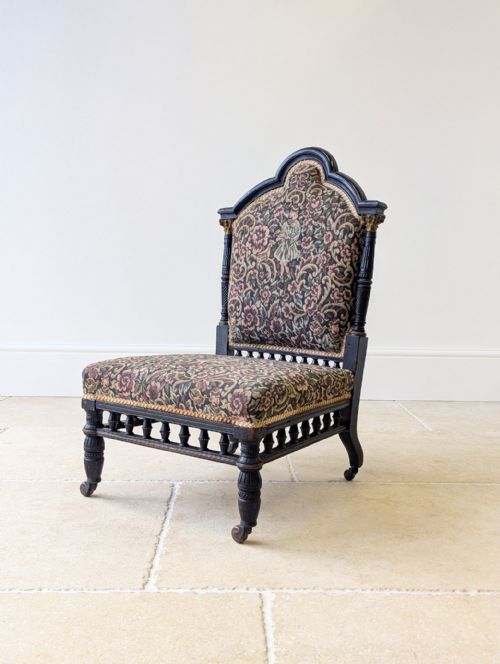
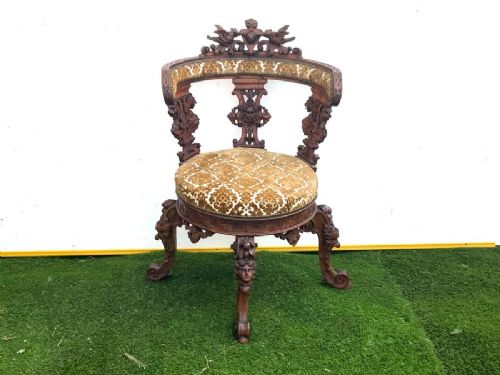
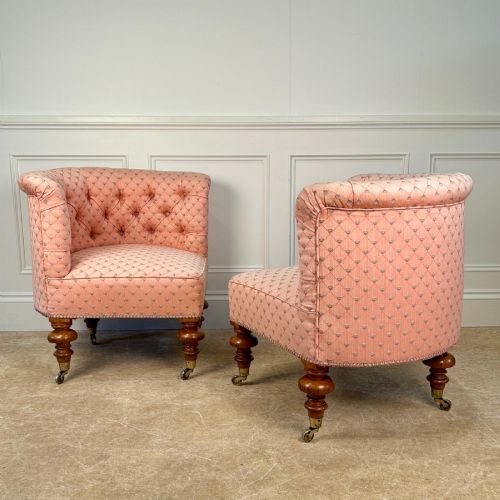
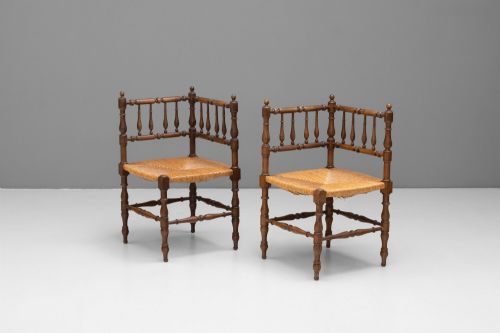
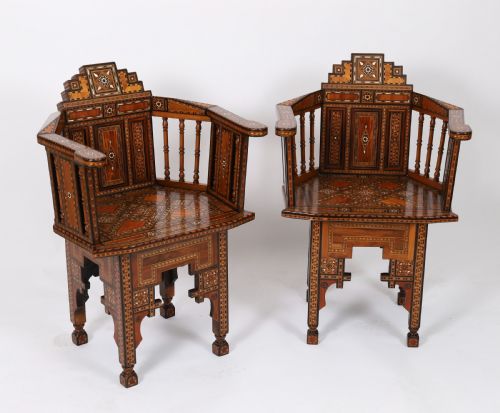
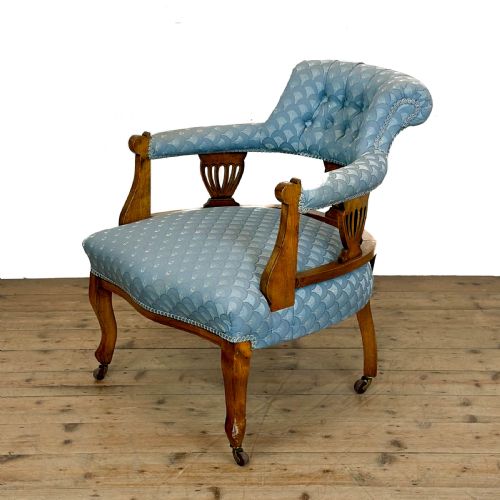
A corner accent chair is a seating form designed to fit room angles, appearing across listings in variations like nineteenth-century ebonised bobbin frames, Edwardian mahogany models, and eighteenth-century George II designs. Buyers searching for a corner accent chair encounter diverse styles ranging from Victorian Gothic Revival and Saxon Revival to Art Nouveau and English Country.
The selection includes specific forms such as turners chairs, low salon chairs, bedroom chairs, and occasional chairs alongside standard corner seating. Materials span oak, mahogany, walnut, ebonised wood, and beech, often paired with fabric, leather, or brass details.
How they were made
Construction relies on solid hardwoods like oak, mahogany, walnut, and beech, shaped through turning, carving, and joinery techniques seen in vernacular turners chairs and formal revival pieces. Wood inlay, parquetry, and marquetry surface work appear on Edwardian mahogany and Levantine or Syrian Moorish frames.
Upholstered versions utilise traditional textile coverings on sprung or padded seats, while other examples feature caning or exposed carved woodwork with scroll arms and figural details.
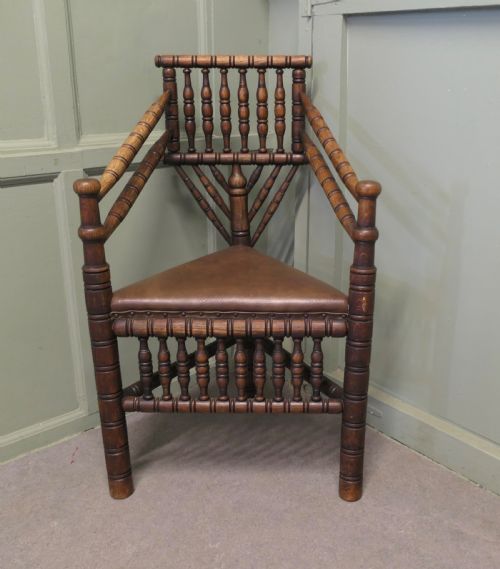
Several listings feature turners chairs built from solid oak and beech, offering an elbow seat fit for an old Saxon king.
What varies in quality
Quality variation lies in the crispness of hand-carving, the precision of inlaid wood or parquetry work, and the structural integrity of turned joints in woods like oak and mahogany. Finer examples display refined proportions, such as the eccentric and curvaceous design found on eighteenth-century export pieces.
The execution of period revival details, from Gothic Revival Glastonbury framing to Art Nouveau inlaid motifs, separates standard utility seating from decorative salon pieces.
Miles & Edward’s
The Corner Accent Chair Glossary
- Bobbin chair
- A turned chair constructed with cylindrical wooden pieces resembling spools or bobbins threaded together.
- Turners chair
- A heavy elbow seat made with turned wooden spindles, often associated with traditional English vernacular forms.
- Parquetry
- Geometric wood inlay patterns used to decorate surfaces on furniture frames.
- Glastonbury chair
- A low-backed wooden armchair with an X-frame base, frequently linked to Gothic Revival styles.
Corner Accent Chair: Frequently Asked Questions
What is a corner accent chair?
A corner accent chair is a seating piece specifically proportioned to sit neatly in the corner of a room. These chairs appear in various historical styles, from eighteenth-century George II models to Edwardian inlaid designs.
They function as both occasional seating and decorative furniture, utilising frames made from oak, mahogany, walnut, and ebonised wood.
How do I identify an Edwardian model?
Edwardian examples often feature mahogany frames combined with delicate marquetry or wood inlay work. They frequently take the form of salon armchairs or occasional chairs dating around nineteen hundred.
These pieces typically display lighter proportions than their Victorian predecessors while maintaining traditional joinery techniques.
Where should I place one?
These chairs fit naturally into empty room corners, hallways, or bedrooms where standard seating might obstruct flow. Their angled frames make use of spatial dead zones while adding period character.
They pair well with low salon settings or serve as standalone accent pieces in living spaces.