




Antique Convex Girandole
An antique convex girandole draws the eye instantly with its curved glass and candle arms, bringing depth and period drama to any room.
Antique Convex Girandole
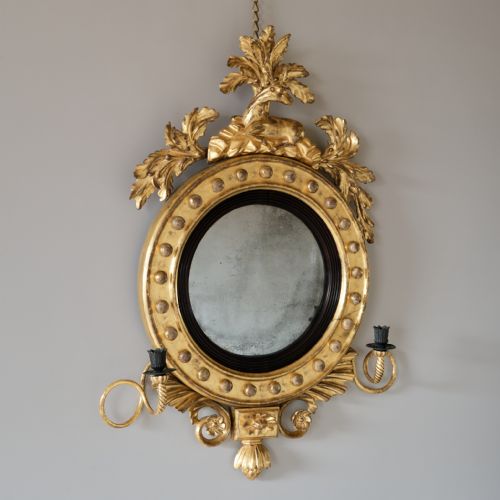
An antique convex girandole is a circular wall mirror featuring curved glass that reflects a wide, distortion-rich view of the interior. These pieces function primarily as wall mirrors and wall sconces, combining reflective glass with integrated candle holders.
The pieces appearing on this page span the Regency period, the nineteenth century, and the early twentieth century, alongside Regency Revival and Victorian interpretations. Most examples draw upon the Regency style, presenting circular frames that command attention through distinct proportions.
Buyers encounter single wall mirrors and pairs of wall sconces alike, ranging from modest diameters to large wall mirrors. The form often incorporates decorative motifs at the crest and base, anchoring the piece firmly within its historical period.
How they were made
Makers constructed the frames from giltwood, gesso, painted wood, and ebonised wood, applying gold leaf or paint over carved timber bases. Metal and brass elements frequently form the candle arms and supporting hardware of the girandole configurations.
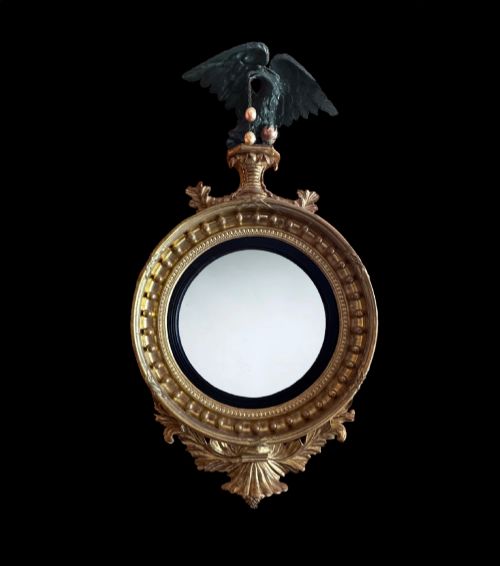
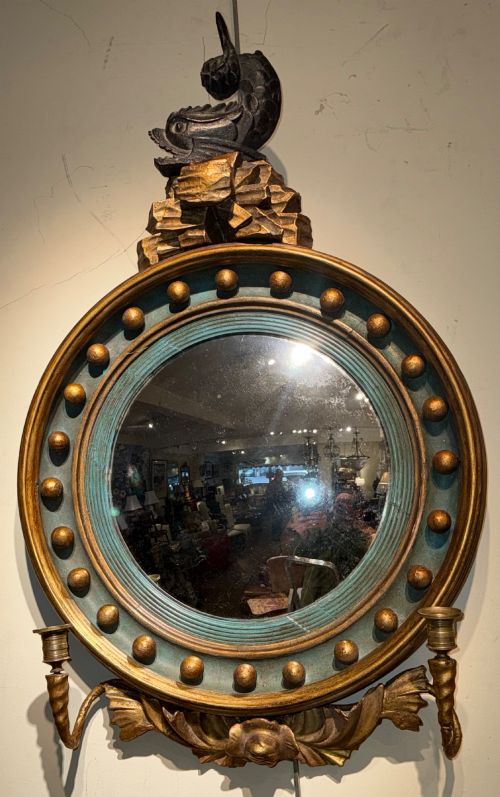
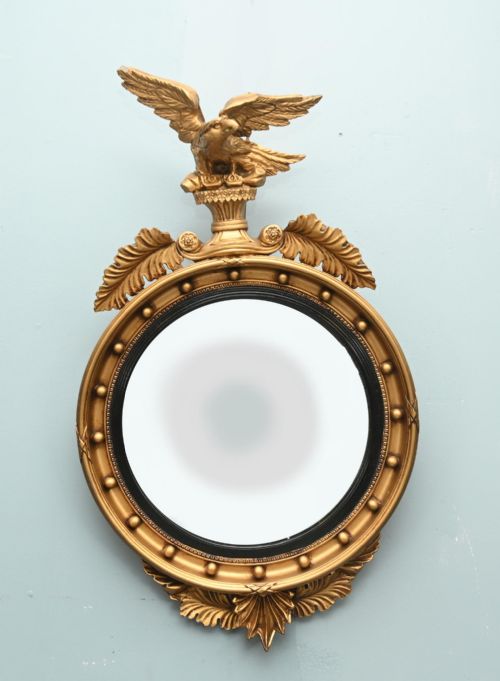
The curved mirror glass sits deep within a moulded or carved rebate, often framed by a reeded ebonised inner slip and surrounded by ball ornaments. Artisans carved intricate crests such as eagles or dragons directly into the wood before gilding.
Antique Convex Girandole Retail Price Guide 2026
Typical asking prices for convex girandole among the pieces listed under this phrase on Sellingantiques today, from the lower quarter to the upper quarter. They describe what is for sale here now, not the wider market.
Current listings feature pieces spanning the Regency, Victorian, and early twentieth-century periods, constructed from giltwood, brass, ebonised wood, and gesso.
What varies in quality
Quality rests in the crispness of the wood carving and the depth of the gilding upon the gesso and giltwood surfaces. Finer pieces display sharply defined ornaments, well-modelled crests, and balanced proportions that hold the room.
The condition and integrity of the convex mirror glass matter greatly, as do the matching pairs of candle sconces on girandole examples. Superior work shows harmonious integration between the central mirror frame and the peripheral candle arms.
The Antique Convex Girandole Glossary
- Convex mirror
- A circular looking glass with an outward-curving surface that captures a panoramic reflection of the surrounding space. This optical effect made them popular in period interiors for monitoring large rooms.
- Girandole
- A branched candle holder attached to a mirror frame to reflect candlelight across the interior. These arms multiply the illumination cast by a single candle.
- Giltwood
- Timber covered with a thin layer of gold leaf over a prepared gesso ground. This finish catches and reflects ambient light.
- Ebonised wood
- Timber stained or treated to imitate dense, dark ebony. It provides a sharp visual contrast against bright gilt decoration.
- Gesso
- A plaster-like mixture applied to wood frames to create a smooth surface for carving and gilding. It allows for intricate moulded details.
Antique Convex Girandole: Frequently Asked Questions
How do I hang a convex mirror safely?
These mirrors carry substantial weight due to their dense timber frames and thick curved glass. Secure them directly into structural wall studs using heavy-duty fixings suited to the wall type.
Position the piece at eye level where it can reflect light from windows or chandeliers without enduring accidental knocks from passing traffic.
Were candle arms original to girandoles?
Many period girandoles were built with integrated metal or wooden candle arms designed to hold lighted tapers. The flickering flame would bounce off the convex glass and gilt frame to illuminate the space.
Some surviving pieces retain their original arms, while others show adaptations where sconces were added or removed over the decades.
What rooms suit an antique convex mirror?
Halls, dining rooms, and drawing rooms accommodate these mirrors particularly well because the wide-angle reflection creates an illusion of expanded space. They serve as central focal points above mantelpieces or console tables.
Keep them away from direct moisture and strong direct sunlight to protect the fragile gilt surfaces and underlying gesso.
How do I spot a Regency period frame?
Regency frames frequently feature distinct classical motifs such as reeded ebony slips, ball-bearing bezels, and carved crests depicting eagles or dragons. The timber construction and preparation layers reflect early nineteenth-century workshop practices.
Later Victorian and revival pieces often imitate these exact proportions but utilise different assembly techniques and fresher gilding.