
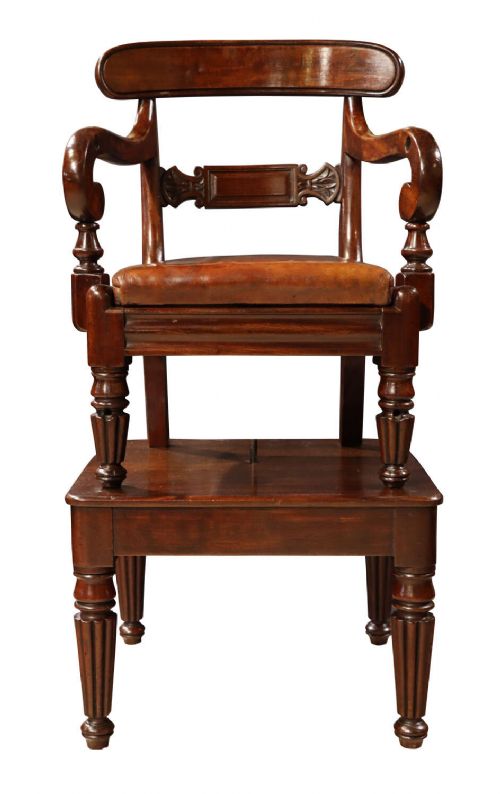


Antique Convertible Chair
An antique convertible chair combines dual functions into one piece, offering clever transformation between seating and library steps, tables, or high chairs.
Antique Convertible Chair
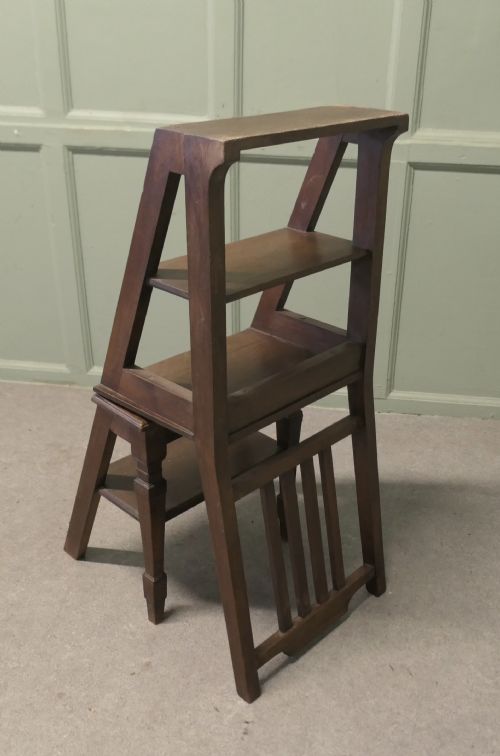
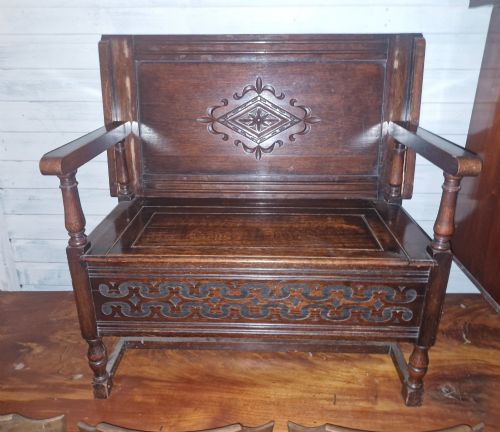
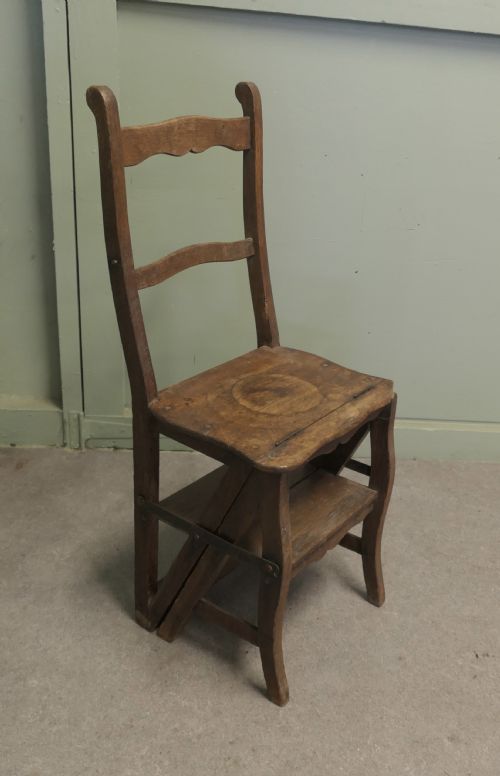
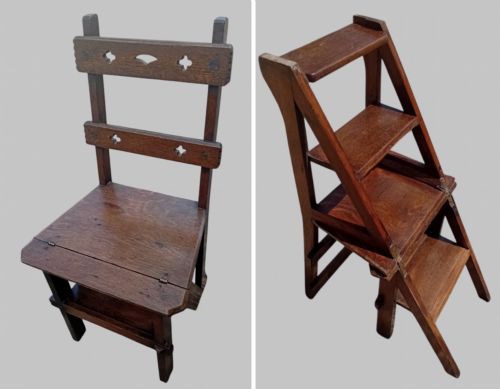
When you search for an antique convertible chair, you encounter a surprisingly diverse array of dual-purpose seating originating from periods spanning the seventeenth century through to the twentieth century. The selection on this page predominantly includes metamorphic library chairs that unfold into steps, monk's benches that convert into tables, and child's high chairs that transform into separate chairs and stands.
Makers across the Georgian, Regency, and Victorian eras approached domestic multi-functionality with mechanical ingenuity, producing pieces designed to save space in compact rooms. Library armchairs pivoting smoothly into staircases and hall seats concealing lift-up compartments demonstrate the practical ingenuity valued by historical households.
The material evidence bridges formal library furnishings in mahogany and rustic country pieces in pine, oak, or beech. Whether examining an early oak chair-table or a refined Regency library armchair, these convertible designs bridge heavy utilitarian utility with domestic refinement.
Materials and construction
Timber selection dictates the structural integrity of these items, with dense hardwoods like mahogany and oak dominating the inventory alongside utility timbers such as pine and beech. Cabinetmakers utilised sturdy joinery to support the pivot points, hinges, and sliding mechanisms essential for safe daily conversion.
Metal components including brass and iron provide the hidden hinges, ratchets, and brackets that allow library steps and folding armchairs to operate smoothly. Surface treatments incorporate leather upholstery, cane panels, and hand-carved ornamentation that elevate functional mechanics into polished furniture.
The listings on this page span the 17th, 18th, 19th, and 20th centuries, covering oak, mahogany, pine, beech, brass, iron, cane, and leather.
Distinctions in standard
The division between ordinary utility and superior quality rests on the precision of the conversion mechanism and the integrity of the timber. Finely engineered pivots operate without straining the joints, whereas lesser examples suffer from loose tolerances and timber fatigue caused by frequent transformation.
Hand-carved detailing, secondary timbers used in hidden drawer linings, and original surface patination separate provincial workshop output from pieces attributed to notable makers. The longevity of a convertible piece depends entirely upon how cleanly the moving parts integrate with the stationary frame.
The Antique Convertible Chair Glossary
- Metamorphic furniture
- Pieces engineered to alter their physical form and function through hinged, sliding, or pivoting mechanisms. This term covers library chairs turning into steps and tables transforming into seats.
- Monk's bench
- A multi-functional seating form featuring a hinged backrest that folds down flat over the arms to create a table top. They frequently include lift-up seats or drawers for storage in hallways.
- Chair-table
- An early domestic form with a broad wooden seat and a high back that tilts forward horizontally to form a table. They appear primarily in heavy oak construction from seventeenth-century provincial traditions.
- Child's high chair on stand
- A convertible form where an elevated chair lifts off a separate wooden base frame to form a low child's seat and a table. These items survive from the Georgian and Regency eras in mahogany or pine.
Antique Convertible Chair: Frequently Asked Questions
How do metamorphic library chairs work?
These library armchairs feature concealed hinges and pivot points that allow the backrest and seat to swing forward and downward. This motion transforms a comfortable reading chair into a sturdy set of library steps for reaching high bookshelves.
The mechanics rely on flush-fitting brass brackets and balanced weight distribution so the transformation requires minimal effort. When folded back into chair form, the steps lock securely into the wooden underframe.
Where were convertible chairs used in the home?
Library chairs with steps found their natural placement in gentleman's libraries, studies, and drawing rooms where book collections lined high walls. Their dual purpose saved valuable floor space in cramped Victorian or Regency interiors.
Monk's benches and chair-tables served in hallways, farmhouse kitchens, and living spaces where furniture needed to perform multiple daily tasks. Child's convertible high chairs operated in dining spaces before separating into play furniture.
How do I check the stability of a convertible mechanism?
Operate the moving parts slowly to observe whether the hinges bind, drag, or wobble within their housings. A well-adjusted piece moves smoothly along its tracks without putting undue stress on the surrounding wood grain.
Inspect the pivot points and joints for replacement screws or modern metal reinforcement. Original brass or iron hardware aligned flush with the surrounding timber indicates undisturbed historical mechanics.