


Mahogany Metamorphic Chair
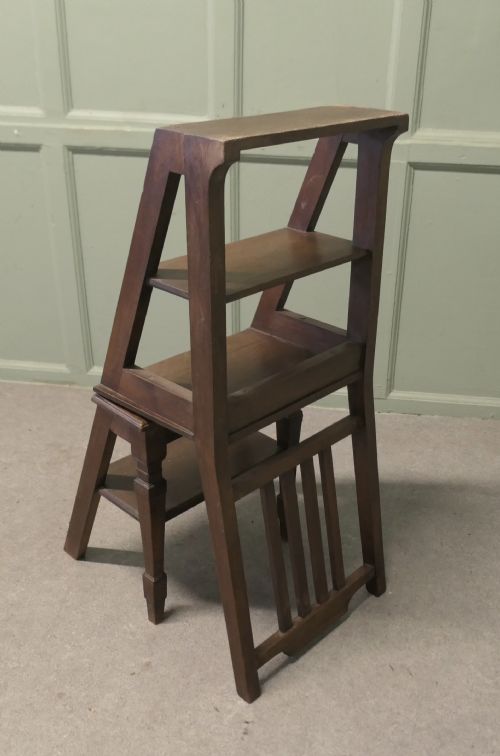
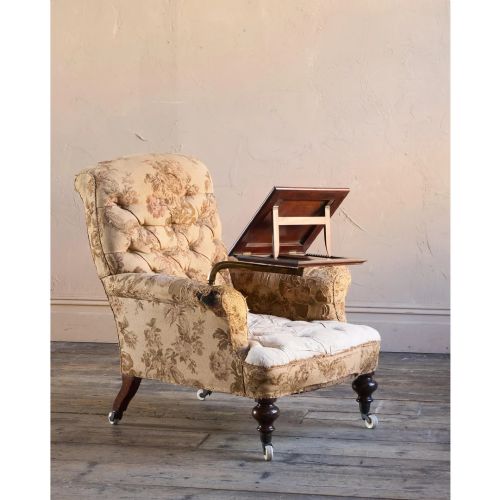
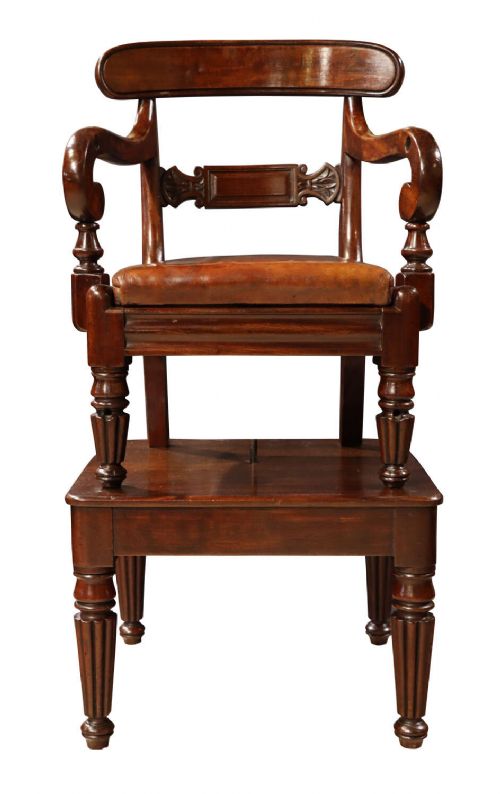
A mahogany metamorphic chair is an ingenious dual-purpose seat that transforms into library steps or a child's high chair.
Mahogany Metamorphic Chair
A mahogany metamorphic chair combines a functional seat with a secondary purpose, most commonly converting into library steps or functioning as a child's high chair. When searching for a mahogany metamorphic chair, buyers encounter ingenious seating designed to save space in period libraries and domestic rooms.
The selections span several distinct eras, drawing from Georgian, Regency, William IV, Victorian, and Edwardian periods. Library armchairs that unfold into steps represent the dominant form, alongside children's high chairs and convertible step-ladders.
Origins trace through the 19th century, featuring maker attributions such as J Foot & Son and the manner of Morgan and Sanders. These functional hybrids reflect domestic ingenuity, combining heavy hardwood frames with clever mechanical pivots.
Materials and construction
Makers relied primarily on solid and veneered mahogany, complemented by secondary timbers like oak and hardwood to build sturdy folding frames. Brass hinges, pivots, and locking brackets facilitate the transformation between chair and steps without compromising structural integrity.
Seating surfaces often incorporate brown leather, cane, fabric, or iron elements depending on whether the piece functions as a study armchair or a child's high chair. The joinery must withstand the dual stresses of supporting a seated person and bearing weight as a staircase.
Listings feature mahogany, brass, leather, cane, and iron across Georgian, Regency, William IV, Victorian, and Edwardian periods.
Assessing quality and mechanics
Quality rests upon the precision of the concealed hinges and the smoothness of the transformation mechanism. Superior pieces operate without binding, locking securely in both configurations to ensure safety.
The choice of mahogany grain and the condition of the leather or cane upholstery distinguish standard utility pieces from finer library furnishings. Maker signatures or documented attributions elevate the desirability of the woodwork.
J Foot & Son·Morgan and Sanders
The Mahogany Metamorphic Chair Glossary
- Metamorphic furniture
- Pieces designed to transform from one furniture type into another, such as a chair turning into library steps. This space-saving ingenuity became particularly popular during the Georgian and Victorian eras.
- Library steps
- Portable staircases used to reach high bookshelves before fitted library ladders became standard. In metamorphic pieces, these steps fold directly into the framework of an armchair.
- Regency
- A British design period spanning the early 19th century, known for classical influences and refined proportions. Pieces from this era often feature elegant reeded legs and polished mahogany surfaces.
- William IV
- A transitional design era during the 1830s characterised by robust proportions and heavier woodwork. Furniture from this period frequently showcases rich mahogany grains and substantial frames.
- Cane
- Woven material made from rattan plant stems, frequently utilised for chair seats and backs. It provides a lightweight and flexible surface that contrasts with solid hardwood frames.
Mahogany Metamorphic Chair: Frequently Asked Questions
How do library step chairs work?
The backrest and seat sections pivot on concealed brass hinges, unfolding outward to form a small flight of stairs. Once inverted, the structure locks firmly into a stable staircase configuration.
Returning the piece to a seat simply involves reversing the motion and securing the brass latches. This dual design allowed homeowners to reach high bookshelves without storing a separate ladder.
Were these chairs used in homes?
Library armchairs with steps served gentlemen's studies and private libraries where tall bookcases lined the walls. They provided a comfortable place to read while offering immediate access to elevated volumes.
Other variations, such as children's high chairs, served the nursery. These domestic pieces combined everyday utility with clever mechanical folding actions.
How do I date a mahogany metamorphic chair?
Dating relies on the stylistic cues of the woodwork, such as Regency reeded legs, William IV proportions, or Victorian carving styles. Secondary timbers and brass hardware also help determine the period of manufacture.
Makers' stamps or labels, when present, provide the most precise indication of age and origin. Comparing the turning mechanisms to dated examples clarifies the timeline.
Are the folding mechanisms fragile?
The brass hinges and pivots were built to endure regular transformation between chair and step configurations. Solid mahogany frames provide the necessary structural strength for both uses.
While robust, the moving joints require careful handling and occasional maintenance to prevent wear. Original mechanisms should operate smoothly without excessive force.