
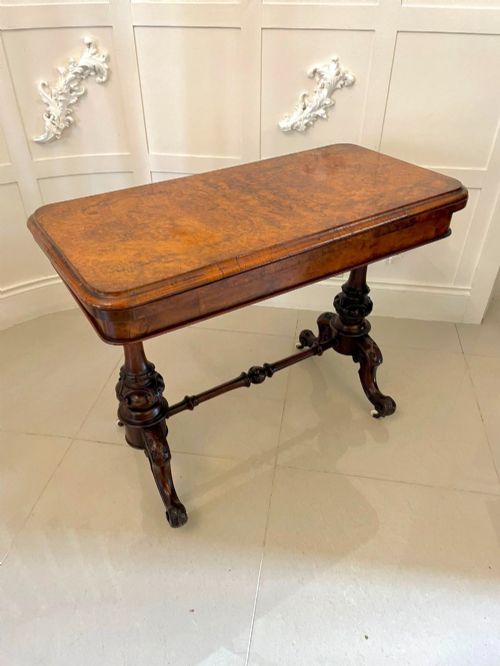
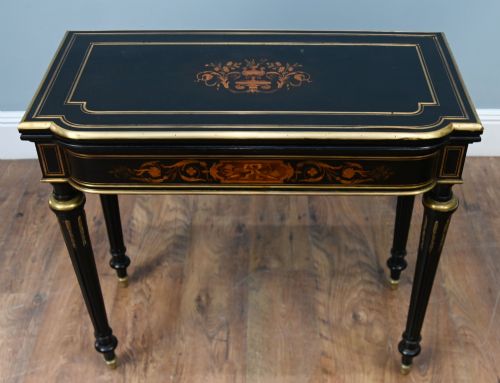
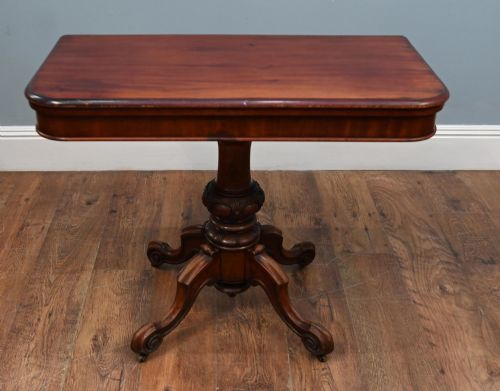
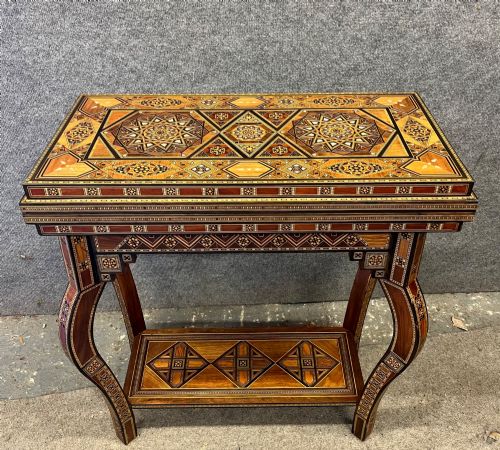
Antique Console Gaming Table
These pieces combine the dual roles of a console table and a fold-over gaming surface, offering formal display and evening entertainment.
Antique Console Gaming Table
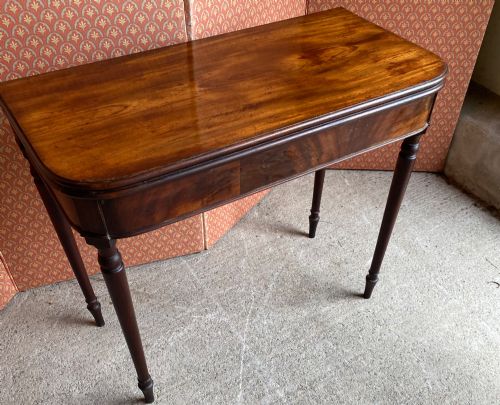
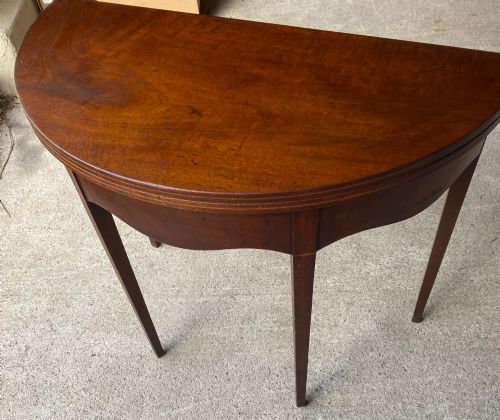
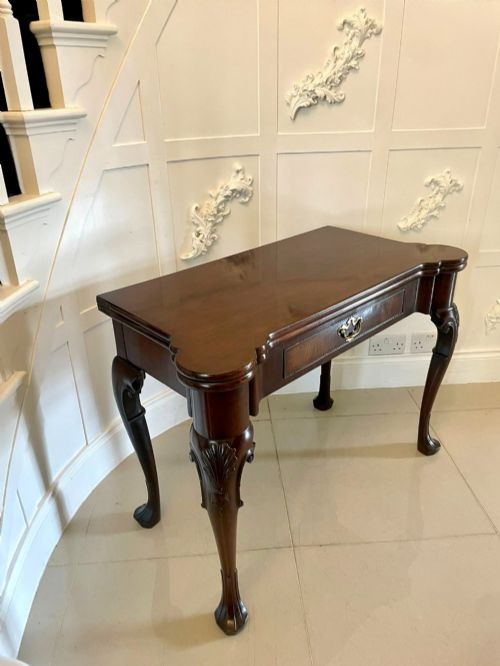
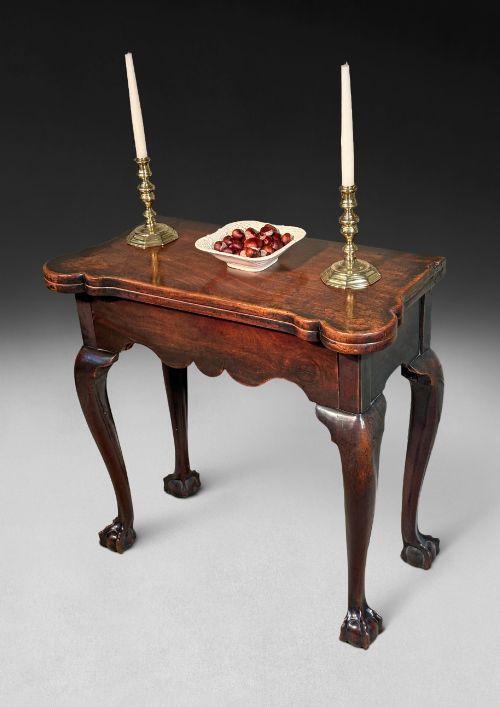
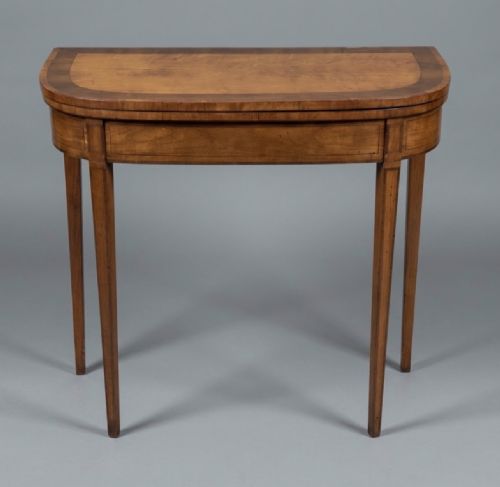
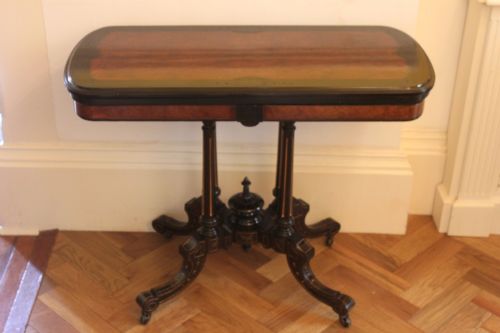
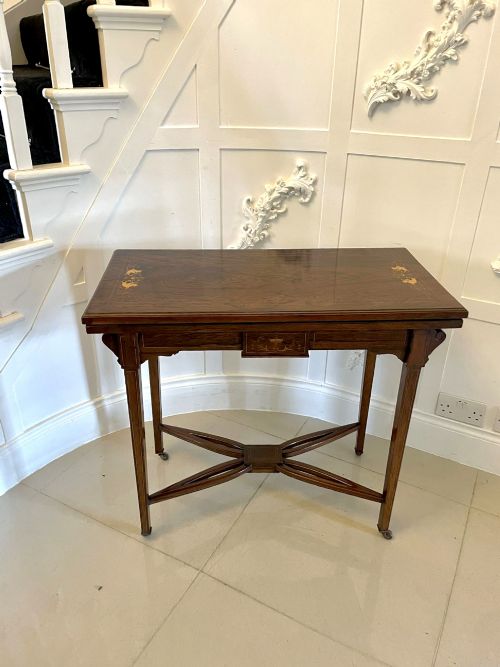
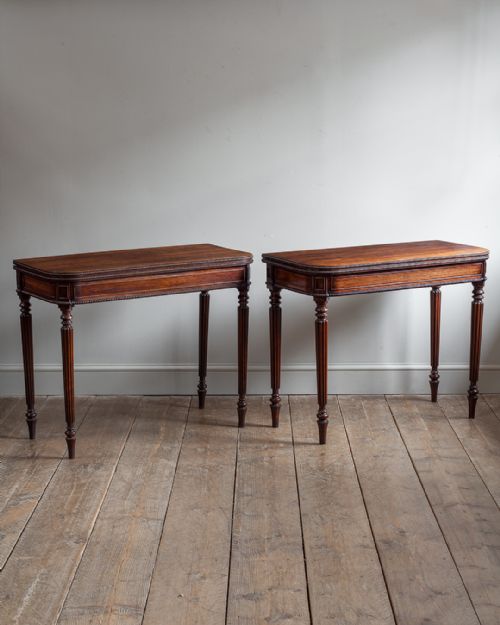
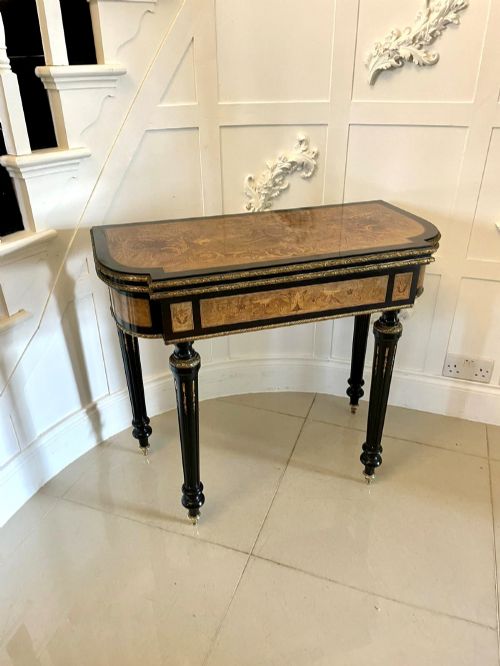
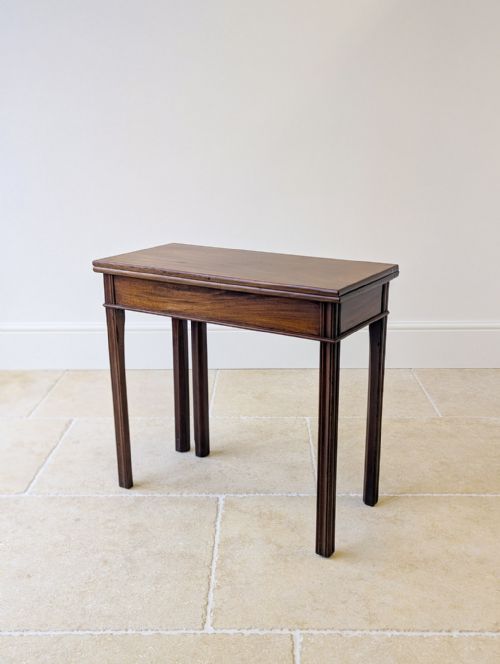
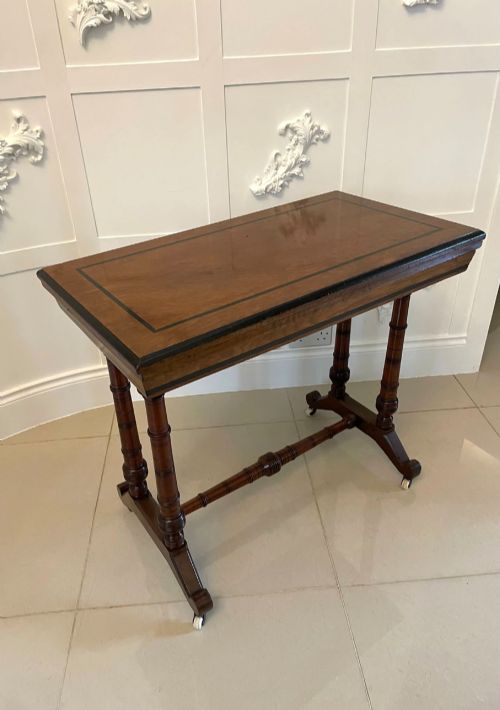
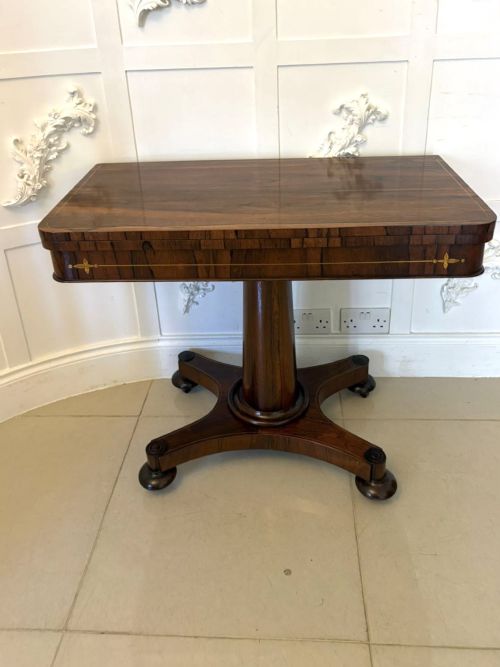
When you search for an antique console gaming table, you encounter hybrid forms designed to stand against a wall as a console or side table before opening to reveal a baize-lined surface for cards and games. The examples on this page span the Georgian, Regency, William IV, and Victorian periods, alongside later revival influences.
The most frequent variations on this page are mahogany, rosewood, and walnut fold-over tables from the eighteenth and nineteenth centuries. These pieces often feature pivoting tops or concertina actions that expand to support the folding leaf during play.
Materials and construction
Cabinet makers utilised dense native timbers such as mahogany alongside exotic veneers like rosewood, burr walnut, and satinwood. Crossbanding, stringing, and marquetry inlay decorate the tops and friezes of finer examples.
Structural integrity relied on stable pivoting mechanisms, concertina frames, and fold-over hinges that allowed heavy timber tops to open safely without straining the rails.
Listings feature woods including mahogany, rosewood, walnut, satinwood, burr walnut, and kingwood across the 18th, 19th, and early 20th centuries.
What separates the finest examples
The distinction between ordinary and superior pieces rests on the choice of timber figurations, such as flame mahogany or burr walnut, and the precision of the brass inlay, carving, and Ormolu mounts. Finely executed turning on the legs and crispness in the carved bases separate workshop standards.
Proportion and execution of the opening mechanism also dictate quality. A well-constructed table maintains a flat, stable surface when open and fits flush against the wall when closed as a console.
George Bullock·Giles Grendey·Gillows
The Antique Console Gaming Table Glossary
- Concertina action
- An expanding frame that pulls out symmetrically to support all four sides of a fold-over table top when open. This design requires intricate joinery.
- Crossbanding
- A strip of veneer laid around the border of a table top with the grain running perpendicular to the centre panel. This technique frames the primary wood.
- Ormolu
- Gilded bronze mounts applied to the corners, friezes, or legs of nineteenth-century furniture. It provides metallic contrast to dark woods like rosewood and kingwood.
- Demilune
- A half-moon shape used for the tops and frames of console and card tables designed to sit flat against a wall.
- Marquetry
- Decorative patterns formed by fitting together thin slices of various coloured woods into a veneer. It appears on elite French-influenced revival tables.
Antique Console Gaming Table: Frequently Asked Questions
How do you open an antique console gaming table?
Most examples utilise a fold-over leaf that swivels ninety degrees on the frame or rests upon a concertina action which extends outwards. Lifting the top reveals a concealed well or a baize-lined playing surface.
Care must be taken to support the pivoting leaf evenly during the opening motion to protect the original hinges and wooden pivot pins from undue stress.
What were these tables used for originally?
During the eighteenth and nineteenth centuries, these dual-purpose pieces functioned primarily as decorative console or side tables against drawing room walls during the day. In the evening, they were pulled out and unfolded for card games, chess, and social gambling.
The enclosed wells often served to store playing cards, counters, and dice when the table remained closed.
How do I identify a Regency period table?
Regency pieces often display classical architectural influences, featuring rosewood or mahogany veneers accented with intricate brass stringing or inlay. Pedestal bases with sabre legs and brass paw castors are common attributes of this era.
The hardware and proportion reflect early nineteenth-century design trends, moving away from heavier Georgian proportions towards sleeker, classical lines.
Where should I place a console gaming table in my home?
These tables suit hallways, living rooms, or dining spaces where they can sit flush against a wall as a console or side table. Placing them away from direct sunlight and heat sources protects delicate rosewood, mahogany, and walnut veneers.
Allow sufficient clearance around the piece if you intend to unfold the top for display or occasional use.