




Antique Compact Mirror
An antique compact mirror is a small, portable dressing accessory designed for powder and cosmetics, highly valued for its intricate metalwork and enamel decoration.
Antique Compact Mirror
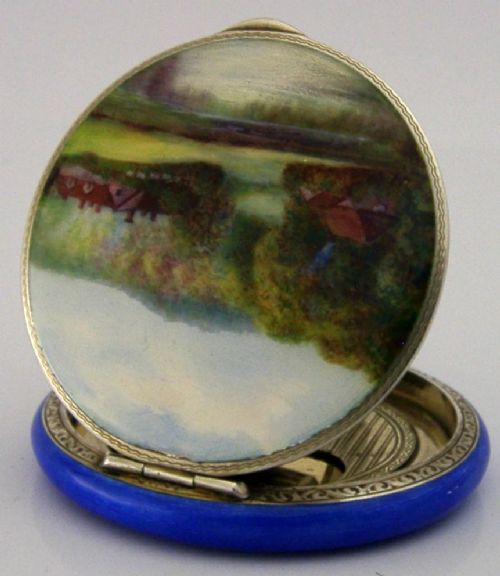
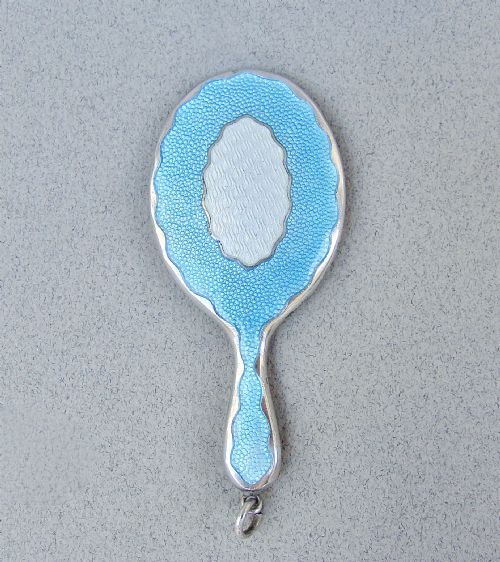
An antique compact mirror is a portable vanity case used for face powder and touch-ups, frequently found from the early twentieth century. These small personal items appear often in Art Deco and Edwardian designs, reflecting the changing social habits of women during those decades.
The pieces on this page span several decades, with a strong concentration of 1920s and 1930s examples alongside earlier Victorian and Edwardian items. Most items function as powder compacts, vanity cases, or miniature purse mirrors made for daily use in a handbag.
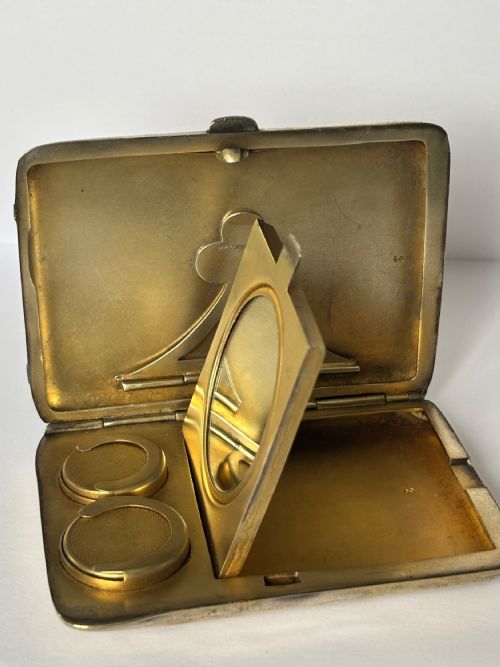
Geographic origins vary, encompassing British silver workshops, German makers, Italian silversmiths, and Asian export silver pieces. Alongside standard silver and enamel forms, buyers encounter combination cases that incorporate lipstick holders, cigarette compartments, or sovereign cases.
How they were made
Makers utilised sterling silver, silver-gilt, brass, chrome, and gold, often shaping the metal through stamping and casting techniques. Engine turning created geometric patterns across the metal lids, providing a textured surface that caught the light.
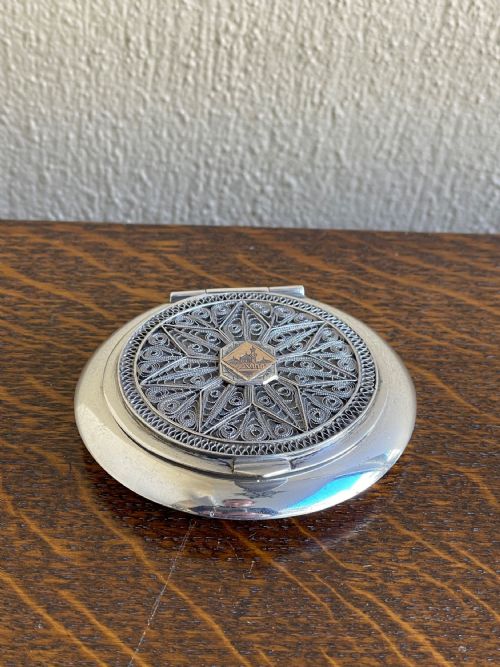
Enamel work represents a major technique, particularly guilloché enamel where translucent coloured enamel covers machine-turned metal grounds. Hand painting and filigree wirework further decorated the lids of Persian, Chinese, and European items.
Interiors frequently contained fitted glass mirrors, powder sifts, mesh panels, and suede or silk linings. Hinges and clasps required precise metalworking to ensure the covers remained securely fastened during travel.
Some compacts doubled as secret cigarette cases, proving that historical multitasking was very much a handbag essential.
What varies in quality
The standard of an antique compact mirror rests on the precision of its mechanical parts and the crispness of its decoration. Solid gold, sterling silver, or heavy silver-gilt construction indicates a higher tier than plated base metals.
Henry Williamson·Henry Matthews·Giuliano Spinelli·Cartier·Richard Hudnut·Houbigant
The Antique Compact Mirror Glossary
- Guilloché
- A decorative technique where a mechanical lathe engraves an intricate geometric pattern into metal before enamel is applied. This method allows light to reflect through translucent coloured coatings.
- Engine turning
- A method of mechanical engraving that cuts precise, repetitive patterns into metal surfaces. It provides both texture and visual depth to compact lids.
- Silver-gilt
- Silver that has been coated with a thin layer of gold on its surface. This finish offers the appearance of solid gold while utilising silver as the base metal.
- Filigree
- Delicate openwork jewellery technique formed from fine twisted metal threads soldered together. It appears frequently on silver compact lids from various regions.
- Combination case
- A multi-functional vanity item designed to hold powder alongside other items such as lipstick, cigarettes, or coins. These pieces demonstrate clever interior engineering.
Antique Compact Mirror: Frequently Asked Questions
What is an antique compact mirror?
An antique compact mirror is a small, portable case equipped with a mirror and a compartment for face powder. Women carried these items in handbags for cosmetic touch-ups throughout the day.
Most surviving examples date from the early twentieth century, particularly the Art Deco period. They combine practical grooming functions with decorative metalwork, enamel, and precious stones.
How do I date an antique compact mirror?
Dating relies on hallmarks, material styles, and mechanical construction. British silver pieces typically feature town marks and date letters that pinpoint the exact year of manufacture.
Stylistic cues also help identify the era, such as geometric guilloché patterns from the 1920s or heavier Victorian metalwork. Maker marks stamped inside the case provide further historical context.
What materials were used?
These vanity accessories were produced in a wide variety of metals and finishes. Sterling silver, yellow gold, brass, chrome, and silver-gilt served as the primary structural materials.
Surfaces were often enhanced with coloured enamel, mother-of-pearl, or glass crystals. Interiors frequently featured fitted glass mirrors, silk linings, and delicate metal mesh sifts.
How were they used historically?
Owners kept them inside handbags or evening purses alongside other personal effects. They allowed women to check their appearance and reapply powder while away from a dressing table.
Some advanced versions doubled as combination cases, holding lipsticks, cigarettes, or coins to reduce the number of items carried during social outings.