




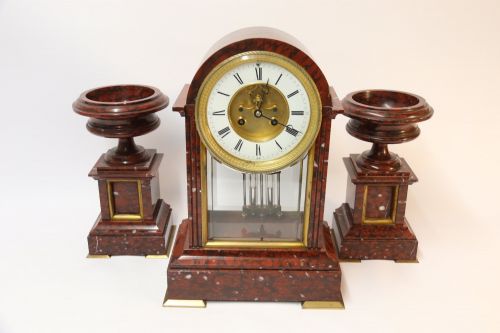
Antique Clock Garniture Set
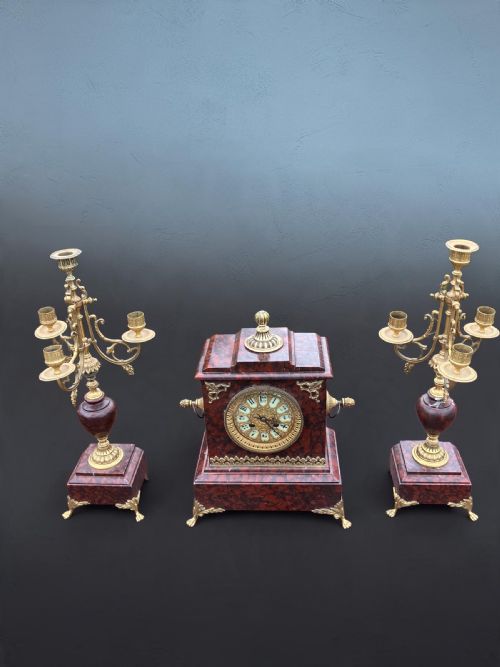
An antique clock garniture set comprises a central mantel clock accompanied by matching side ornaments, bringing symmetry and matched design to a room.
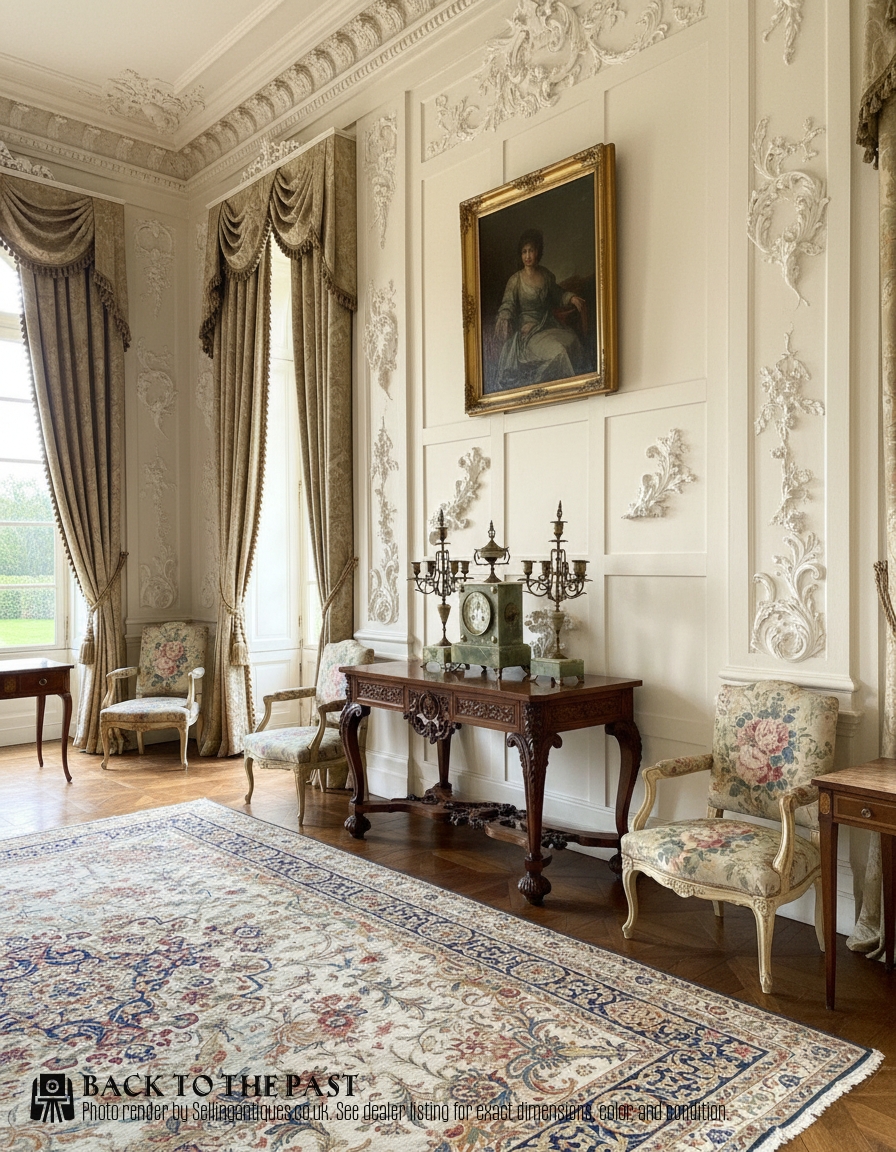
Antique Clock Garniture Set
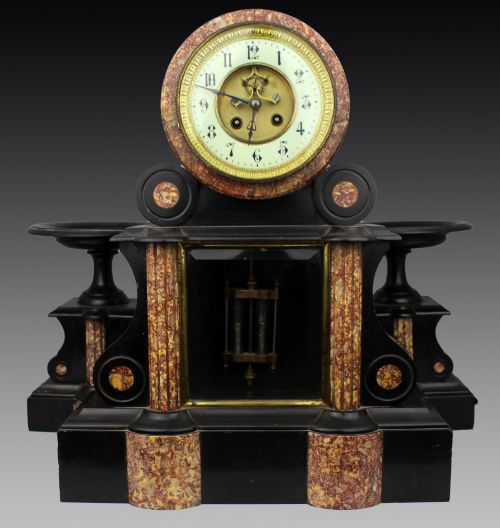
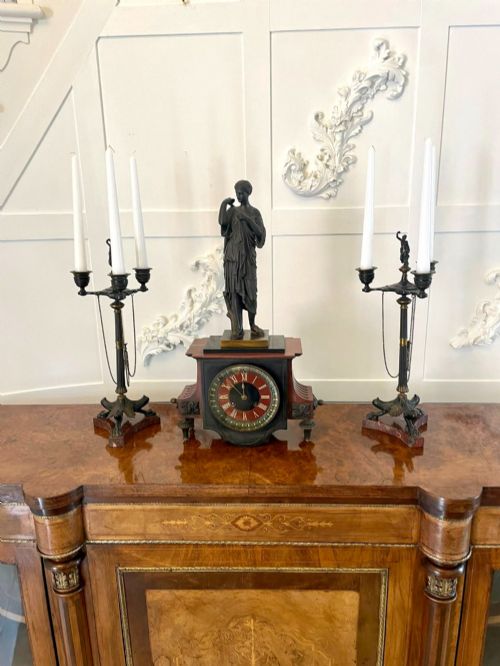
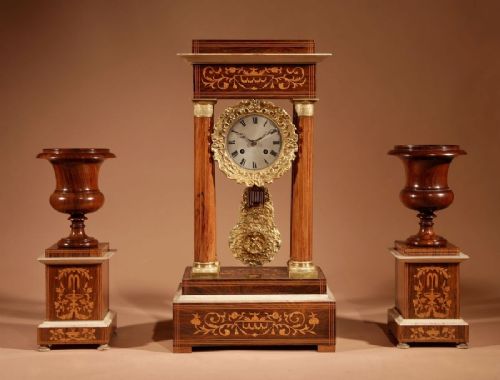
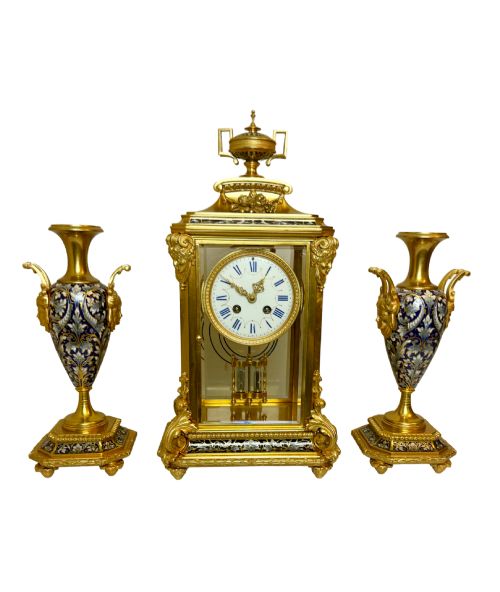
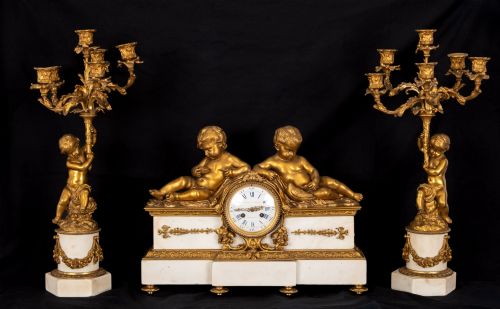
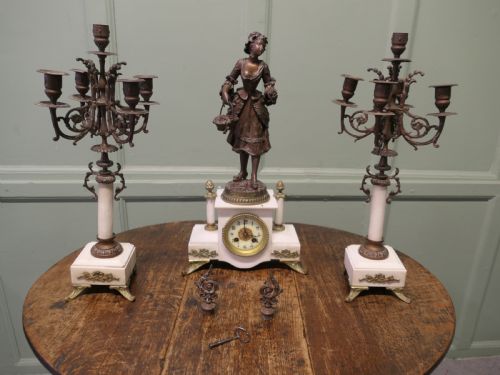
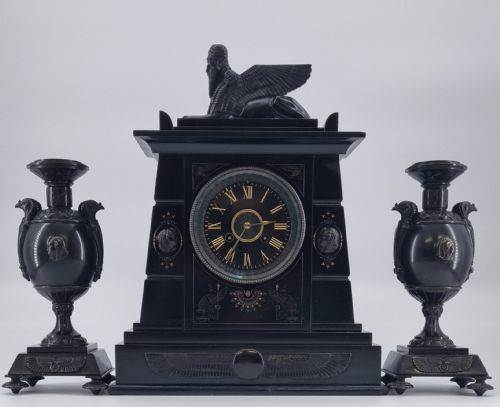
An antique clock garniture set consists of a central mantel clock paired with matching side pieces such as candelabra, urns, or vases designed to display together on a mantelpiece or shelf. The pieces on this page are predominantly French in origin, dating from the nineteenth century through the Art Deco period, incorporating styles like Louis XVI Revival and French Empire.
The most common configurations feature a central clock flanked by two matching side garnitures, often utilising stones like black or white marble alongside metals. These groupings provide a complete decorative scheme conceived as a unified whole by the maker rather than assembled from disparate items over time.

How they were made
Maker workshops combined cast metals such as gilt bronze, ormolu, and brass with natural materials like marble, onyx, and porcelain to build these multi-piece ensembles. Metal components were cast, chased, and gilded, while marble bases were cut, turned, and polished to support the weight of the clock movements and side ornaments.
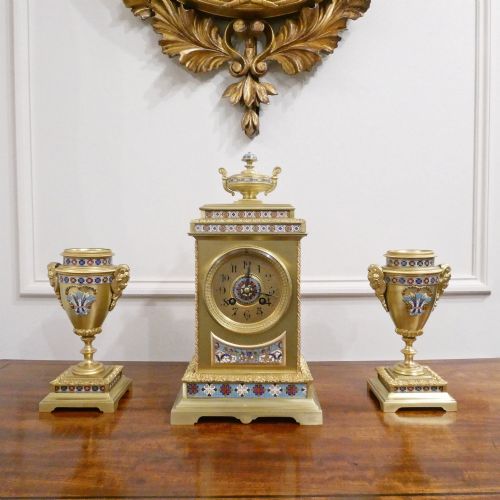
Dial faces frequently utilised white enamel with painted numerals, protected behind glass doors or bezels, while movements were housed within stone or metal architectural cases. Champlevé enamel and hand-painted porcelain panels added colour and intricate detail to the metal and ceramic surfaces.
Antique Clock Garniture Set Retail Price Guide 2026
Typical asking prices for clock garniture set among the pieces listed under this phrase on Sellingantiques today, from the lower quarter to the upper quarter. They describe what is for sale here now, not the wider market.
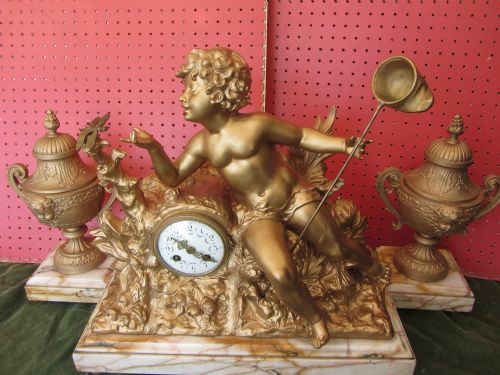
Many sets include mischievous bronze cherubs leaning casually against marble columns, seemingly unconcerned with the passage of time.
What varies in quality
The sophistication of the metal chasing and the depth of the gilding separate standard sets from exceptional examples produced by prominent makers. Crisp casting details on figural bronzes, cherubs, and floral mounts indicate superior craftsmanship compared to softer, more generalized surface work.
The selection and preparation of the materials also dictate the tier of the piece, with dense, finely veined marbles and unblemished porcelain panels marking out the finer end of the range. Complete sets that retain their original matching side garnitures and glass domes command greater attention than assembled or incomplete groupings.
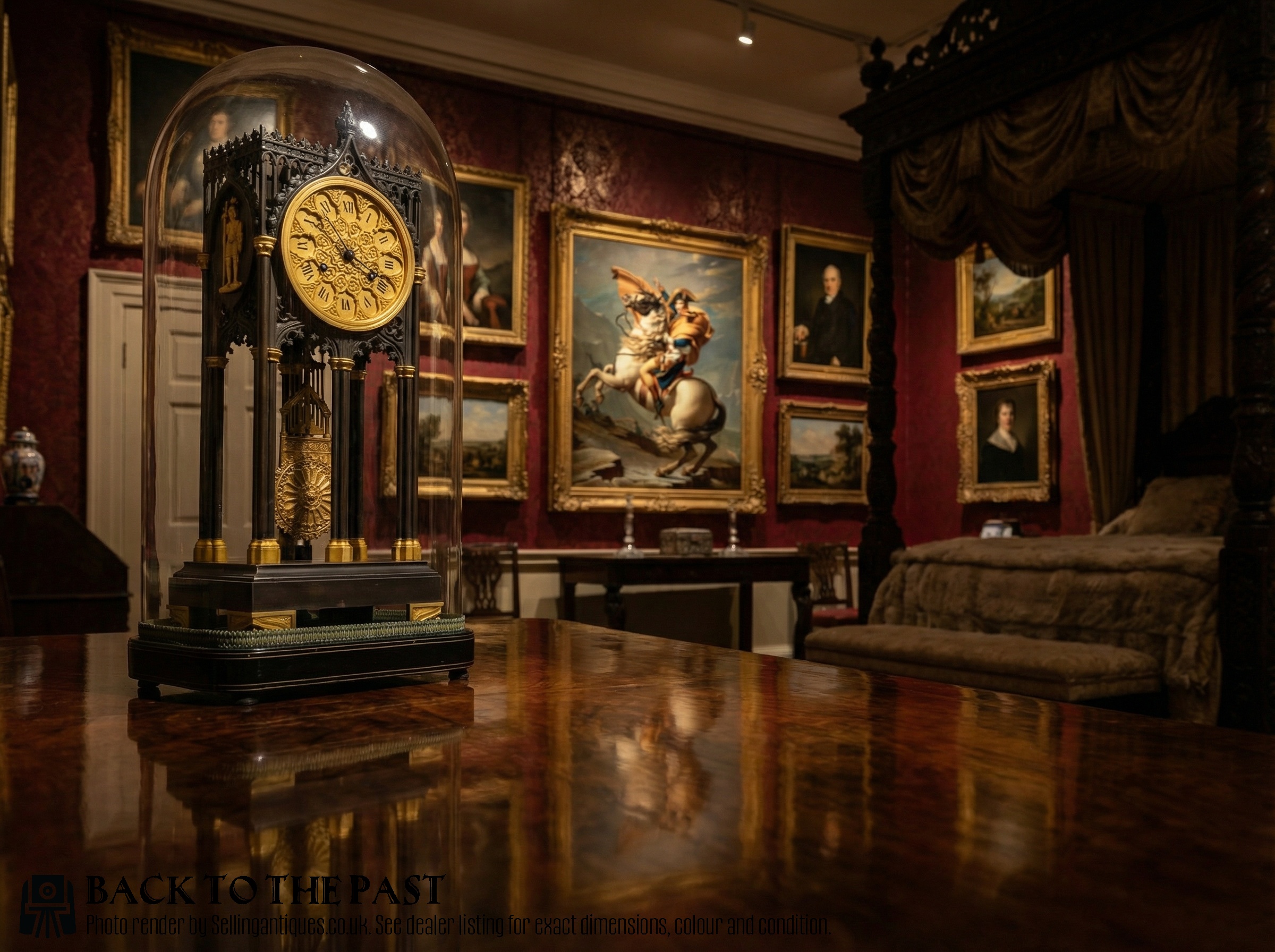
Japy Frères·Samuel Marti·Henry Dasson
The Antique Clock Garniture Set Glossary
- Garniture
- A set of matching decorative objects designed to be displayed together, typically consisting of a central clock and two side pieces. These arrangements were popular in nineteenth-century interiors for creating balanced mantel displays.
- Ormolu
- Finely ground high-carat gold-mercury amalgam applied to a bronze object. This historic gilding technique gives the metal a distinctive warm, rich lustre.
- Champlevé
- An enamelling technique where troughs or cells are hollowed out of a metal surface and filled with vitreous enamel before firing. It frequently appears on nineteenth-century clock cases and garnitures.
- Candelabra
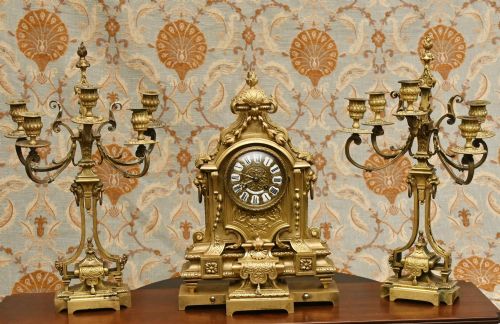
- Branched candlestick holders used as side pieces in a garniture set. They match the style and materials of the central clock to unify the display.
- Portico clock
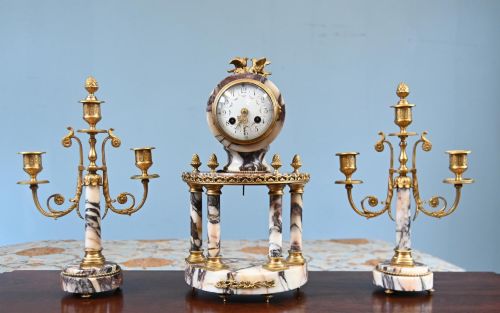
- A distinct architectural clock style featuring a flat entablature supported by columns, often included within garniture groupings. The movement sits suspended within the classical frame.
Antique Clock Garniture Set: Frequently Asked Questions
What is an antique clock garniture set?
An antique clock garniture set is a matched group of decorative objects designed for a mantelpiece, consisting of a central clock and two matching side pieces such as urns or candelabra.
These sets were manufactured primarily in France during the nineteenth and early twentieth centuries to provide a unified decorative arrangement for formal rooms.
How were garniture sets used?
They were placed centrally on mantelpieces above fireplaces, accompanied by their matching side pieces arranged symmetrically on either side.
Beyond telling time, they served as status symbols and decorative centerpieces that reflected the aesthetic tastes of Victorian and continental interiors.
How do I care for marble and bronze?
Clean marble surfaces gently with a soft, dry cloth and avoid using harsh chemical cleaners that can etch the polished stone or damage historic finishes.
Bronze and ormolu should be dusted carefully with a soft brush, taking care not to rub or compromise the original gilding on the metal.
How can I tell periods apart?
Earlier nineteenth-century pieces often reflect heavy classical influences like French Empire or Louis XVI Revival, utilising gilt bronze and detailed cherub motifs.
Later pieces from the twentieth century transition into cleaner geometric lines and streamlined forms characteristic of the Art Deco period.