




Antique Clear Glass Stand
An antique clear glass stand brings period sparkle to a table, offering raised display for sweets, condiments or small dishes.
Antique Clear Glass Stand
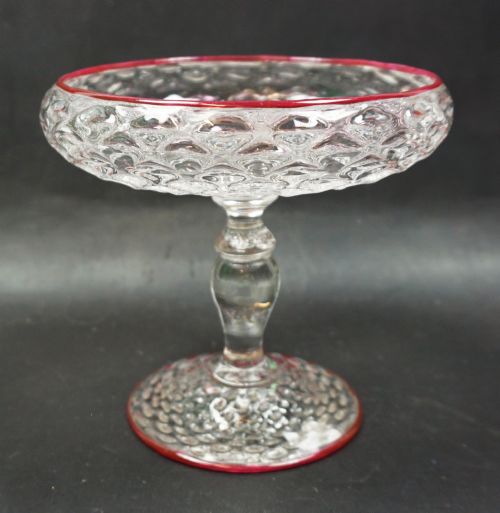
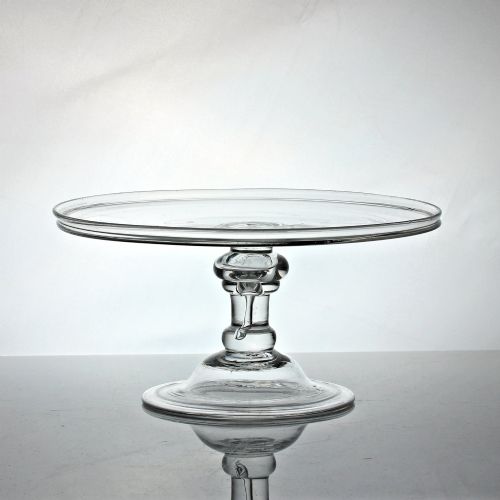
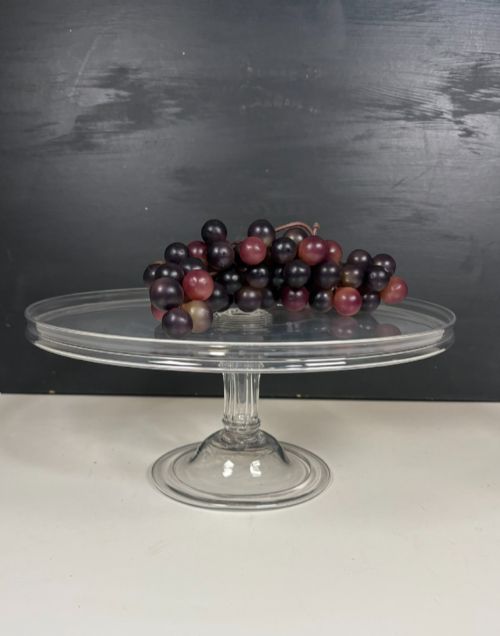
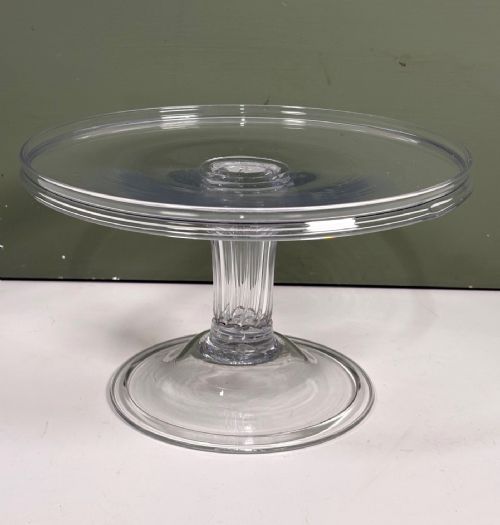
When you search for an antique clear glass stand, you encounter elevated tableware designed to showcase sweetmeats, fruit, small patches or condiments. These pieces lift items above the table surface, adding height and dimension to a dining arrangement or side table.
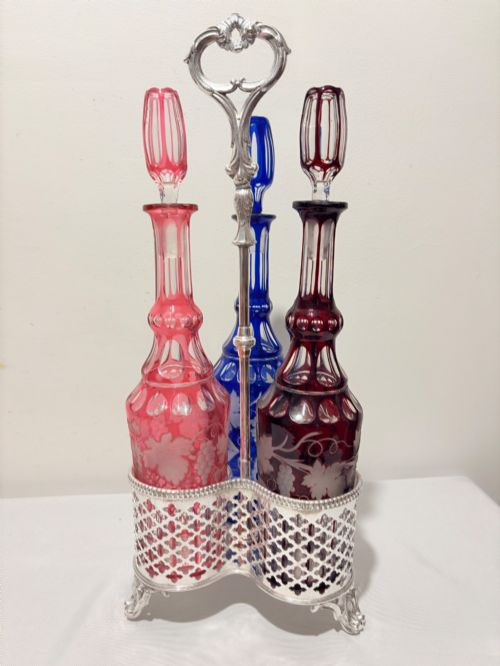
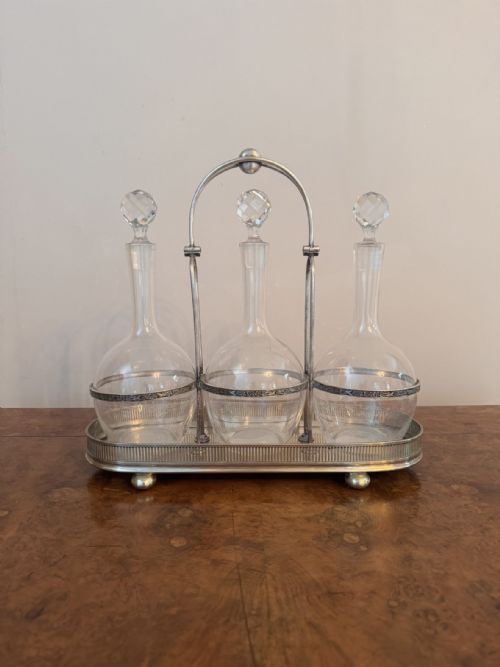
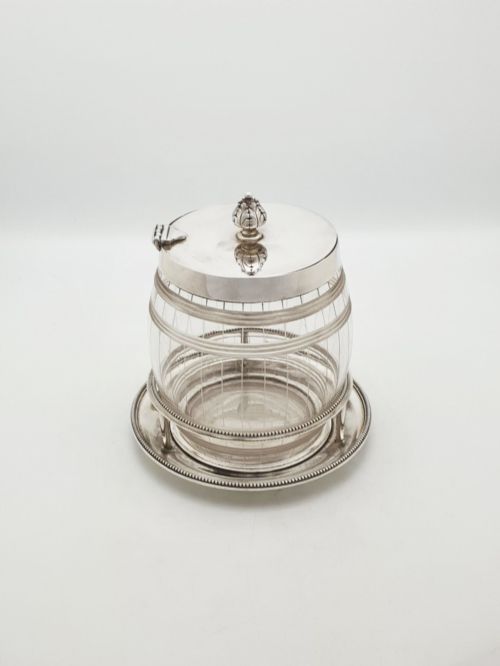
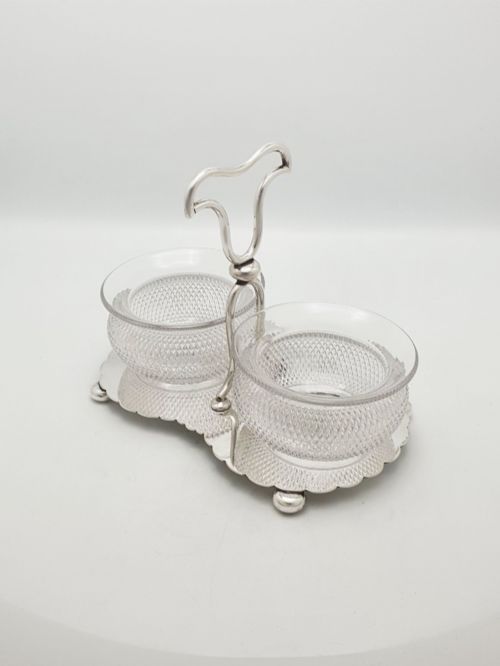
The selection frequently includes tazzas on central stems, small patch stands from the Georgian era, and multi-piece cruet sets or decanter frames combining clear glass bowls with silver-plated or sterling silver holders.
Originating across the eighteenth, nineteenth and early twentieth centuries, these objects span Georgian baluster forms, Victorian cut-glass vessels, and Edwardian or Art Deco assemblies. The clear glass ranges from simple lead-free metal to heavy lead crystal with intricate moulding.
Materials and construction methods
Makers utilised lead glass and crystal alongside clear glass, shaping vessels through blowing, mould-blowing or pressing. Honeycomb moulding, rib-moulding and deep wheel-cutting create the refractive patterns seen across the pieces.
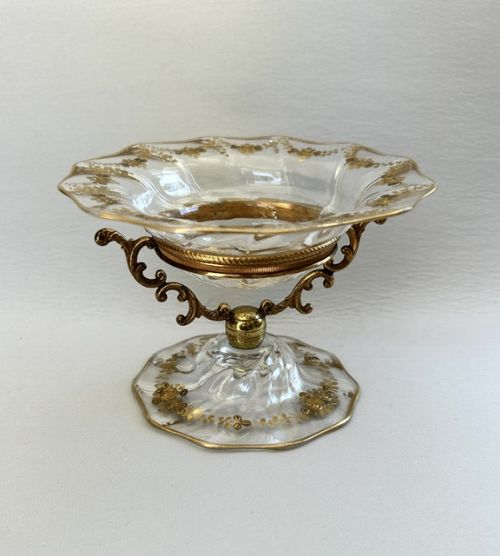
Metal components involve silver plate, sterling silver, ormolu and gilded bronze, providing sturdy frames, mounts or handles for the glass bowls and bottles. Stands often combine folded or domed feet with knopped stems to support the weight of the glass.
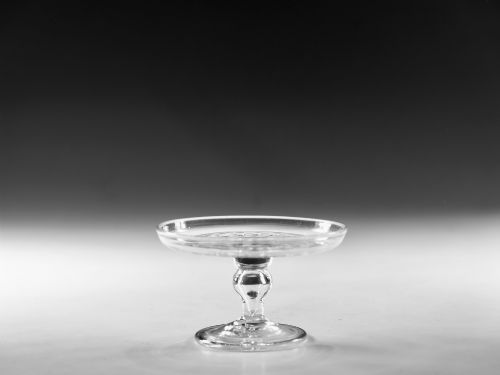
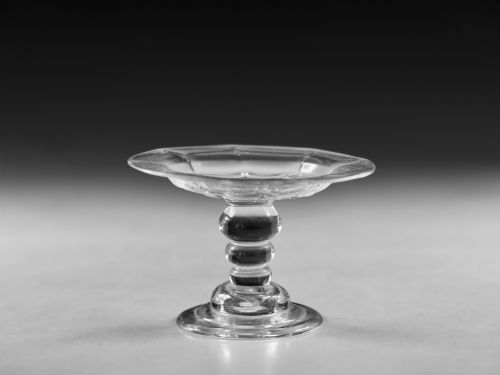
Georgian gentlemen and ladies used tiny glass stands to hold cosmetic face patches, turning courtly vanity into miniature glassware artistry.
Judging quality and craftsmanship
The clarity and weight of the glass dictate the primary division in quality, with heavy lead crystal displaying superior refractive brilliance compared to lighter metal glasses. Crispness in the cutting and moulding separates standard production from finer workshop execution.
The integration between the glass component and its metal stand indicates the level of care in manufacture. Original matching parts, secure mountings, and well-balanced proportions on baluster stems or terraced feet elevate the standing of an individual piece.
Elkington·Walker & Hall·WMF
The Antique Clear Glass Stand Glossary
- Tazza
- A shallow bowl or plate raised upon a central foot or stem. These pieces function as display vessels for fruit or sweetmeats.
- Patch stand
- A small, elevated dish used during the eighteenth century to hold cosmetic patches. They often feature terraced feet and multi-knop stems.
- Lead crystal
- Glass containing a proportion of lead oxide, which increases weight, clarity and light refraction. This material allows for deeper, sharper cutting.
- Cruet set
- A collection of glass bottles or jars held within a dedicated frame for vinegar, oil or condiments. They frequently pair clear glass with silver-plated stands.
- Baluster stem
- A turned stem shape resembling an architectural baluster, common in eighteenth-century drinking vessels and small stands.
Antique Clear Glass Stand: Frequently Asked Questions
How do I date an old glass tazza?
Dating relies on observing form, manufacturing techniques and foot construction. Early eighteenth-century examples often feature folded feet and heavy baluster stems, while later Victorian pieces show heavier machine cutting or mould marks.
Examining the pontil mark on the underside provides further clues. A polished pontil typically indicates a later nineteenth or twentieth-century date, whereas a rough, snapped pontil points to earlier Georgian production.
What were small patch stands used for?
Miniature glass patch stands held small adhesive silk patches worn on the face during the Georgian period. These decorative patches concealed blemishes or smallpox scars.
Because of their diminutive size and fragile nature, surviving examples from the seventeen-forties remain scarce. Collectors prize them for their delicate baluster stems and terraced feet.
How do I clean antique clear glass?
Cleaning antique glass requires lukewarm water and mild soap, avoiding harsh scrubbing or sudden temperature changes. Delicate pieces with cut facets or moulded patterns benefit from soft bottle brushes.
Metal stands and silver-plated mounts demand separate care to prevent moisture damage to the glass fittings. Proper drying prevents water spots from dulling the clear surface.
Are silver-plated stands original to the glass?
Many frames and stands were manufactured as complete ensembles by silversmiths and metalworkers. Matching hallmarks or fitted grooves in the metal indicate a deliberate pairing.
Over the decades, individual bowls or bottles occasionally broke and were replaced. Inspecting the fit inside the frame helps determine whether the glass and stand belong together.