

Antique Classical Landscape Art
Antique classical landscape art brings mythological scenes, architectural ruins, and pastoral idylls into your interior from centuries past.
Antique Classical Landscape Art
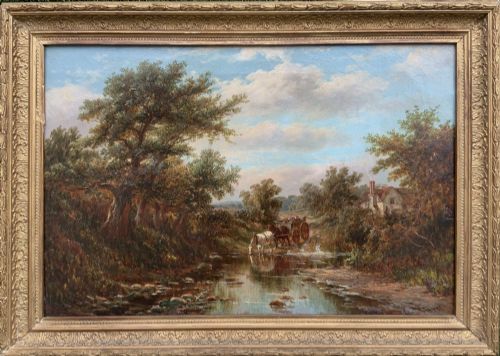
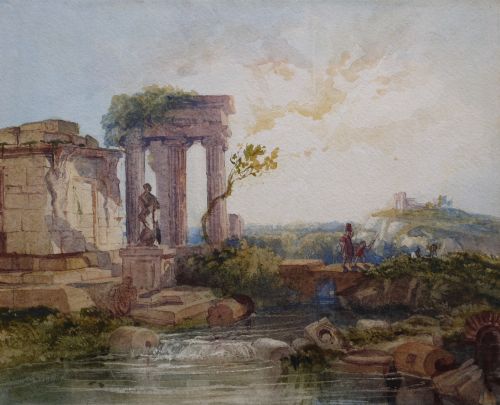
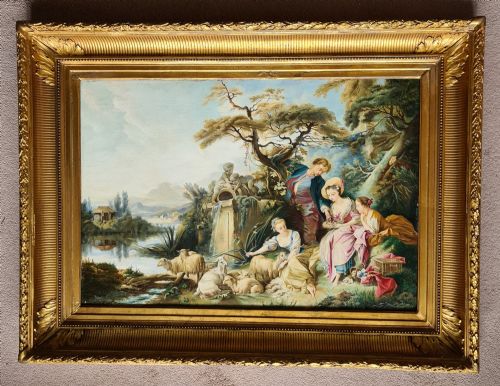
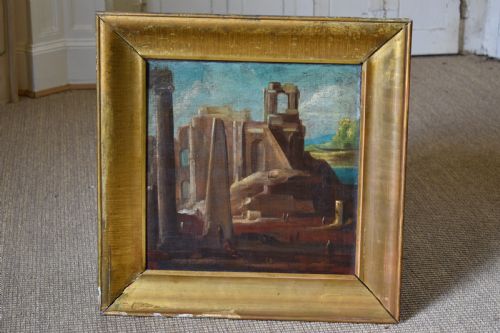
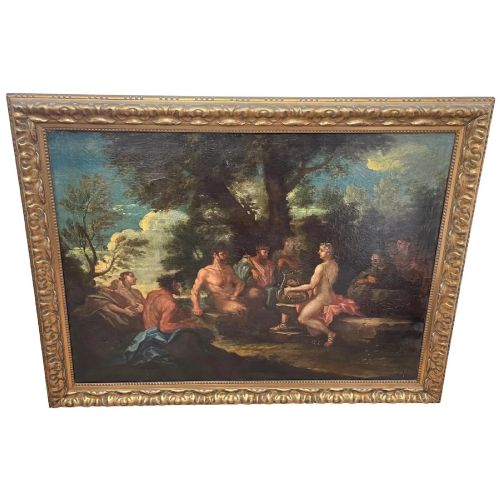
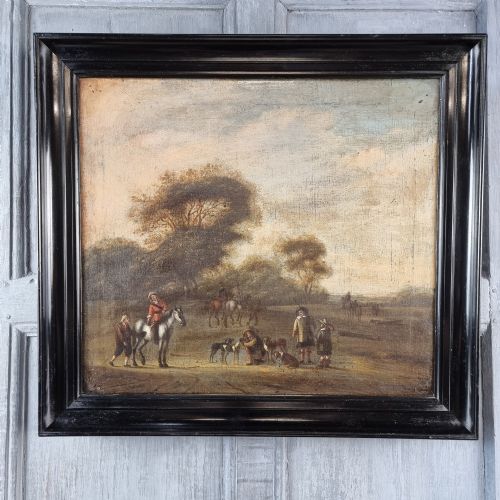
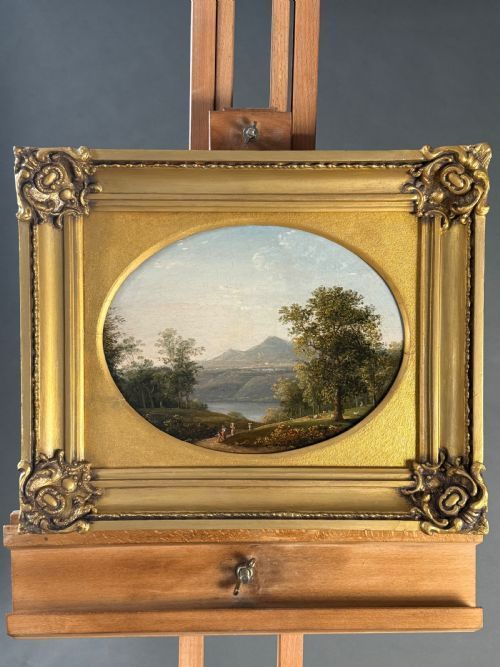
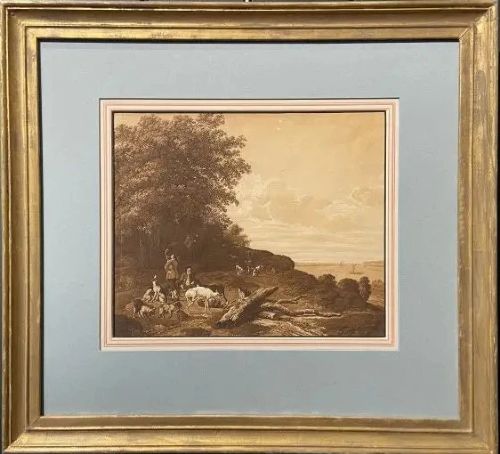
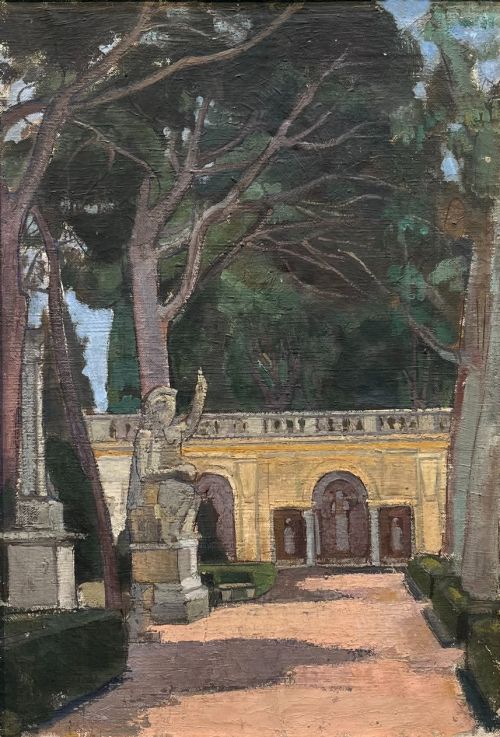
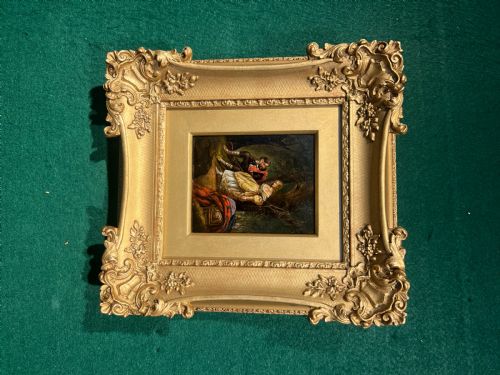
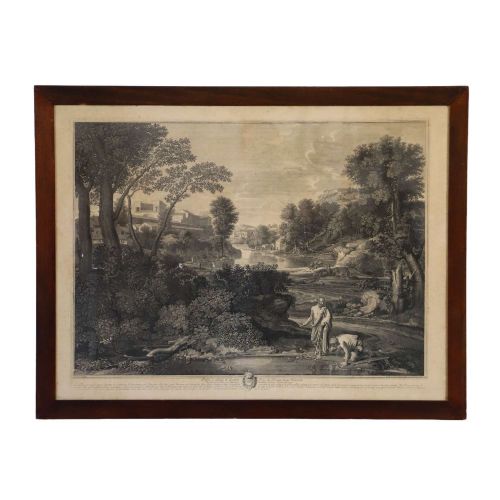
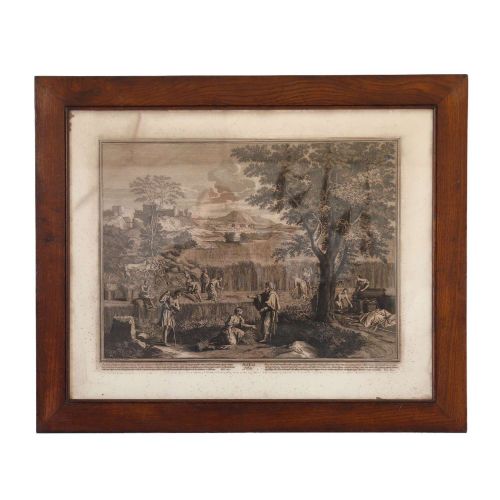
When you search for antique classical landscape art, you encounter oil paintings, watercolours, engravings, and tapestries depicting idealised views often centered around ancient ruins and pastoral settings. The examples on this page span several centuries, with a strong representation of seventeenth-century Dutch and Italianate compositions alongside eighteenth-century Grand Tour works.
These pieces frequently incorporate mythological or biblical figures placed within expansive natural backdrops, castle ruins, and Italianate coastal views. Works range from intimate watercolours on paper to large oil paintings on canvas and expansive Flemish tapestries framed in period wood and gesso.
Materials and Construction
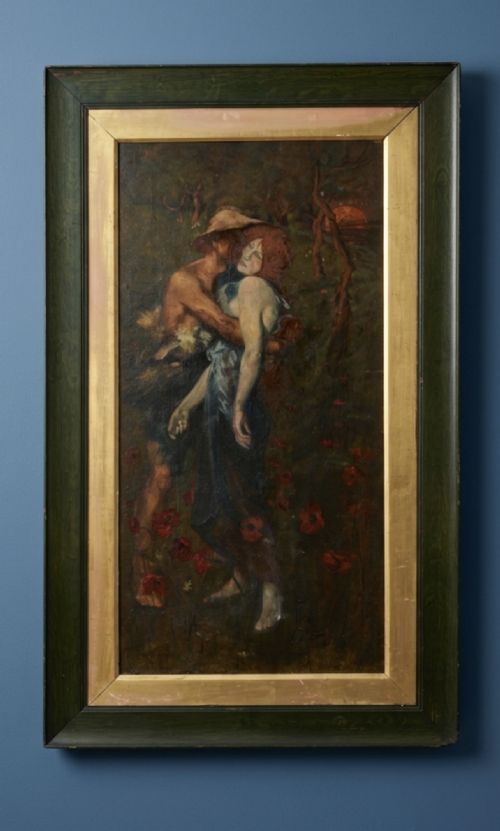
The works rely upon traditional mediums such as oil on canvas, watercolour on paper, and ink within period engravings, supported by wooden stretchers and paper supports. Many canvases and panels are housed within their original or period-appropriate giltwood and gesso frames, which utilise gold leaf finishes.
Tapestries employ woven textile techniques utilising fine threads to create large-scale wall panels depicting verdant landscapes and biblical scenes. Prints and engravings utilise pressed paper formats, often preserving early framing methods.
Several canvases manage to squeeze sprawling Roman ruins, grazing sheep, and a reclining deity into a surprisingly modest patch of wall.
Evaluating the Works
Quality in these pieces rests upon the finesse of the brushwork, the depth of the composition, and the fidelity of the perspective within the architectural elements and natural scenery. Works by identified circles or established masters display greater anatomical precision in figures and more atmospheric lighting effects across skies and ruin sites.
The condition of the primary surface, whether canvas, paper, or textile, combined with the integrity of the original or period giltwood frame, influences the standing of the piece. Finer examples retain their original pigments and structural mountings without extensive overpainting or later alterations.
Richard Principal Leitch·Angelo Maria Crivelli·Francois Boucher·Jacob Philipp Hackert·Johannes Lingelbach·Étienne Baudet·Jan Miel·John Ferneley Senior·Carl Johan Fahlcrantz·Cornelis Van Poelenburgh·Thomas Edward Roberts·John Hamilton Mortimer·Jean-Baptiste Joseph Pater·Giovanni Paolo Panini·Claude Lorrain
The Antique Classical Landscape Art Glossary
- Grand Tour
- A traditional trip through Europe undertaken by upper-class young men in the eighteenth and nineteenth centuries to absorb classical art and culture. Paintings from this context frequently feature Italian ruins and pastoral vistas.
- Neoclassical
- A Western cultural movement drawing inspiration from the art and culture of classical antiquity. In these landscapes, it manifests through strict architectural forms and balanced compositions.
- Giltwood
- Wood that has been treated with a thin layer of gold leaf or gilt paint. This finish is typical of period frames housing seventeenth and eighteenth-century canvases.
- Verdure tapestry
- A type of woven wall hanging featuring plant motifs, foliage, and landscape elements as the primary subject matter. These often incorporate pastoral views and architectural hints.
- Gesso
- A paint mixture consisting of a white pigment combined with a binder used to prepare wood or canvas surfaces. It forms the base for the intricate gilding found on many antique frames.
Antique Classical Landscape Art: Frequently Asked Questions
What is classical landscape art?
Classical landscape art depicts idealised scenery, typically featuring ancient architectural ruins, mythological figures, and balanced natural compositions inspired by antiquity.
These works draw heavily on the aesthetic traditions of seventeenth-century masters and the subsequent Grand Tour enthusiasm across Europe.
How do I date an oil painting?
Dating involves examining the canvas weave, the composition style, the stretcher construction, and the type of pigments used by the artist.
Period frames also offer valuable clues, as original giltwood and gesso housings frequently correspond to the era in which the artwork was created.
Where were these paintings displayed?
Historically, these artworks hung in country houses, formal reception rooms, and galleries as expressions of classical education and cultural refinement.
Owners typically positioned large oils and tapestries as focal points above mantelpieces or along panelled walls.
How should I care for a tapestry?
Tapestries require protection from direct sunlight to prevent the fading of natural dyes within the wool and silk threads.
Hanging them away from damp walls and dusting them gently with a soft brush helps preserve the textile fibres over time.