





English Landscape Panel Painting
An english landscape panel painting captures rural scenery on a rigid wooden support, offering tactile brushwork and historic charm.
English Landscape Panel Painting
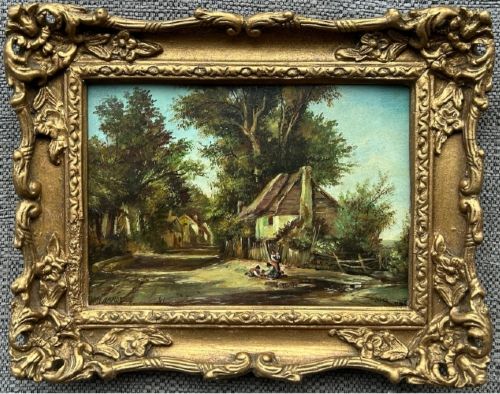
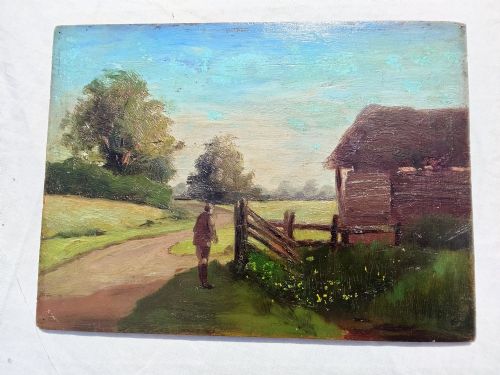
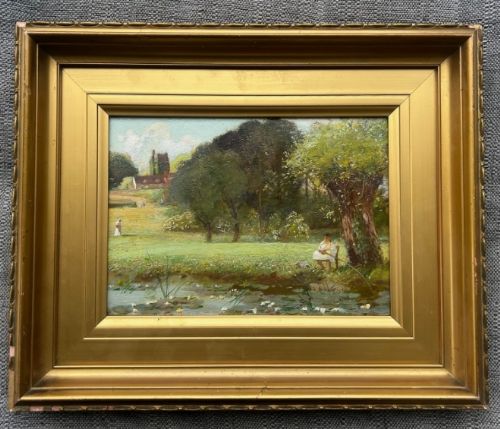
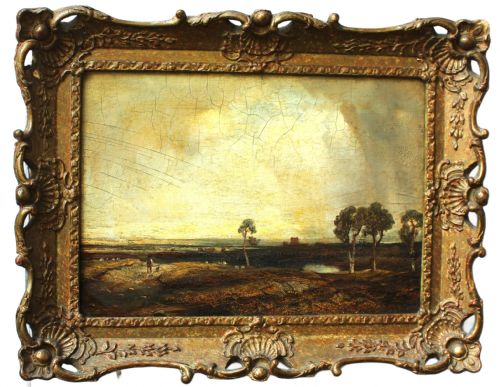
An english landscape panel painting presents rural scenery, rivers, mills, and cottages captured directly onto solid wooden supports. These works range from late eighteenth-century topographical views to early twentieth-century impressionistic studies.
Most examples encountered here originate from the nineteenth and early twentieth centuries, created by regional artists or provincial schools. Alongside standard framed artworks, the selection includes topographical ceramics such as painted porcelain mugs depicting specific countryside locations.
How they were made
Artists painted primarily with oil paint applied to prepared wooden boards, oak panels, mahogany surfaces, or canvas. These rigid supports provided a stable foundation for detailed brushwork and varied impasto textures.
Framing often involved traditional materials such as giltwood, gesso, or burr walnut style mouldings that complemented the period aesthetic of the artwork.
A border collie, a pet kid, and hunting hounds occasionally interrupt the scenery to supervise the countryside.
What varies in quality
Quality depends upon the confidence of the brushwork, the atmospheric depth of the scenery, and the sensitivity with which light is handled across the sky and terrain. Stronger compositions demonstrate a purposeful control of perspective and tonal harmony rather than mechanical execution.
The choice of support and the preservation of the original paint surface influence desirability. Panels retaining distinct topographical details or documented local provenance stand apart from generic provincial studies.
William Howard Hardy·Florence Adelina Hess·Hubert Wellington·Sir David Murray·John Gilbey Bowles·Kershaw Schofield·George Lambert·William Greaves·Owen Bowen·Arthur W Newsholme·John Smith Atherton·Benjamin Barker of Bath·George Vicat Cole·William E Tindall·Paul Fordyce Maitland·William Manners·B J Dawson·John Constable·Margaret Fisher Prout·Edmund Bristow·Ada Stone·Patrick Nasmyth·Sam Bough·Julius Caesar Ibbotson·Alfred Steinacker
The English Landscape Panel Painting Glossary
- Panel painting
- A painting executed on a rigid flat surface such as wood, board, or oak rather than flexible canvas. This traditional method offers a smooth, stable ground for detailed pigments.
- Impasto
- Paint applied thickly to a surface, leaving visible brush or palette knife marks that stand out in relief. This technique adds tactile dimension and texture to foliage, water, or clouds.
- Naïve art
- Artwork produced by self-taught creators characterised by a simplified perspective and direct charm. These pieces prioritize narrative clarity and honest observation over academic rules.
- English School
- A loose designation for artists trained or working within Britain, sharing stylistic traditions across portraiture, landscape, and genre subjects. It encompasses both major academy figures and regional painters.
English Landscape Panel Painting: Frequently Asked Questions
What defines an english landscape panel painting?
These works depict rural British scenery executed directly onto wooden boards or panels rather than woven canvas.
They span centuries of changing artistic styles from topographical recording to impressionistic interpretations.
How should I display a panel painting?
Panel paintings require stable indoor humidity to prevent the wood support from warping or cracking over time.
Keep them away from direct heat sources and strong sunlight to protect the historic oil pigments.
How can I tell the period of a piece?
Dating relies upon examining the type of wood preparation, framing style, costume details, and written inscriptions on the reverse.
Many works include artist signatures, titles, or old labels that help pinpoint their exact era of creation.
Why use wood instead of canvas?
Wooden boards offered artists a rigid, durable surface that resisted sagging and required minimal preparation.
This tradition remained popular among plein-air painters who valued portability and stability while working outdoors.