
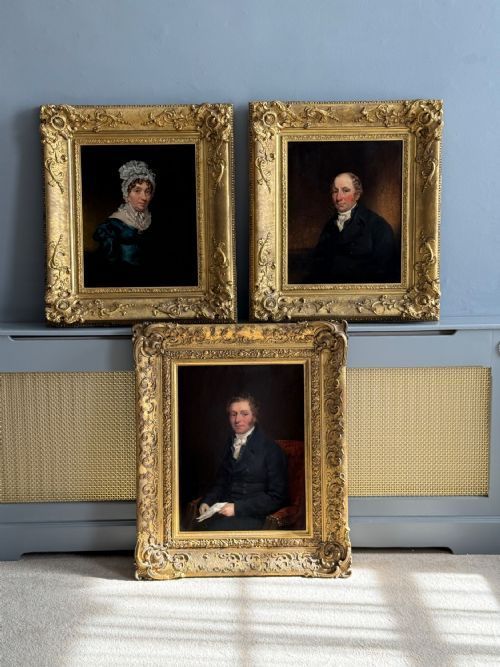
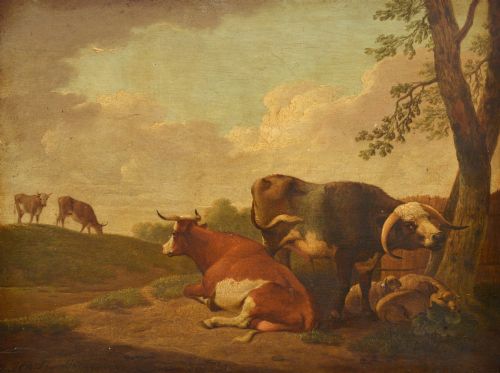
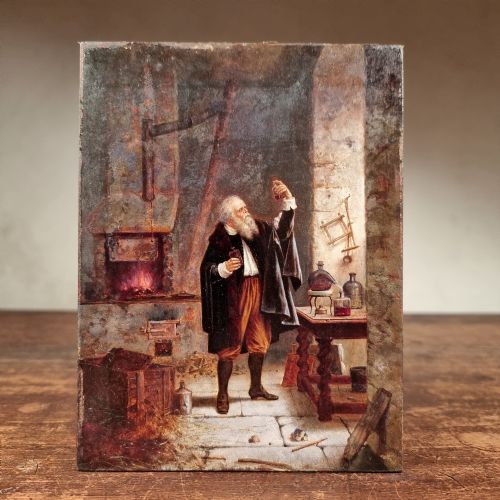
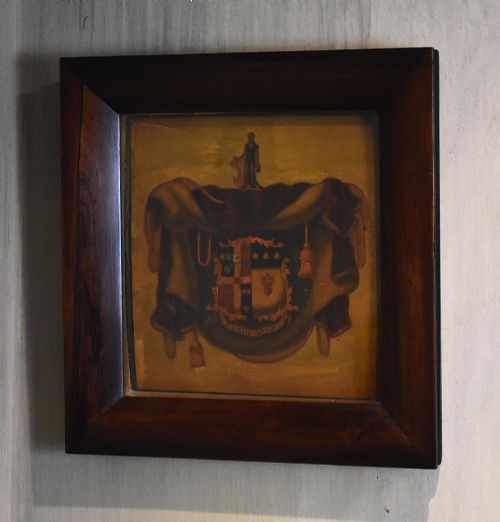





Georgian Oil on Panel
Georgian oil on panel works are historic paintings executed on sturdy wooden boards, prized by collectors for their rich surface texture and intimate domestic scale.
Georgian Oil on Panel
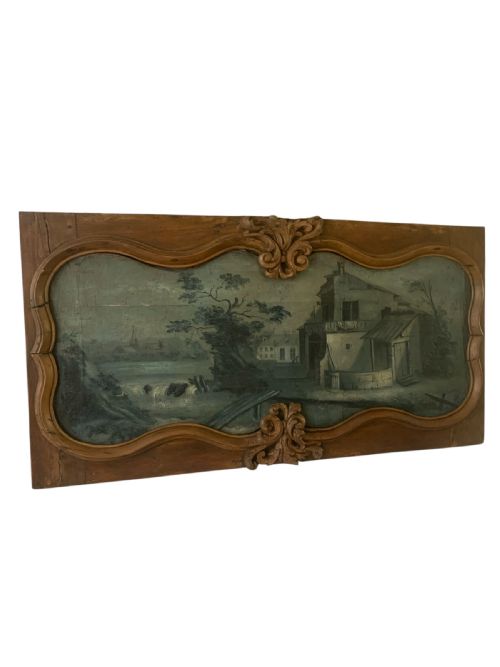
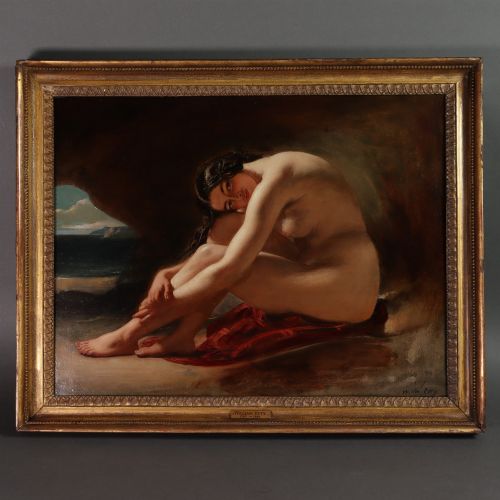
When you search for georgian oil on panel, you encounter a diverse selection of artworks ranging from intimate portraits and landscapes to architectural coaching panels and still lifes. These works span the eighteenth and nineteenth centuries, capturing everything from elite portraiture to charming folk art and naive topographical scenes.
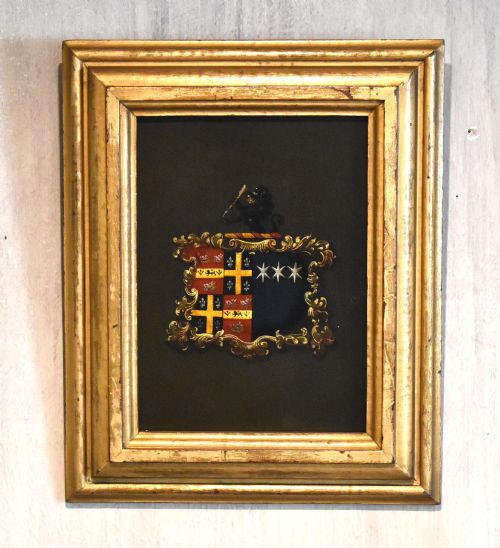
You are most likely to meet small-scale portraits and pastoral landscapes on wood supports, often reflecting the domestic tastes and decorative traditions of British and European schools. The selection includes specific genres such as heraldic carriage panels, architectural overdoors, and detailed sporting scenes executed on solid timber boards.
How they were made
Artists painted these works primarily using traditional oil paint applied to wooden supports, including oak, pine, and specialised board or panel preparations. Some works utilise canvas laid onto wood panel or copper supports, combining durable grounds with rich pigment layers.
Finishing touches frequently involved giltwood frames and gold leaf accents to enhance the display and protect the edges of the rigid support. The stability of the wooden panel allowed for fine brushwork and smooth glazing techniques characteristic of the period.
Several panels double as historic transport decoration, having once adorned the doors of horse-drawn carriages before entering the art market.
What varies in quality
Quality in these panel paintings depends heavily upon the confidence of the brushwork and the anatomical or perspective accuracy achieved by the artist. Master works display subtle tonal gradations and expressive character, whereas naive or provincial pieces rely on charming simplicity and bold outlines.
The choice and preparation of the wood support also influence the enduring stability of the paint layer. Panels that retain their original frames and show minimal warping command greater appreciation among collectors seeking untouched historic condition.
Joseph Clover RA·Hendrik Willem Schweickhardt·W Williams Pinxit·George Lambert·Balthasar Denner·Sir Thomas Lawrence·Francesco Renaldi·Stephen Taylor·George Clint·James Ward
The Georgian Oil on Panel Glossary
- Oil on panel
- A painting executed with pigment suspended in drying oil directly onto a rigid wooden support rather than flexible canvas.
- Giltwood
- Wood that has been coated with a thin layer of gold leaf or gilt powder, commonly seen on period framing.
- Naive art
- Artwork created by a self-taught artist, characterised by a rejection of strict academic perspective and proportion in favour of expressive directness.
- Overdoor
- A decorative painting designed to be installed permanently above a doorway within an architectural interior.
Georgian Oil on Panel: Frequently Asked Questions
How should I clean a panel painting?
Dust the surface gently with a soft, dry brush and avoid applying any moisture or cleaning solutions directly to the paint layer. Professional conservation is recommended for any deeper cleaning or removal of discoloured varnish.
Keep the painting away from direct sunlight and areas prone to rapid humidity changes to protect the underlying wood from warping or cracking.
Are these paintings always framed?
Many works retain their period giltwood or wood frames, which complement the age and style of the artwork. Some pieces are sold unframed, allowing you to select a display option that suits your interior.
Original frames often contribute historical context, though later framing is common for works that survived centuries of domestic use.
How can I tell the age of the wood?
Examination of the panel's reverse, tool marks, and grain pattern helps experts determine the approximate period and method of timber preparation. Oak and pine panels often exhibit characteristics typical of eighteenth-century carpentry.
Associated signatures, exhibition labels, or historical attribution provide further clues to date the painting accurately alongside stylistic analysis.
Where were these panels displayed originally?
Smaller portraits and landscapes were typically hung in domestic parlours, studies, and drawing rooms of Georgian homes. Larger decorative elements like coaching panels and overdoors served specific architectural or transport functions.
Their versatile size made them ideal for intimate viewing spaces as well as grand country houses.