
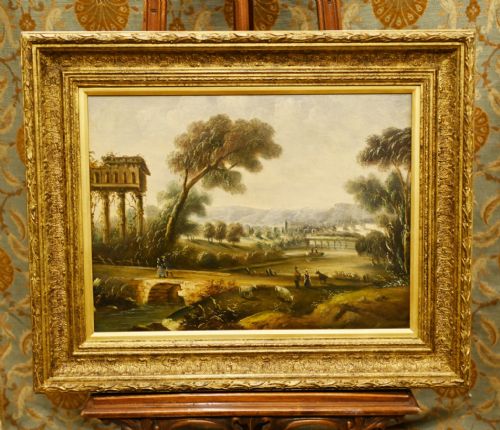


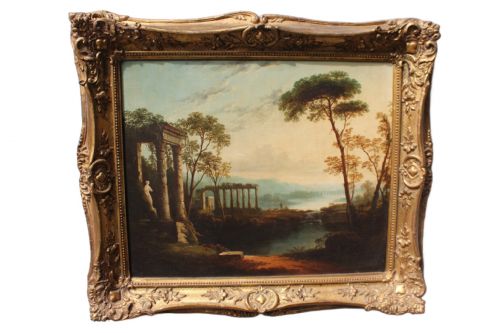


Classical Ruins Landscape Artwork
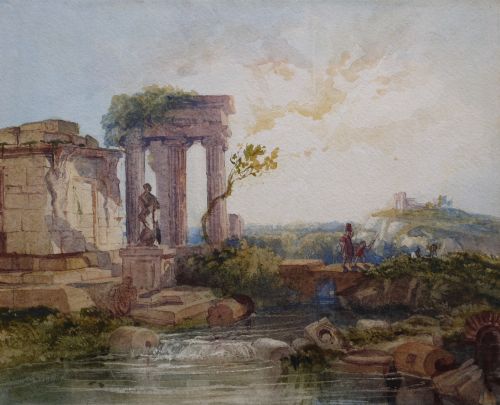
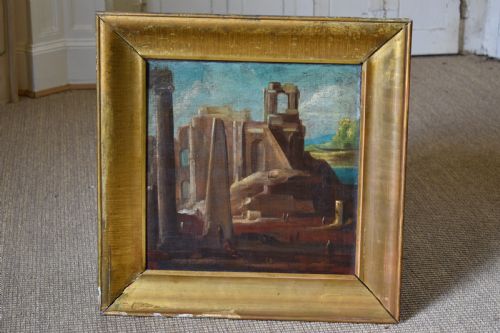
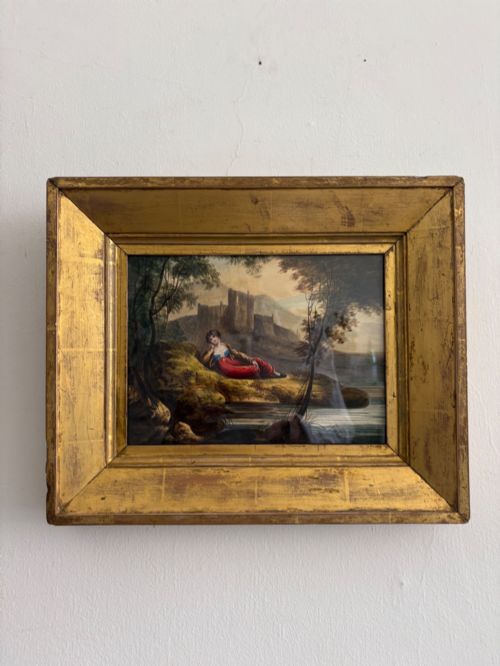
These classical ruins landscape artwork pieces capture ancient monuments and picturesque remnants in oil and watercolour.
Classical Ruins Landscape Artwork
When you search for classical ruins landscape artwork, you encounter depictions of ancient architecture, temples, and arches set within pastoral or Italianate scenes. These works reflect a fascination with antiquity, often recorded by artists travelling through Italy on the Grand Tour during the eighteenth and nineteenth centuries.
The selections available here span several centuries, featuring oil on canvas, watercolours, and gouache alongside framed prints. You are most likely to meet nineteenth-century watercolours and oils depicting Roman sites such as the Forum, the Colosseum, and the Campagna.
Subjects range from imaginary capriccio compositions combining different monuments to accurate topographical watercolours of specific sites in Rome, Tivoli, and Pompeii. Works appear in various formats, including single framed paintings, pairs, and larger sets of architectural scenes.
What varies in quality
The distinction between works rests upon the precision of the architectural draughtsmanship and the atmospheric depth of the surrounding landscape. Finer pieces demonstrate a confident handling of light and shadow, particularly in the rendering of crumbling masonry and distant skies.
Provenance and attribution elevate certain works, especially those signed by known artists associated with the Grand Tour or executed in the manner of established masters. The preservation of the medium, the clarity of paper or canvas, and the integrity of the period frame contribute significantly to the standing of each piece.
Listings feature works spanning the seventeenth century through to the late nineteenth century, executed in oil, watercolour, gouache, and print.
Richard Principal Leitch·Angelo Maria Crivelli·Franz Knebel·Francesco Zuccarelli·William Crouch
The Classical Ruins Landscape Artwork Glossary
- Grand Tour
- A traditional trip through Europe, particularly Italy, undertaken by upper-class European young men of the eighteenth and nineteenth centuries to study the arts and classical antiquity.
- Capriccio
- An architectural fantasy placing together fictitious and actual buildings, archaeological ruins, and other architectural elements in a fictional compositional landscape.
- Gouache
- An opaque water-based paint consisting of pigment, water, and a binding agent such as gum arabic, frequently used in nineteenth-century Italian landscape painting.
- Campagna
- The countryside surrounding Rome, celebrated by landscape painters for its sweeping vistas, ancient aqueducts, and atmospheric ruins.
- Italianate
- A nineteenth-century style of painting and architecture inspired by the idealized landscape and vernacular buildings of rural Italy.
Classical Ruins Landscape Artwork: Frequently Asked Questions
What is a classical ruins landscape artwork?
These works depict ancient Roman and Greek architectural remnants, temples, and arches placed within picturesque or idealized natural scenery. They capture the romantic appeal of decaying antiquity as witnessed by travellers and artists abroad.
Such pieces range from detailed topographical watercolours of specific monuments to imaginative oil paintings created as souvenirs of European travel.
Where were these paintings created?
Many works were produced in Italy by visiting or resident artists who painted direct views of Roman ruins, the Campagna, and Tivoli. Other pieces were executed in British and European studios by artists working from sketches brought home from the Grand Tour.
English and continental schools both contributed significantly to this genre, producing oils and watercolours for collectors across Europe.
How should I frame and display them?
These works are best displayed away from direct sunlight to protect delicate watercolours, gouaches, and pigments on paper from fading over time. Maintaining stable indoor humidity prevents wood panels and paper supports from warping.
Many pieces retain period gilt or wooden frames that complement the classical subject matter and should be preserved where possible to maintain historical character.
How do I date a classical ruins painting?
Dating relies upon examining the materials, paper types, canvas weave, and the style of the frame alongside any signatures or inscriptions. Costume details of figures included in the landscape also offer clues to the period of execution.
Twentieth-century interpretations often show different handling of pigment and modern stretcher construction compared to eighteenth and nineteenth-century works.