
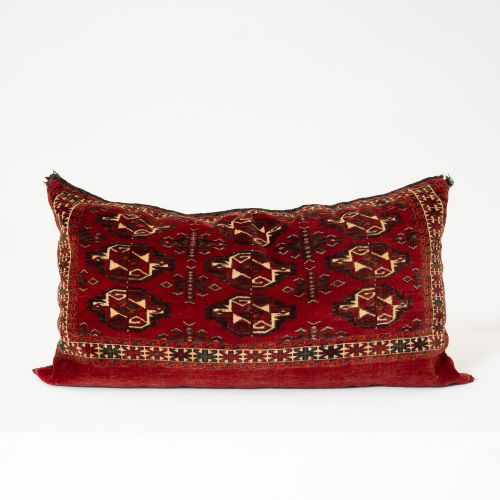
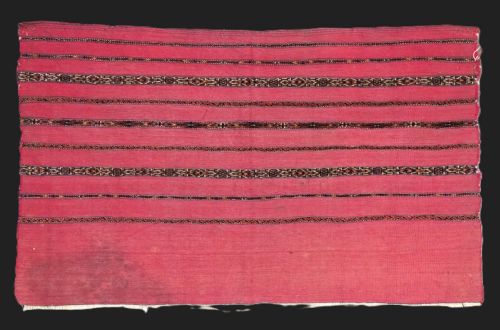


Antique Chuval Textile
When you examine an antique chuval textile, you handle a tribal storage bag face woven by Central Asian nomads from wool and natural dyes.
Antique Chuval Textile
An antique chuval textile represents a large trapping utilised by nomadic groups in Central Asia for domestic storage inside a yurt. These objects were traditionally woven as rectangular bags to hold household goods, bedding, or clothing.
Most examples encountered on this page survive as bag faces rather than complete pouches, though surviving pieces with original plain weave backs or hanging loops occasionally appear. The designs include repetitive primary guls, tree motifs, and banded layouts reflecting specific tribal traditions.
The regional attribution spans Turkmen and Turkoman groups, including Tekke, Ersari, Yomut, Saryk, and Salor weavers. Dating across the inventory extends from the mid-eighteenth century through the nineteenth century and into the early twentieth century.
How they were made
The construction relies primarily on hand-spun wool for the pile and structure, combined with cotton foundations or supporting elements. Weavers built these pieces using dense knotting techniques on vertical or horizontal looms set up in nomadic encampments.
Colour derives from natural dyes applied to the wool, yielding deep red tones often designated as kizil or lighter ivory shades known as ak. The palette draws on botanical and mineral sources available across the Trans-Caspian steppes and the Amu Darya region.
Some nineteenth-century storage bags still retain their original wool hanging loops for yurt attachment.
What varies in quality
The density of the weave dictates the refinement of the pattern, with very fine examples showing crisp execution of complex gul motifs. Knot count and the precise handling of secondary ornaments distinguish standard tribal work from exceptional pieces.
Condition and completeness alter the character of each piece, ranging from fragmentary eighteenth-century survivals to intact bag faces retaining original borders and elem panels. The presence of complete backs or hanging loops also influences how closely a textile maintains its original utility.
The Antique Chuval Textile Glossary
- Chuval
- A large tent storage bag produced by Turkmen and other Central Asian nomadic tribes. These pieces were hung inside a yurt for household organisation.
- Gul
- A primary medallion motif repeated across Turkmen carpets and bag faces. Different tribal groups developed distinct geometric gul variations.
- Elem
- The decorated lower skirt or border panel situated beneath the main field of a chuval. This section often displays floral or tree designs.
- Torba
- A smaller storage bag variant related to the chuval. These pieces served similar domestic functions within nomadic dwellings.
- Kizil
- A descriptive term denoting the deep red colour palette characteristic of certain Turkmen tribal weavings. It translates literally as red.
Antique Chuval Textile: Frequently Asked Questions
What is a chuval textile?
A chuval textile is a tribal storage bag face originating from Central Asian nomadic groups such as the Tekke and Ersari tribes. These woven pieces were traditionally utilised inside yurts for storing household possessions.
Today, they survive primarily as decorative flat textiles or wall hangings. Collectors prize them for their geometric guls and natural dye palettes.
How were chuvals used?
Nomadic families used chuvals as large storage containers for bedding, clothing, and domestic goods inside traditional tents. They were often hung against the lattice walls of the dwelling.
Over time, many bags lost their backs and supporting structures from heavy daily use. The surviving bag faces display the intricate weaving intended to face outward within the tent.
How do I identify tribal designs?
Tribal attribution relies on specific geometric motifs, colour choices, and structural layouts unique to each group. Tekke, Yomut, and Ersari weavers each utilised distinct primary guls and border arrangements.
Examining the secondary ornaments and elem panels provides further clues to tribal origin. Nineteenth-century examples often display the most consistent traditional design markers.
How should I display a chuval?
Many collectors mount these textile bag faces on conservation-grade backing for safe wall display. They work well in spaces where their deep red tones and geometric patterns can be appreciated at eye level.
Protecting the wool from direct sunlight and insect damage helps preserve the natural dyes. Gentle vacuuming through a mesh screen maintains the surface without stressing the cotton and wool foundation.