
Antique Chinoiserie Cupboard
An antique chinoiserie cupboard brings painted oriental scenes and dark lacquer into a room, offering both display and concealed storage.
What these cupboards are
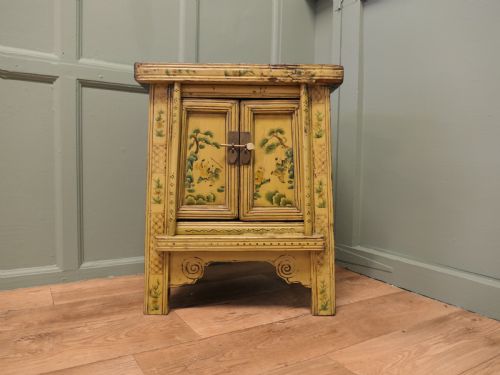
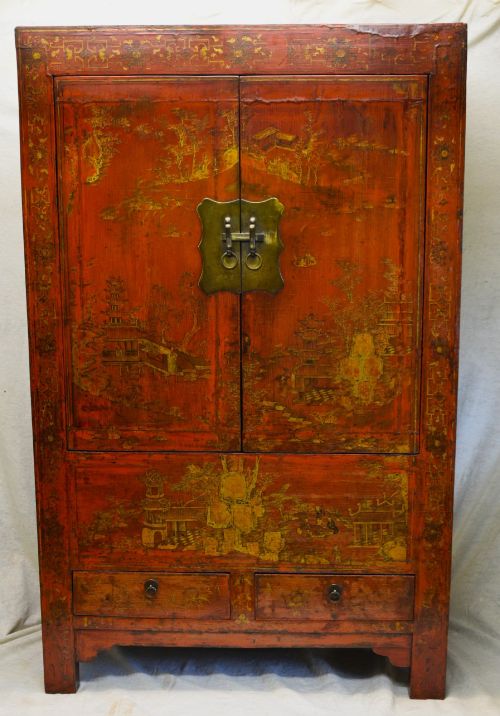
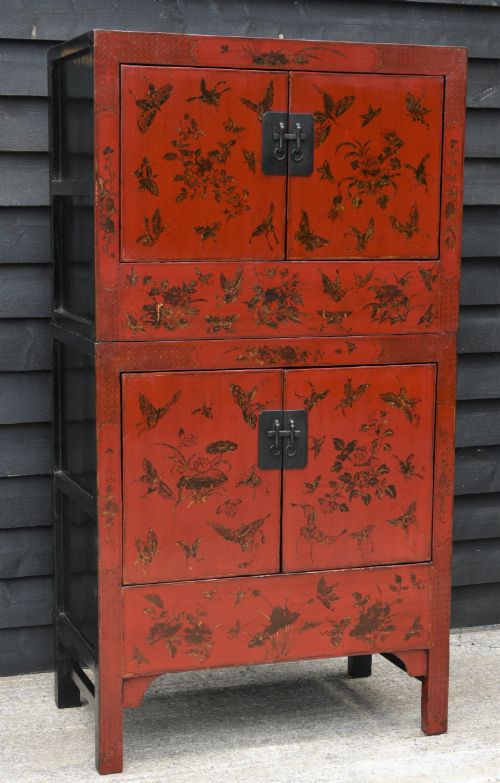
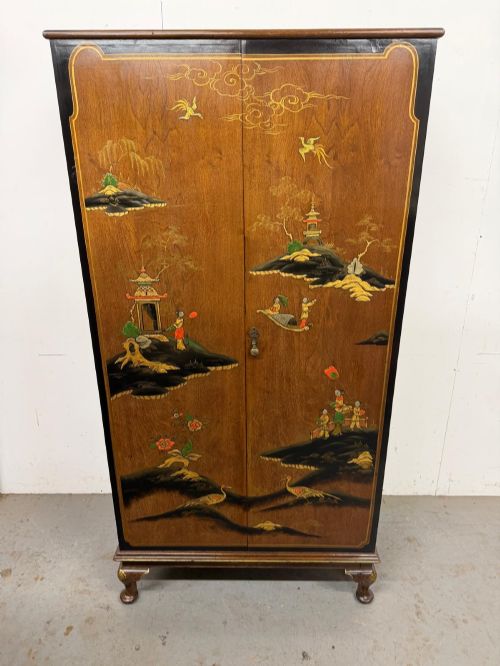
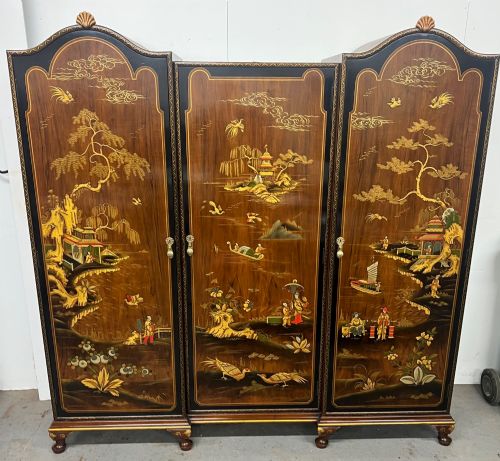
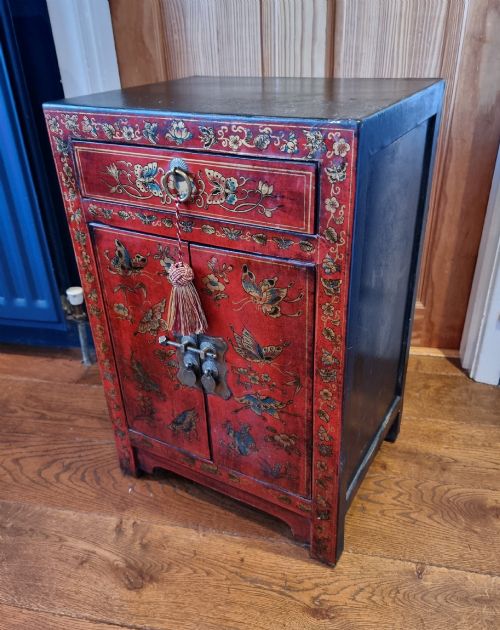
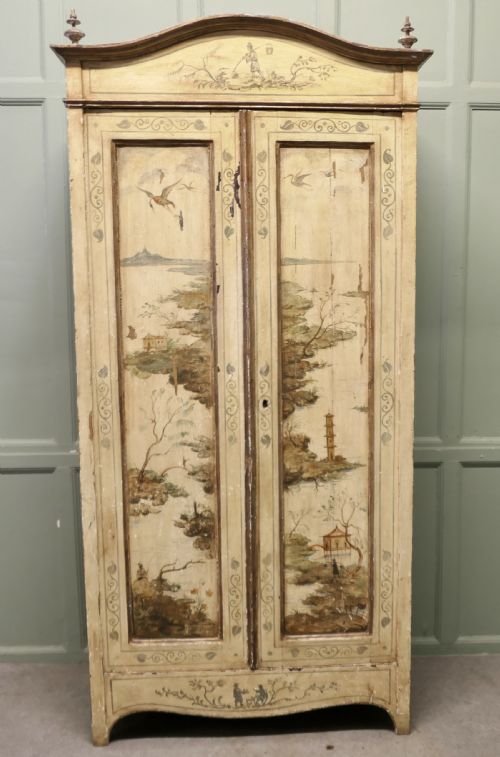
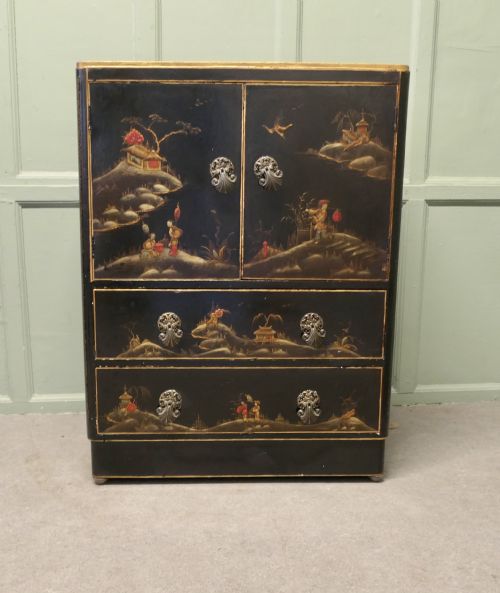
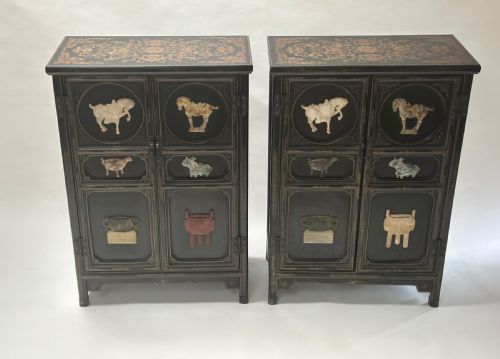
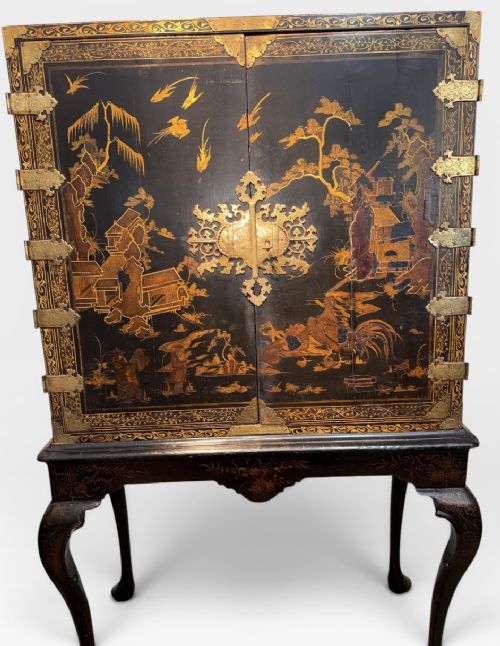
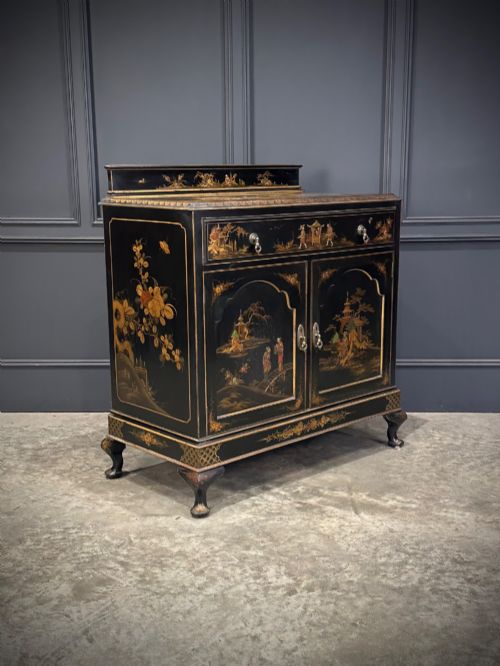
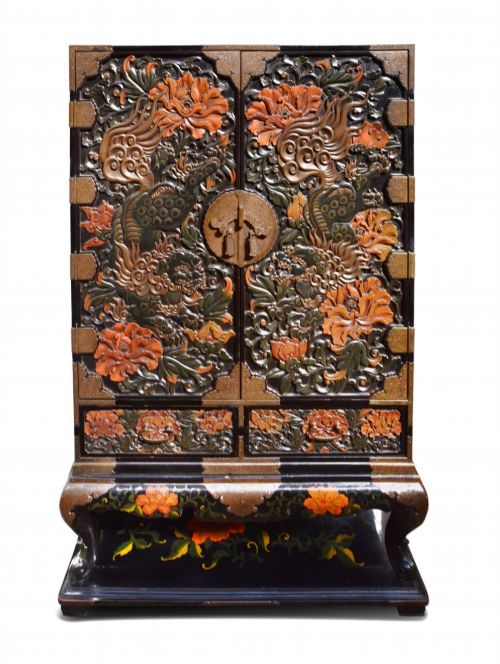
An antique chinoiserie cupboard combines European furniture forms with decorative motifs inspired by East Asian art. The pieces on this page span the eighteenth century, the Victorian era, and the Edwardian period, capturing centuries of European fascination with Asian design.
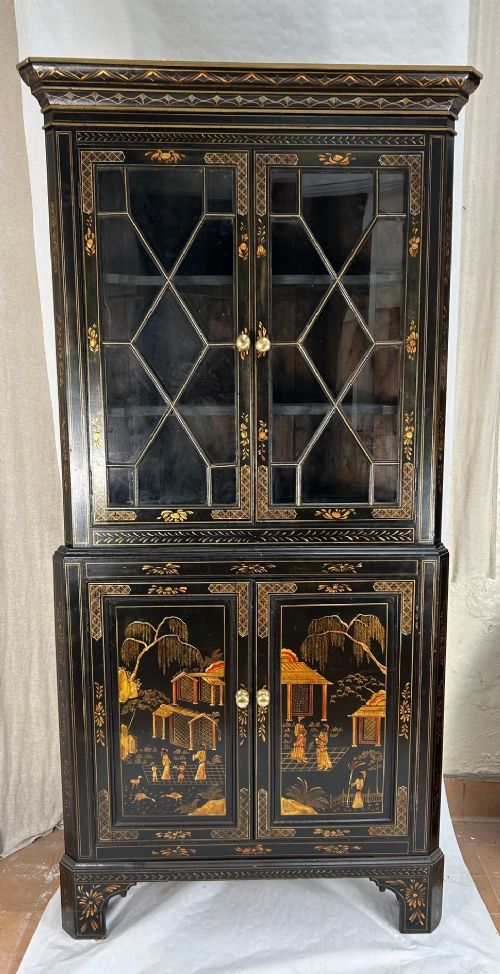
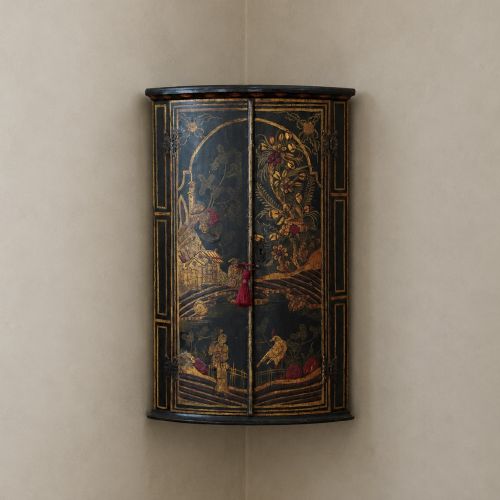
Corner cupboards and wall-hanging cabinets appear alongside larger wardrobes and compactum pieces. Most examples utilise traditional corner cabinet formats to maximise space while displaying elaborate surface decoration.
The evidence shows both English Georgian interpretations and later pieces from nineteen-ten and the nineteen-twenties. These later items continue a long tradition of applying decorative lacquer and gold leaf to everyday storage furniture.
How they were made
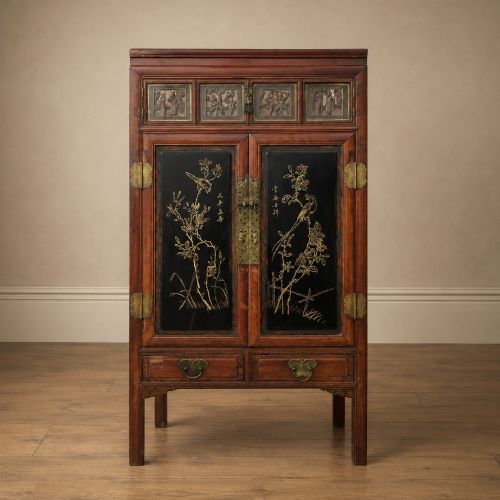
Wood serves as the primary structural foundation, often paired with softwood for internal construction and shelving. Brass hardware such as hinges and escutcheons secures the doors and corners of these cabinets.
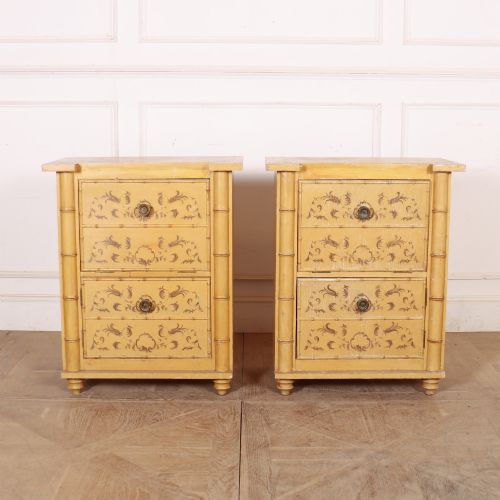
Makers applied layers of lacquer to create a smooth dark or yellow ground before adding hand-painted details. Gold leaf highlights figures, pagodas, and landscapes across the surfaces of these cupboards.
Retail Price Guide 2026
Typical UK retail prices for chinoiserie cupboard, calculated from the Sellingantiques database of over a million retail prices indexed since 2003. This retail price guide relies exclusively on Sellingantiques data; no external sources or auction records are used, so the figures do not describe the wider market.
The listings show pieces spanning from the eighteenth century through to the nineteen-twenties, incorporating brass hardware and glass.
What varies in quality
The depth of the lacquer finish and the intricacy of the painted decoration distinguish finer pieces from simpler items. Early eighteenth-century examples demonstrate meticulous layering of lacquer that achieves a rich sheen over the wooden core.
The finesse of the figural work and landscape scenes dictates the artistic merit of each cabinet. Superior examples feature carefully detailed gold leaf work that remains crisp and bright across the doors and panels.
The Antique Chinoiserie Cupboard Glossary
- Chinoiserie
- European decorative style reflecting Chinese artistic influences, characterised by painted scenes of figures, pavilions, and gardens. This aesthetic dominated fashionable interiors during the eighteenth century and saw revivals in later periods.
- Japanned
- European imitation of East Asian lacquerwork, created by applying successive coats of varnish and resin. This technique was widely practiced by British cabinetmakers to achieve an oriental finish.
- Lacquer
- Natural resin coating applied to wood to create a durable, glossy surface. It forms the base for painted and gilded decorations on oriental-style furniture.
- Compactum
- A fitted wardrobe designed to maximise internal storage with a combination of hanging space, drawers, and shelves. Edwardian examples often incorporate this efficient layout.
- Corner cupboard
- A storage piece shaped to fit neatly into the corner of a room, saving floor space while providing display or shelving. Many surviving chinoiserie pieces take this triangular or bow-fronted form.
Frequently Asked Questions
What is an antique chinoiserie cupboard?
An antique chinoiserie cupboard is a storage piece decorated with European interpretations of East Asian art. These cabinets feature painted scenes and lacquer finishes applied to forms like corner cupboards and wardrobes.
They combine practical storage with decorative surfaces that reflect historical European tastes for oriental design.
How do I date a chinoiserie cupboard?
Dating relies on examining the construction methods, the timber used, and the style of the painted decoration. Eighteenth-century pieces typically show different cabinetmaking techniques compared to Edwardian or nineteen-twenties revivals.
The specific furniture form, such as a compactum wardrobe or a wall-hanging corner cabinet, also helps place the piece within its historical period.
Where should I place a corner cupboard?
A corner cupboard fits efficiently into the unused junction of two walls, making it ideal for smaller rooms or hallways. Wall-hanging versions attach directly to plaster or wood panelling at eye level.
Floor-standing corner cabinets anchor a room layout while offering accessible shelving behind decorated doors.
How do I care for antique lacquer?
Antique lacquer requires gentle dusting with a soft, dry cloth to protect the delicate surface layers. Avoid placing these pieces in direct sunlight or near heat sources that could cause the lacquer to dry out or crack.
Maintaining a stable room temperature helps preserve both the wooden structure and the painted gold leaf details.