




Antique Chinese China Plate
These antique chinese china plate examples span the eighteenth and nineteenth centuries, offering hand-painted export porcelain for display or dining.
Antique Chinese China Plate
When you search for an antique chinese china plate, you encounter porcelain and earthenware vessels shaped as circular plates, chargers, platters, and saucer dishes. These ceramics originate from Qing Dynasty production centres and European imitation kilns, spanning the eighteenth and nineteenth centuries.
The pieces most frequently met on this page belong to the eighteenth century, particularly the Qianlong period, alongside nineteenth-century Canton and export wares. Alongside traditional blue and white designs, buyers find rich enamelled palettes and armorial commissions bearing British family crests.
Forms extend beyond standard dining plates to include octagonal soup plates, rectangular dishes, trefoil trays, and teacups with matching saucers. Each object reflects either direct Chinese export trade or domestic Georgian and Victorian interpretations of oriental motifs.
Materials and production methods
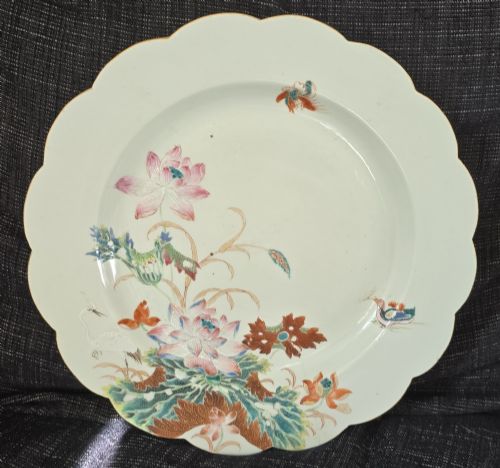
Potters shaped these objects using fine white porcelain or earthenware, applying cobalt underglaze pigments for classic blue and white motifs before firing. Artisans then added overglaze enamels in diverse colour palettes, incorporating gold leaf and gilt highlights to enrich floral and figural scenes.
Many items underwent hand painting by skilled decorators in Chinese kilns or European factories such as Worcester and Minton. Firing techniques fixed the bright enamel colours and clear glazes onto the ceramic body, producing durable surfaces designed for lasting display.
Materials recorded across the inventory include cobalt glaze, enamel, gold leaf, and gilt applied to Chinese export and British ceramics.
What separates the standard of pieces
The distinction between standard export wares and superior examples rests upon the precision of the hand-painted brushwork and the complexity of the narrative scene. Plates featuring intricate armorial crests, detailed acrobatics, or auspicious symbols display a higher level of artisan skill than repeating floral patterns.
The preservation of the original enamel colours, cobalt glazes, and gold leaf significantly influences the visual impact of each ceramic. Plates retaining crisp outlines and vibrant pictorial depth without extensive rubbing demonstrate superior survival from the eighteenth and nineteenth centuries.
The Antique Chinese China Plate Glossary
- Famille Rose
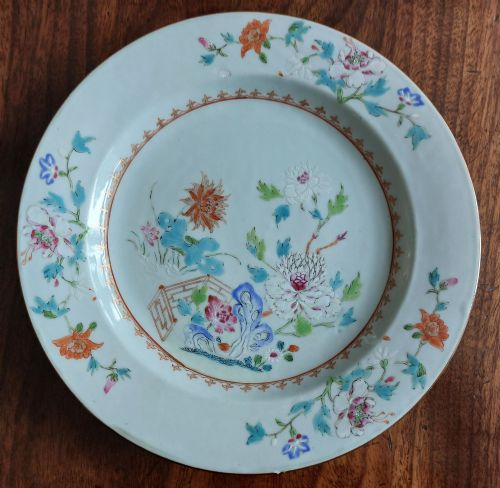
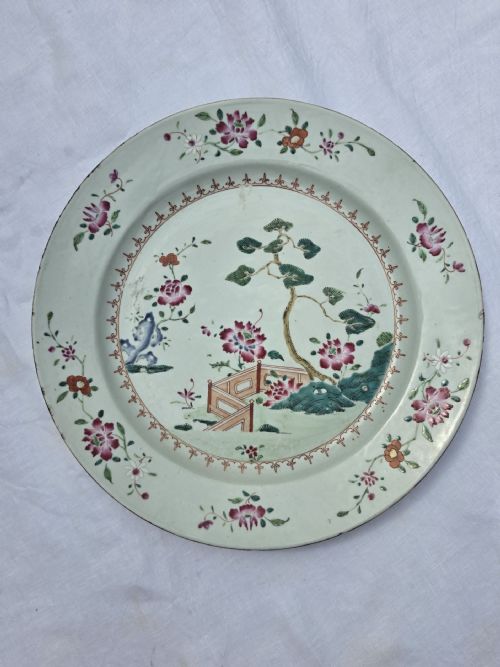
- A prominent palette of opaque overglaze enamels dominated by pink and rose shades, introduced during the Qing Dynasty. This colourful style adorns numerous eighteenth-century export plates and tea wares.
- Armorial
- A ceramic service decorated with a specific European family coat of arms or crest. Wealthy patrons commissioned these bespoke armorial plates directly from Chinese export workshops.
- Qianlong
- The era of the Qianlong Emperor spanning the eighteenth century, associated with exceptional porcelain output. Pieces from this dynasty often feature refined painting and intricate decorative schemes.
- Mandarin Pallet
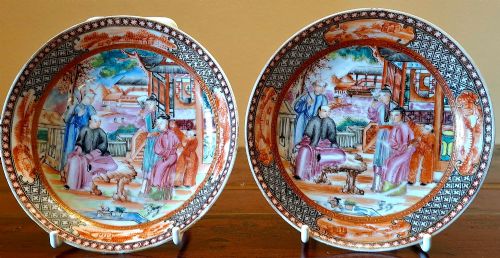
- A style of Chinese export porcelain featuring detailed figurative scenes within elaborate borders. These compositions frequently depict court life, domestic gatherings, or narrative acts.
- Imari
- A decorative style inspired by Japanese wares, utilising underglaze blue combined with iron red and gilt highlights. Chinese kilns reproduced these striking patterns for international export markets.
Antique Chinese China Plate: Frequently Asked Questions
How do I date an antique Chinese plate?
Dating relies on stylistic evidence, such as the palette used, reign periods like Qianlong, and potting characteristics. Eighteenth-century pieces often feature thin, refined porcelain bodies with hand-painted underglaze blue or famille rose enamels.
Nineteenth-century items, including Canton wares, typically display heavier porcelain and denser, brighter medallion decoration. Comparing the motifs and manufacturing techniques against documented examples clarifies the production era.
What is Chinese export porcelain?
Chinese export porcelain refers to ceramics manufactured in China specifically for European and Western markets from the seventeenth through the nineteenth centuries. These wares combined traditional Chinese manufacturing skills with shapes and crests requested by foreign buyers.
While many pieces retained purely oriental landscapes, others incorporated European armorials, religious scenes, or Western decorative patterns.
Can I use these plates for dining?
While these ceramics were originally created as functional tableware or display chargers, age and historic wear advise careful handling today. Eighteenth and nineteenth-century glazes and enamels can be sensitive to modern detergents and abrasive cleaning.
Most collectors prefer to display these plates on specialist stands or wall mounts to preserve their painted surfaces and historical integrity.
What is the difference between famille rose and blue and white?
Blue and white porcelain relies on cobalt oxide applied beneath the clear glaze before a single high-temperature firing. This creates a durable, monochromatic design that dominated trade for centuries.
Famille rose ceramics utilise a wider spectrum of opaque overglaze enamels applied after the initial firing, requiring an additional low-temperature kiln process to bond pink, green, and yellow pigments.