
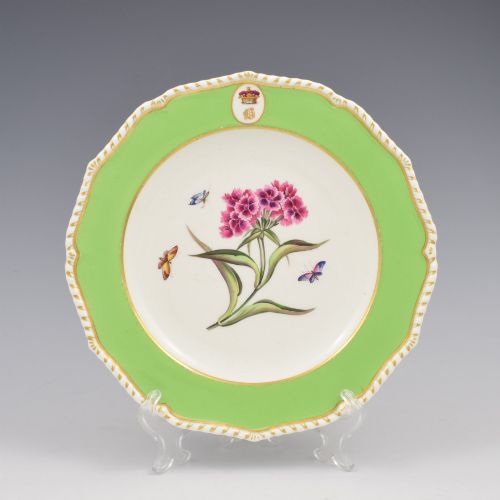


Antique China Dinnerware
These antique china dinnerware sets span Georgian, Regency, Victorian, and Edwardian periods, offering everything from large armorial services to smaller patterned plates for daily use or display.
Antique China Dinnerware
When you search for antique china dinnerware, you encounter comprehensive dining sets, partial services, and individual plates spanning the Georgian, Regency, Victorian, and Edwardian eras. These collections range from extensive multi-piece settings designed for formal dining to child's toy services and cabinet plates intended for display.
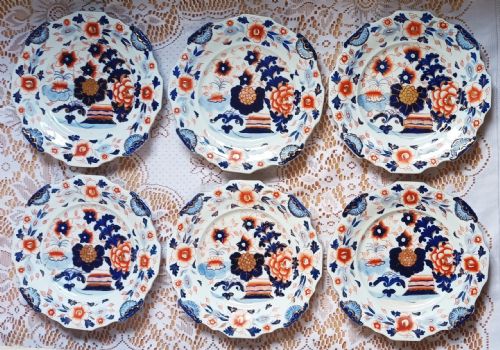
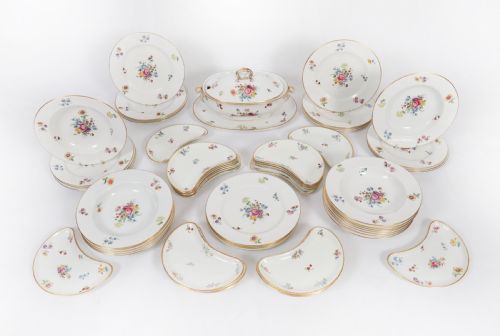
The services available on this page include traditional English ironstone, porcelain, creamware, and earthenware decorated with transfer prints, hand-painted botanical motifs, and armorial crests. Buyers most frequently meet large nineteenth-century services alongside sets of six or eight plates featuring patterns such as Willow, Italian, and Japan.
How these pieces were made
Potters of the Georgian and Victorian periods utilised foundational ceramic bodies including ironstone, creamware, and porcelain, shaping them into plates, soup bowls, and serving platters. Ironstone provided a durable, heavy alternative to traditional earthenware, while fine porcelain suited delicate botanical dessert plates and armorial services.
Decoration relied on skilled hand-painting, transfer printing in blue and white, enamel work, and the application of gold leaf and gilt accents. Specialised techniques such as pate-sur-pate and polychrome enamel detailing elevated functional dining pieces into decorative art.
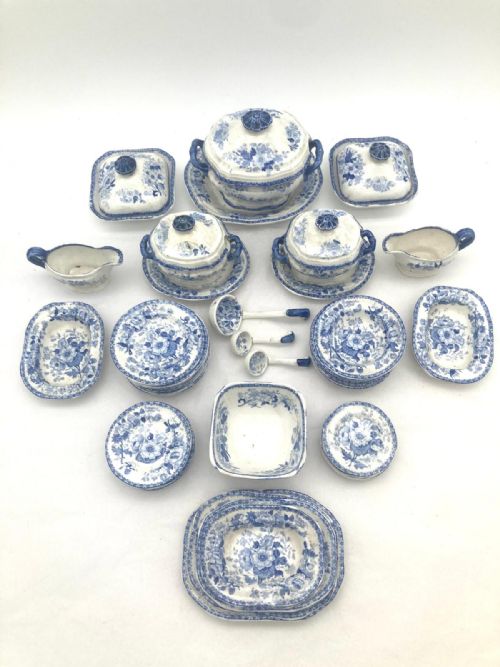
Victorian nurseries hosted miniature toy dinner services, allowing children to practice setting a table with tiny ironstone plates.
What varies in quality
The standard of a service rests on the crispness of the transfer print or the precision of the hand-painted brushwork across the botanical and armorial motifs. Pieces featuring hand-painted details by named factories or individual artists display a superior level of artistry compared to standard transfer-printed wares.
Completeness and uniformity also dictate value within larger settings, where matching sets of six, eight, or extensive multi-piece services demonstrate careful preservation. The application of gold leaf, enamel, and glaze integrity further distinguish standard domestic tableware from exhibition-quality cabinet porcelain.
Minton·Spode·Copeland·Bloor Derby·Wedgwood·Booths·Coalport·Masons Ironstone·Müller Volkstedt MV Co·Doulton·Barr Flight and Barr·Limoges·Elkin and Newbon·Royal Worcester·Chamberlains
The Antique China Dinnerware Glossary
- Ironstone
- A patented ceramic body developed to be heavy, durable, and resistant to chipping. It served as a robust substitute for porcelain during the nineteenth century.
- Armorial
- A design featuring a family crest, coat of arms, or heraldic insignia. These bespoke commissions were painted specifically for aristocratic households.
- Transfer printing
- A mechanical decoration method where an engraved copper plate transfers a design onto paper and then onto the ceramic surface before glazing. This technique allowed for consistent patterns like the Willow and Italian designs.
- Creamware
- A refined earthenware with a pale yellowish-cream glaze, perfected in the eighteenth century. It provided a smooth, light surface for painted botanical decorations.
- Pate-sur-pate
- A porcelain decoration technique where wet white slip is built up in successive layers on a coloured background to create a low relief cameo effect. Mintons utilised this method on specialised cabinet plates.
Antique China Dinnerware: Frequently Asked Questions
Can I use antique dinnerware for everyday dining?
While many ironstone and earthenware services were built for practical use, older ceramic glazes and hand-painted gilt elements can be sensitive to modern dishwashers and microwaves.
Hand washing in warm soapy water preserves the enamel, gold leaf, and delicate transfer-printed patterns on these nineteenth-century pieces.
How do I date an antique dinner service?
Dating relies on maker marks stamped or painted on the underside, stylistic indicators from periods such as Regency or Victorian, and manufacturing methods like transfer printing.
Comparing the pattern name, body type such as ironstone versus porcelain, and historical factory culls helps narrow the decade of production.
What is the difference between ironstone and porcelain?
Ironstone is a dense, opaque, and highly durable earthenware developed to withstand heavy domestic use while mimicking the appearance of imported china. Porcelain is a finer, more translucent ceramic fired at higher temperatures, typically reserved for formal dining and decorative cabinet plates.
Both materials appear frequently across Georgian and Victorian tableware.
Why do some antique plates feature coats of arms?
Plates bearing armorial crests were custom-ordered by wealthy families, nobility, or institutions to display their heraldry during formal banquets. These bespoke armorial services represent some of the finest hand-painted work produced by factories like Chamberlains and Minton.