


Antique Cherub Candlesticks
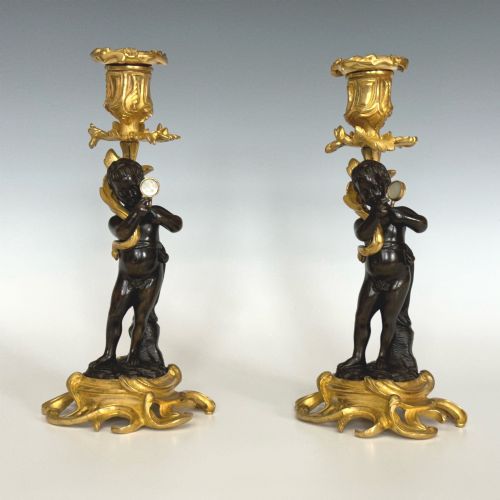
Antique cherub candlesticks bring classical sculpture to the table, combining cast bronze and porcelain figures of winged infants with functional candleholders.
Antique Cherub Candlesticks
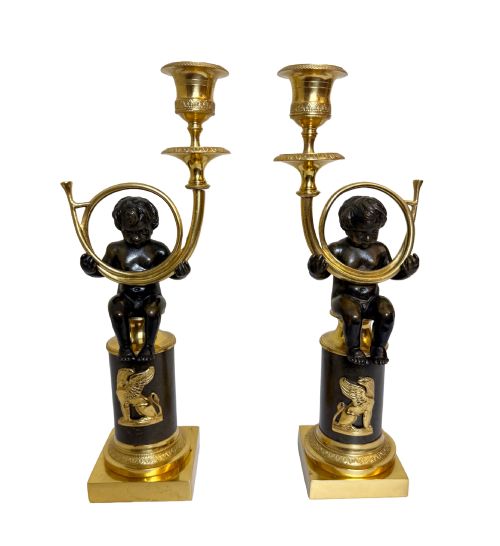
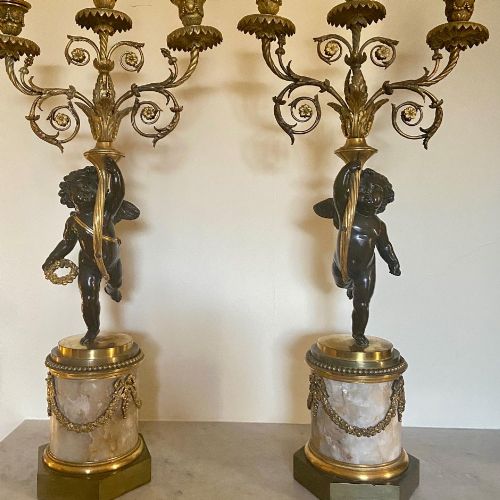
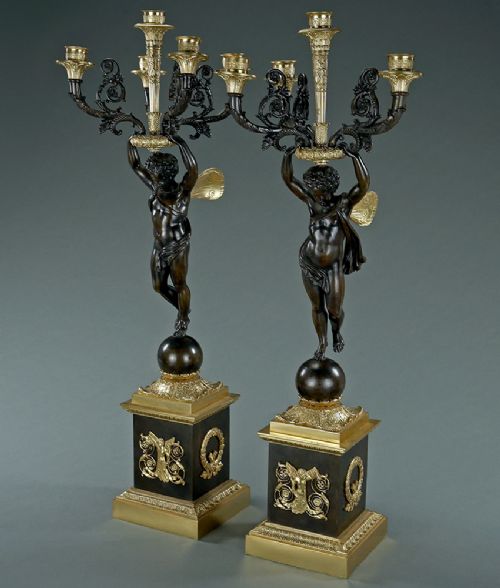
When searching for antique cherub candlesticks, buyers encounter figural lighting pieces depicting winged putti, cherubs or angels supporting sockets and branches. These items frequently appear as matched pairs intended for mantelpieces, sideboards or dining tables.
The selection ranges from nineteenth-century French gilt bronze and marble compositions to eighteenth-century porcelain figures and cast brass examples. Many pieces double as multi-light candelabra, integrating scrolled arms alongside the central figure.
Continental workshops dominate the offerings, particularly French makers influenced by Louis XVI and Rococo revival styles. Victorian British brass and silver-plated interpretations also emerge regularly across the listings.
How they were made
Foundry workers cast bronze and brass components using traditional lost-wax or sand-casting methods, then chased the metal surfaces to sharpen details on the hair, wings and drapery. Gilt bronze and ormolu finishes required the application of gold leaf or mercury gilding to achieve a bright golden sheen.
Marble and onyx bases provided stable weight and contrast for the metal figures, often turned on lathes and fitted with bronze mounts. Porcelain examples from factories like Meissen and Minton involved slip-casting in moulds, hand-modelling fine botanical elements, and firing at high temperatures before glazing and enamel painting.
Listings feature items spanning from the seventeenth century through to the Victorian era, executed in gilt bronze, marble, porcelain, and patinated bronze.
What varies in quality
The crispness of the metal chasing separates ordinary commercial castings from superior studio work, where individual feather tips on the wings and facial expressions remain sharply defined. The depth and evenness of the ormolu or fire gilding also indicate the standard of production in the workshop.
Material combination plays a role, as heavy natural marble plinths paired with patinated and gilt bronze denote higher costs of manufacture than lighter spelter alternatives. In porcelain versions, the delicacy of the modelled flowers and the precision of the hand-painted enamels determine the tier of the piece.
Francois Redmond·Chelsea·Minton·Meissen·Triebner ENS and Eckert Volkstedt·Claude Clodion·Sitzendorf
The Antique Cherub Candlesticks Glossary
- Putti
- Plural of putto, representing a chubby male infant, frequently winged, derived from classical art and commonly rendered as a cherub in later decorative objects.
- Ormolu
- Finely ground high-carat gold applied to a bronze base using a mercury amalgam, creating a rich golden surface that resists tarnish.
- Candelabra
- A branched candlestick holding multiple lights, often incorporating figural stems or central sculptural elements.
- Spelter
- An alloy of zinc and lead used as a cheaper alternative to bronze for cast figures, typically painted to imitate bronze or patinated metal.
- Blanc de Chine
- A white porcelain produced in China, highly copied by European factories attempting to achieve a smooth, milky glaze without surface colour.
Antique Cherub Candlesticks: Frequently Asked Questions
What is the difference between cherubs and putti?
In art history terminology, putti are secular winged infants borrowed from classical mythology, while cherubs carry religious connotations from biblical descriptions. In the context of antique candlesticks, the terms are used interchangeably by dealers to describe any winged infant figure.
Most nineteenth-century French and English decorative pieces depict putti engaged in playful or seasonal activities rather than strictly theological angels.
How do I clean gilt bronze and ormolu?
Gilt bronze and ormolu require gentle dusting with a soft, dry brush to prevent the accumulation of dirt in the crevices of the casting. Avoid abrasive polishes, chemical dips or modern cleaning agents, which will strip away the historical gold leaf or mercury gilding.
If the metal requires further cleaning, a damp cloth with mild soap can be used cautiously, followed immediately by thorough drying with a soft lint-free cloth.
Were these originally made for candles or electricity?
These pieces were originally manufactured strictly for wax candles or oil before the widespread adoption of domestic electricity. Many surviving examples retain their original nozzle inserts, drip pans and socket configurations without having been drilled for wiring.
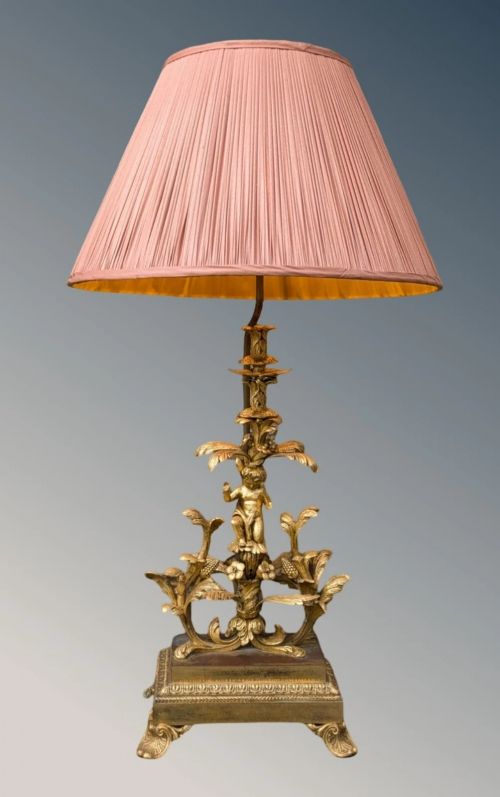
Some items listed on the market have been adapted into table lamps by running a cord through the centre, a modification that collectors evaluate based on whether the alteration preserves the original structure.
How can I tell a nineteenth-century revival piece from an eighteenth-century original?
Eighteenth-century pieces display hand-tooling marks, heavier casting techniques appropriate to the period, and wear patterns consistent with extended use over centuries. Revival pieces from the Victorian era or the late nineteenth century often utilise mechanical finishing methods and standardised components.
Examining the underside of the marble bases, the composition of the bronze alloy, and the style of the screws or threading helps determine the manufacturing era.