



Antique Champagne Glass
An antique champagne glass brings the weight of past dining rooms to the table, offering a tangible connection to nineteenth and twentieth-century celebration.
Antique Champagne Glass
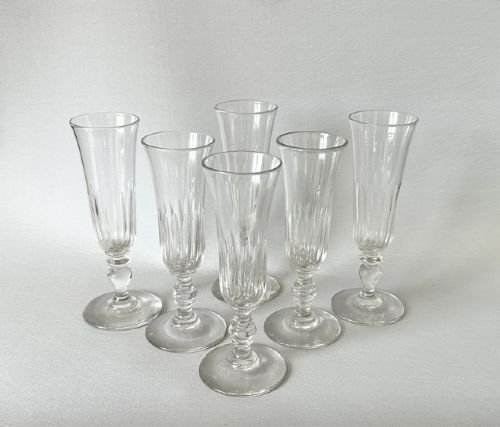
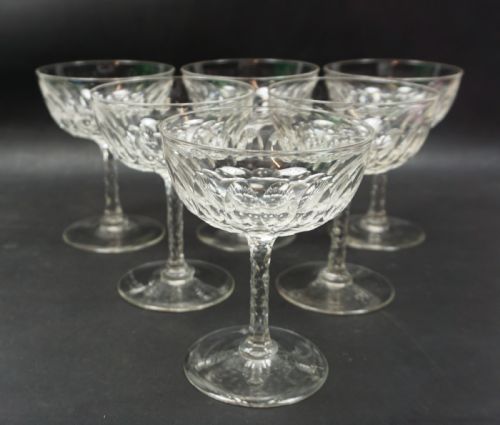
When you search for an antique champagne glass, you encounter vessels designed for sparkling wines across centuries of changing tastes. The forms shift from tall eighteenth-century flutes through shallow nineteenth-century coupes to twentieth-century bowls and modern silhouettes.
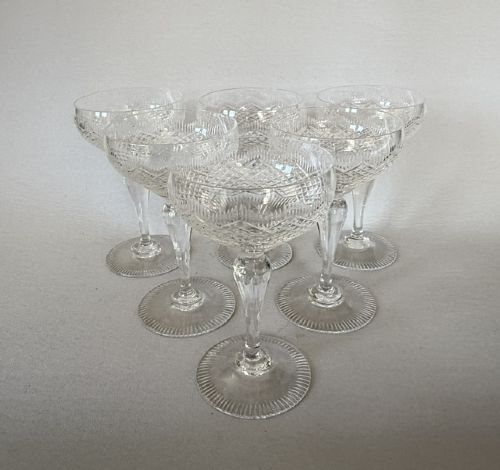
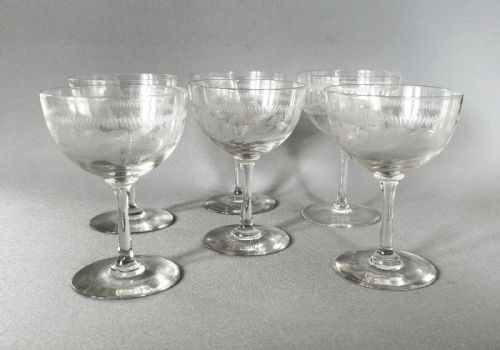
The most common versions met on this page are Victorian and Edwardian matching sets or harlequin groups of six. These pieces range from plain blown lead glass to deeply cut crystal bowls resting on faceted or knopped stems.
How they were made
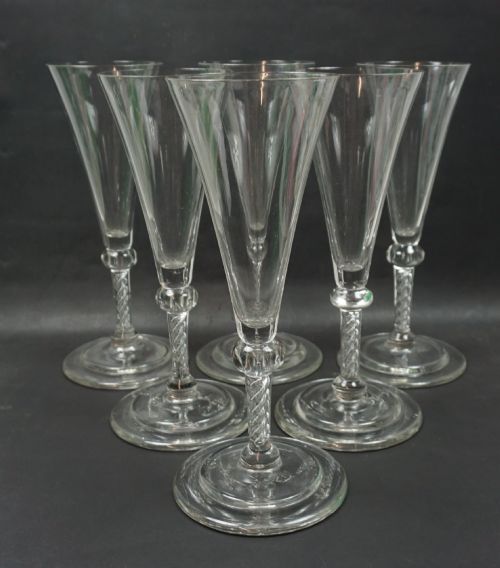
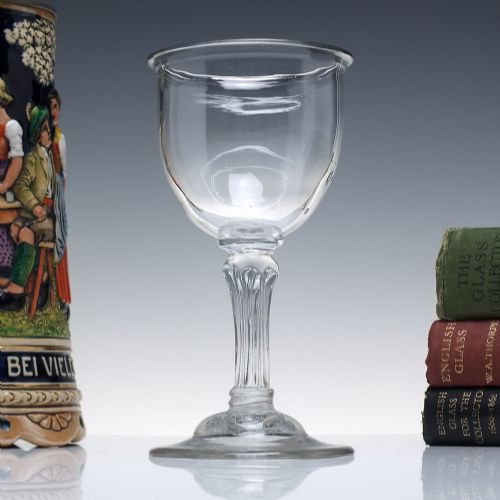
Glassmakers shaped these pieces by free-blowing or mould-blowing lead crystal and clear glass, then finished them by hand. Stems often incorporated air twists, opaque white glass threads, or sharp facet cutting before being joined to the foot.
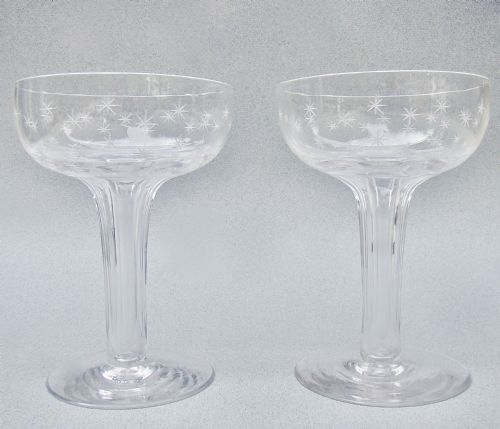
Decoration relied on skilled hand-engraving, wheel-cutting, star-etching, or applying gilding and enamel colours. Overlay techniques added layers of cranberry, red, or green glass over a clear crystal core to create striking contrast when cut away.
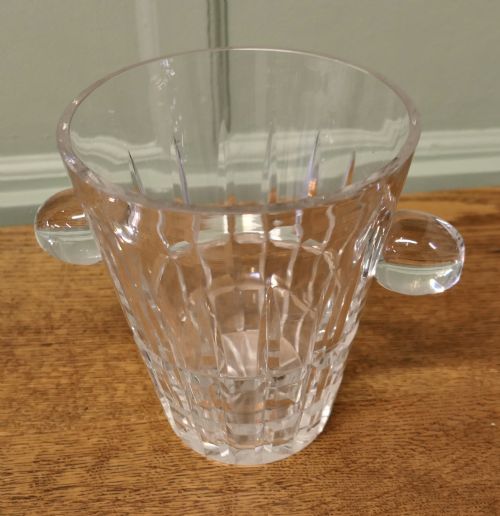
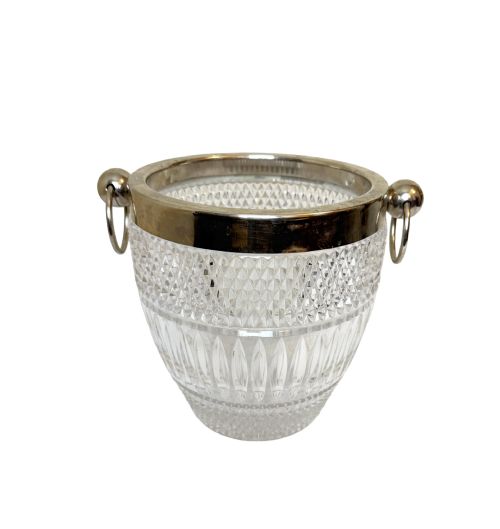
The listings here span from eighteenth-century Georgian air twists through Victorian cut crystal to early twentieth-century Art Deco ice buckets.
What varies in quality
Quality rests upon the clarity of the metal, the weight of the lead crystal, and the crispness of the wheel-cut or engraved details. Heavier, more resonant glass with deeply ground facets and unblemished surfaces sits at the upper end of the scale.
The precision of the stem formation and the uniform thickness of the bowl walls distinguish master craftsmanship from standard production. Matched sets featuring intact gilding or complex twist formations command greater attention than simple blown variants.
Richardsons Birmingham·Fritz Heckert·Moser Crystal·Wiener Werkstätte·Adelbert Niemeyer·Josephinenhutte·Powell Whitefriars·Stuart
The Antique Champagne Glass Glossary
- Coupe
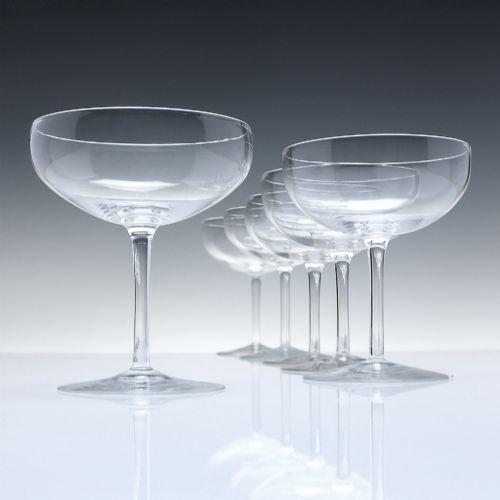
- A broad, shallow bowl shape historically favoured for champagne service before the flute regained popularity. It permits a wide surface area for the release of aromas.
- Air twist
- An internal spiral thread of tiny bubbles trapped within a glass stem during manufacture. This technique requires exceptional skill from the blower.
- Opaque twist
- A white or coloured enamel glass rod incorporated into the stem to create opaque white threads. These are twisted during the pulling process.
- Hollow stem
- A stem containing an internal channel opening directly into the bowl. This design allowed the sparkling wine to rise into the stem itself.
- Overlay
- A technique where a thin layer of coloured glass is cased over a clear crystal body. Subsequent cutting exposes the clear glass beneath.
Antique Champagne Glass: Frequently Asked Questions
What is an antique champagne glass?
An antique champagne glass is a drinking vessel produced during the Georgian, Victorian, Edwardian, or early twentieth-century periods. These items encompass flutes, coupes, and bowls designed specifically for sparkling wines.
They reflect the shifting etiquette and manufacturing methods of historical dining culture. Collectors value them for both display and occasional use.
How were hollow stem glasses used?
Hollow stem glasses allowed champagne to fill both the bowl and the interior channel of the stem. This feature created a striking visual effect as bubbles travelled down the length of the glass.
Victorian diners prized this design for formal dinners and garden parties. It remains a distinctive marker of nineteenth-century glassware.
How do I care for antique crystal?
Antique crystal requires careful hand washing in warm water with mild detergent. Sudden temperature changes must be avoided to prevent thermal shock and cracking.
Storage should prevent the delicate rims from chipping against one another. Drying with a lint-free linen cloth preserves the polished surface.
How do I date an antique glass?
Dating relies on examining the pontil mark on the base, the composition of the metal, and the cutting style. Georgian pieces often feature heavy lead weight and air twists, while Victorian examples show deep star-etching and coloured overlays.
Comparing form and decorative motifs against known manufacturing periods helps establish an accurate timeframe. Maker marks, where present, provide definitive attribution.