


Antique Ceramic Spill Vase
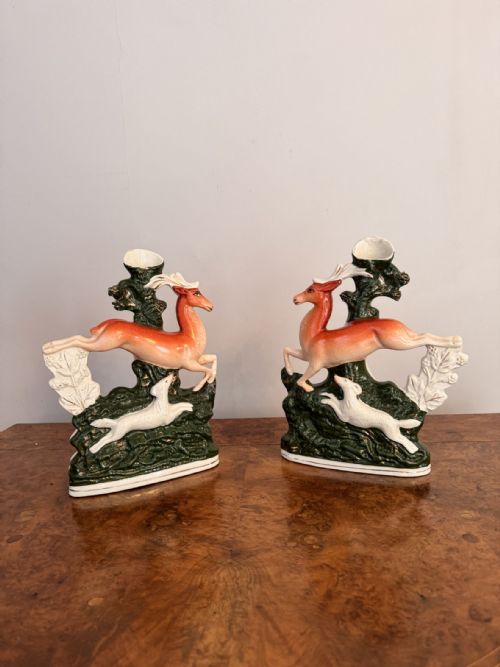
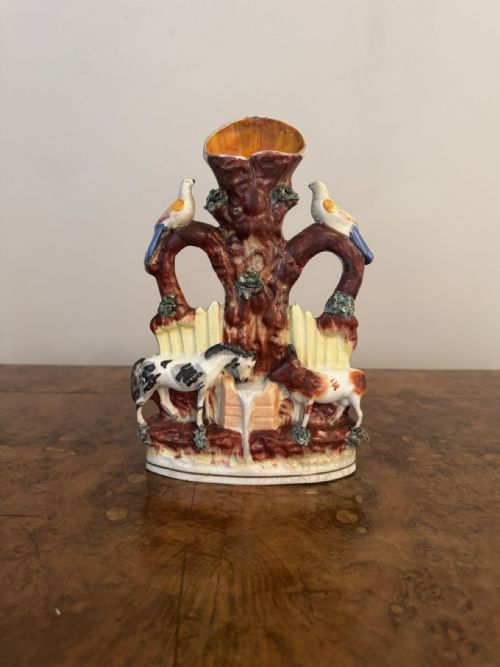
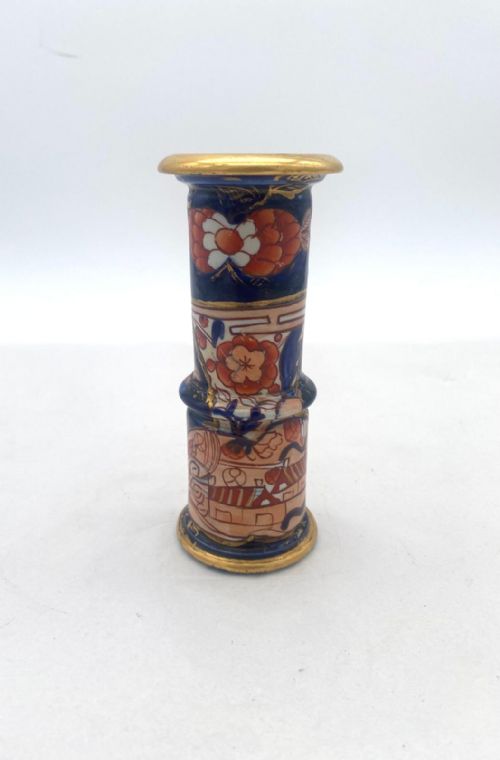
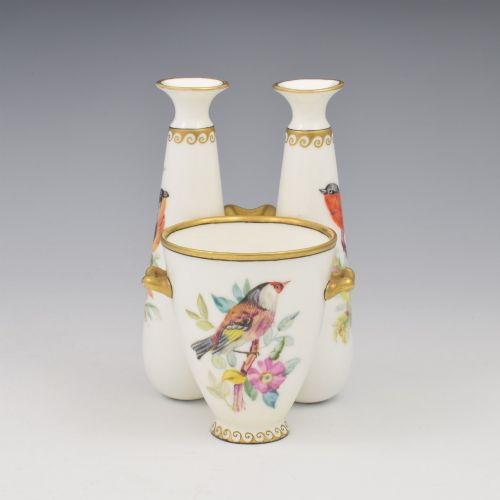
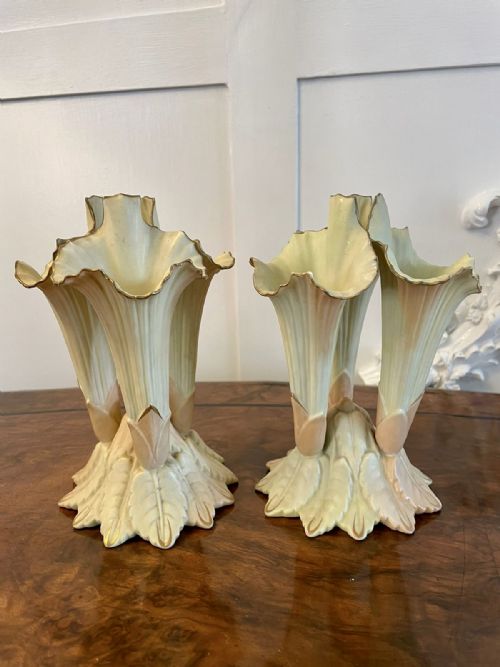
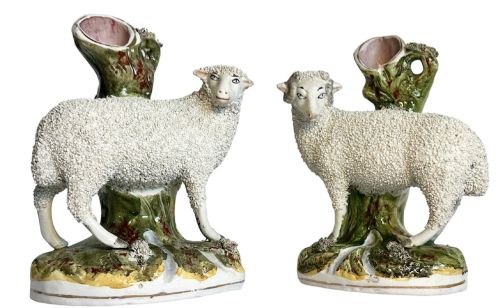
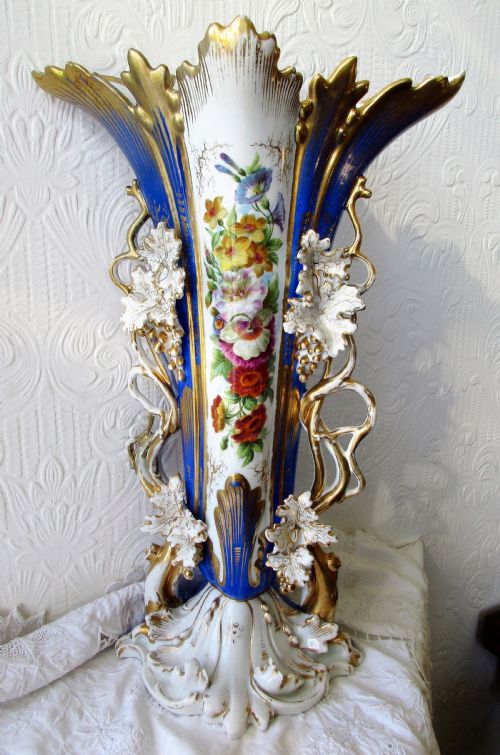
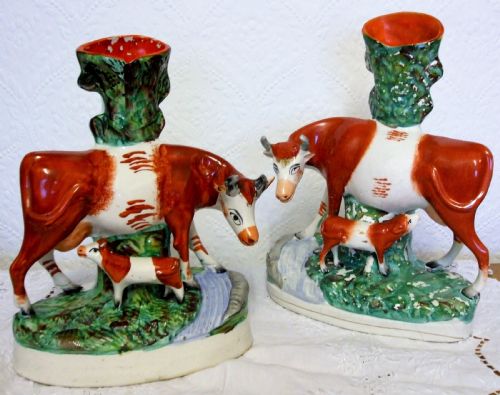
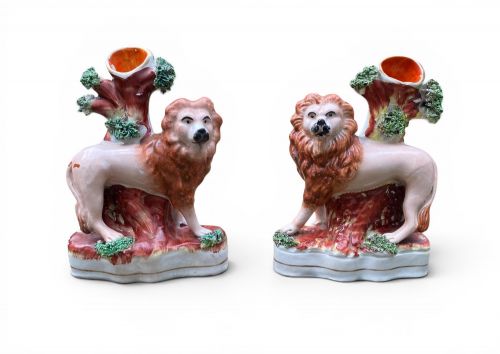
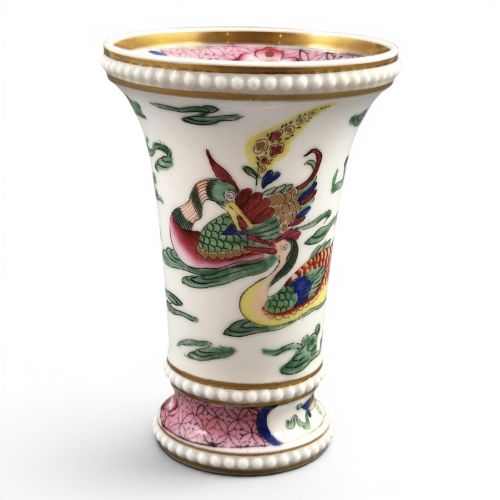
These antique ceramic spill vase examples are Staffordshire figures and Art Nouveau vessels designed to hold wooden tapers for lighting fires and candles.
What an antique ceramic spill vase is
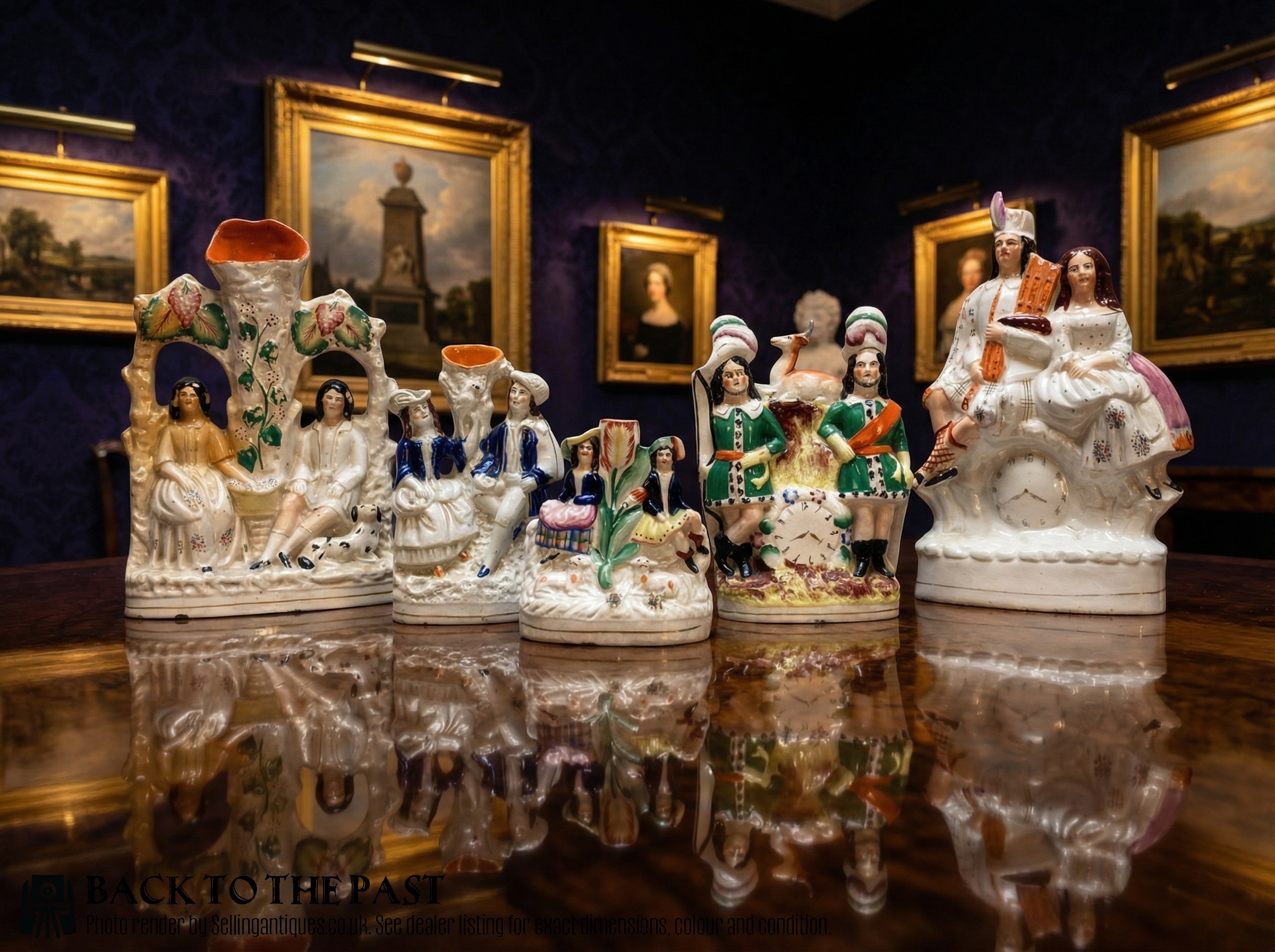
An antique ceramic spill vase combines a decorative figure group or vessel with a cylindrical tube intended to hold wooden spill lights for transfer of flame from hearth to candle or pipe. The forms appearing here include Victorian Staffordshire flatback figures, swans with cygnets, and an early twentieth century Art Nouveau earthenware piece.
Most examples originate from the nineteenth century, spanning periods from eighteen sixty through the Victorian era and into the early twentieth century. Makers and styles range from traditional English Staffordshire potteries to continental Art Nouveau production.
The buyer encounters varied forms, from modelled animal groups and narrative figure scenes such as Babes in the Wood or Band of Hope figures to sculptural botanical and animal designs.
How they were made
Makers utilised earthenware, glazed terracotta and ceramic bodies, formed by moulding clay before firing. Surface decoration relied upon hand painting, enamel colours and applied glaze to achieve vibrant details on figures and vases.
Many pieces incorporate gilt highlights applied over the glaze and fired again to add metallic lustre to borders, clothing and decorative motifs.
Retail Price Guide 2026
Typical UK retail prices for ceramic spill vase, calculated from the Sellingantiques database of over a million retail prices indexed since 2003. This retail price guide relies exclusively on Sellingantiques data; no external sources or auction records are used, so the figures do not describe the wider market.
Listings feature earthenware and glazed terracotta pieces spanning the Victorian period and the early twentieth century Art Nouveau style.
What varies in quality
The sophistication of the design distinguishes the output, ranging from naive regional Staffordshire figures to the flowing organic lines associated with Ernst Wahliss Art Nouveau ceramics.
Ernst Wahliss·Staffordshire potteries
The Antique Ceramic Spill Vase Glossary
- Spill vase
- A hollow cylindrical container integrated into a ceramic figure or vessel, specifically designed to hold thin wooden spills used for lighting fires.
- Flatback
- A style of Staffordshire figure moulded with a detailed front and a flat, unglazed or minimally decorated rear intended to sit against a mantelpiece wall.
- Earthenware
- A porous ceramic body fired at lower temperatures, commonly used for nineteenth century figures and glazed to ensure the vessel held dry spills.
- Enamel
- Opaque glass-like paint applied over the fired glaze to provide bright colours on Staffordshire figures and decorative vessels.
Frequently Asked Questions
What is an antique ceramic spill vase?
An antique ceramic spill vase is a hollow vessel or figure incorporating a small tube designed to hold wooden tapers. These spills were lit from the hearth fire and carried across the room to ignite candles, lamps or tobacco pipes.
Most examples found on this page date from the Victorian period and feature hand painted earthenware construction.
How do I date a Staffordshire spill vase?
Dating relies upon stylistic markers such as the transition from mid nineteenth century Victorian flatback figures to later Art Nouveau designs from the early twentieth century. Details in costume, modelling technique and glaze characteristics assist in placing pieces within specific decades.
Comparative analysis with known factory production helps narrow the date range of unmarked ceramic pieces.
Where were these spill vases displayed?
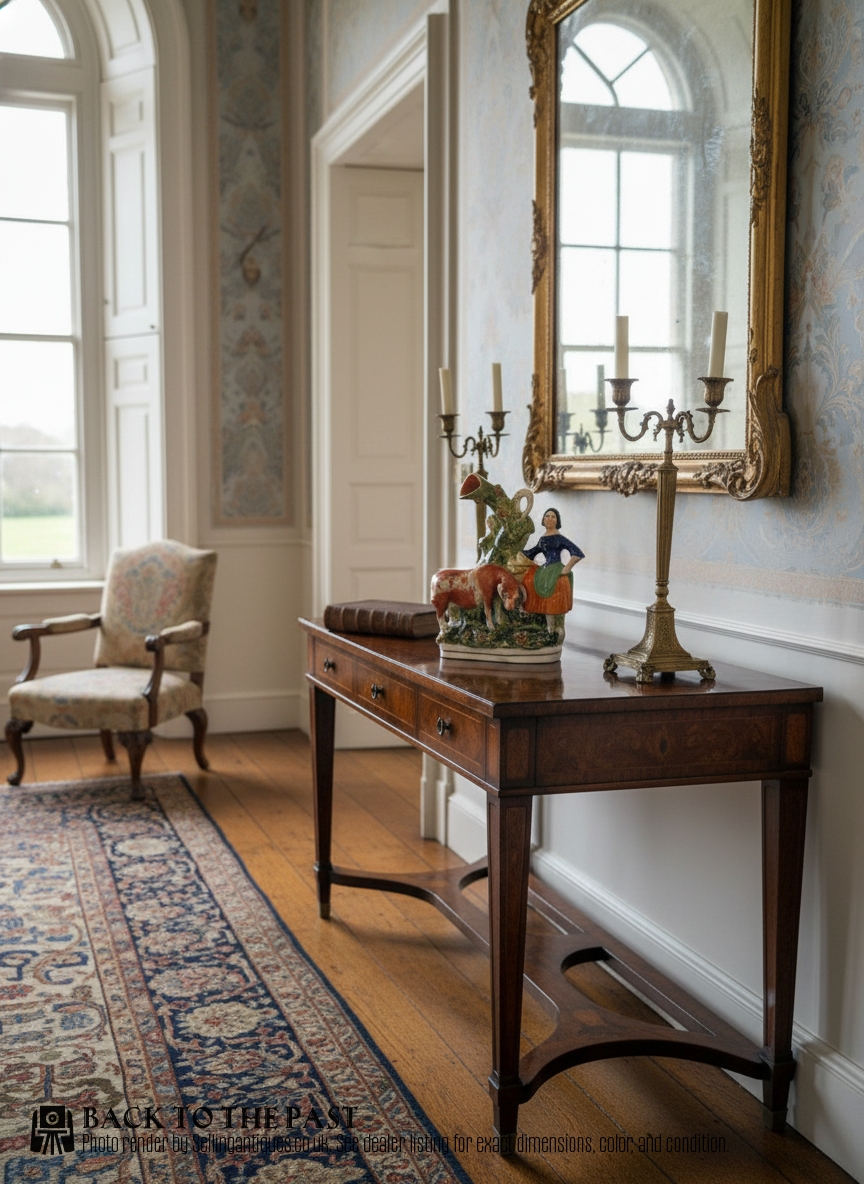
Victorian spill vases sat upon mantelpieces, hearth shelves and an array of parlour furniture where fires were regularly tended. Their flat backs allowed them to rest flush against walls in domestic sitting rooms.
They served both a practical purpose for fire lighting and a decorative role in Victorian interior display.
Are all Staffordshire spill vases marked?
Many early Staffordshire figures and spill vases bear no maker marks, relying instead on distinctive modelling styles, glaze types and subject matter for identification. Some continental makers, such as Ernst Wahliss, marked their earthenware productions with specific factory stamps.
The absence of a maker mark is common among nineteenth century English pottery.