
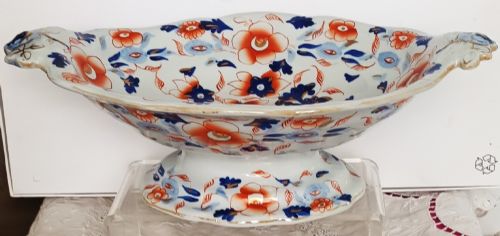
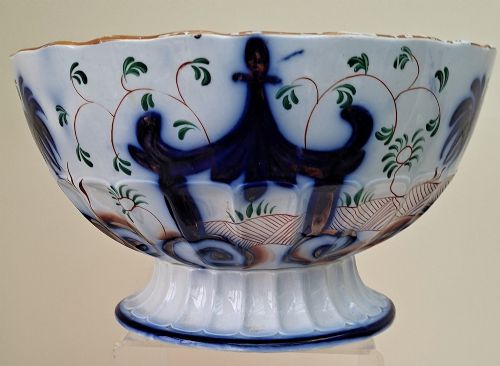
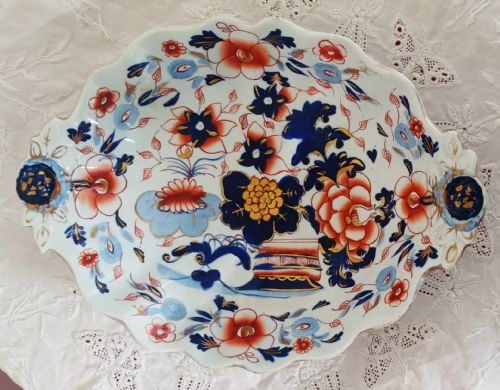
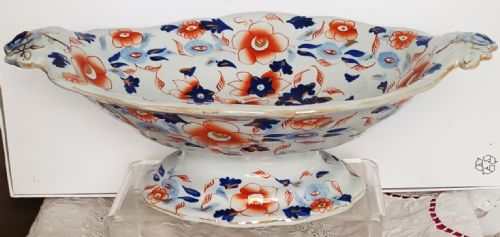
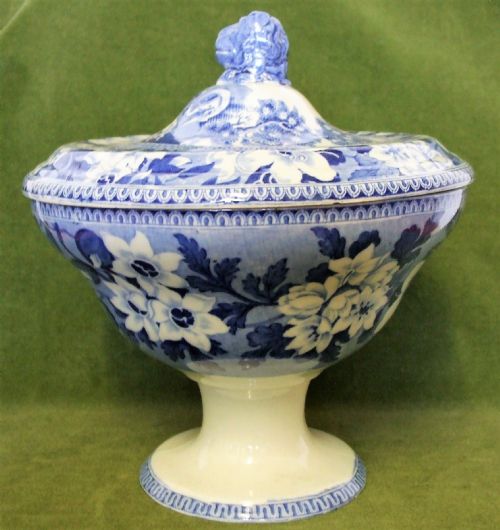


Antique Ceramic Pedestal Dish
An antique ceramic pedestal dish brings height and presence to a table, combining practical service with decorative form.
Antique Ceramic Pedestal Dish
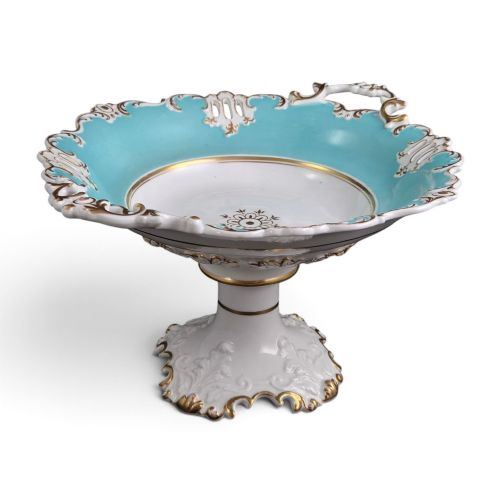
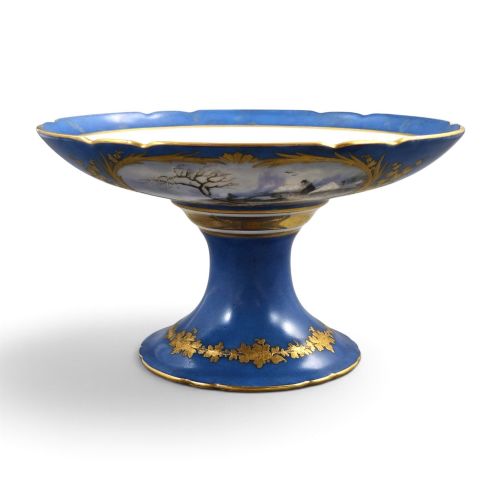
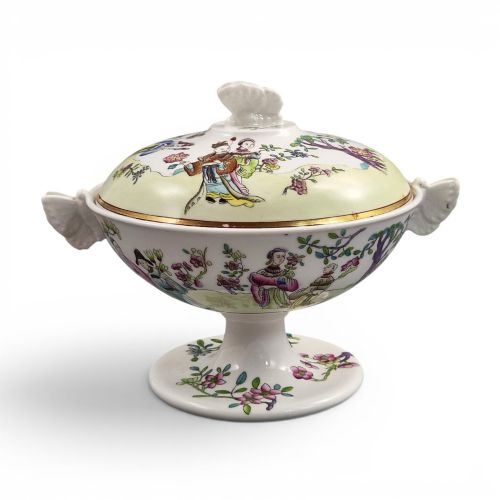
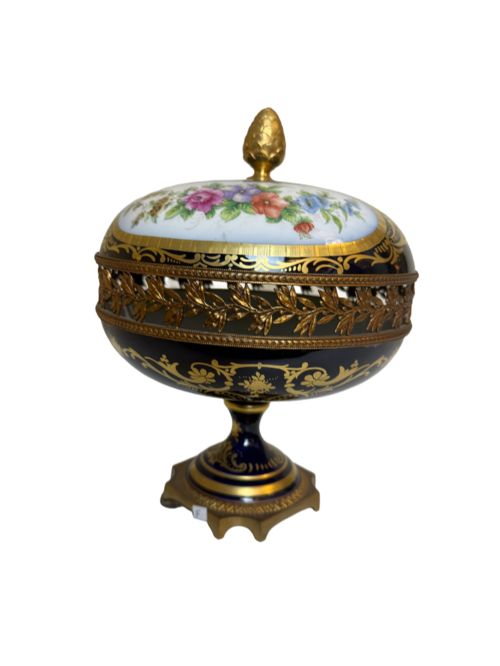
An antique ceramic pedestal dish elevates fruit, sweets or desserts above the surface of a table on a raised foot or stand. When exploring this selection, a buyer encounters forms ranging from shallow tazzas and low comports to deep centrepieces and covered tureens.
The materials span refined porcelain, durable ironstone, and glazed earthenware, representing production centres from English potteries to French and German factories. Examples stretch across the Georgian, Victorian, and Edwardian periods, displaying styles from restrained Regency lines to exuberant Rococo Revival ornamentation.
Materials and methods of manufacture
Potters shaped these pieces using earthenware, ironstone, and porcelain, often applying lead or tin glazes to seal the porous clay bodies before firing. Cobalt blue transfer printing, hand-painted polychrome enamel, and lustres provided the surface decoration.
Makers integrated structural elements such as applied handles, figural putti, and raised pedestals into the primary ceramic body or attached them prior to the final kiln process. Gilt and gold leaf highlights were frequently added as a finishing touch and fixed with a low-temperature firing.
Keep an eye out for diminutive ceramic putti clinging persistently to the edges of nineteenth-century centrepieces.
Distinctions in execution and design
The division between standard production and exceptional work lies in the crispness of the moulded relief and the control shown in hand-painted details. Superior pieces display finely modelled figures, precise transfer printing alignment, and well-applied enamels that maintain their clarity across complex surfaces.
The reputation of the manufactory and the complexity of the ceramic body also dictate distinction. Works from established English and continental houses demonstrate greater ambition in scale, sculptural integration, and glaze depth than simpler utilitarian wares.
Coalport·Sèvres·Spode·Limoges·John Rogers and Son·Schierholz Plaue·Maling·Wedgwood·Minton·Royal Worcester·Davenport·Eichwald·Copeland and Garrett·Moorcroft
The Antique Ceramic Pedestal Dish Glossary
- Tazza
- A shallow saucer or bowl mounted on a central foot or pedestal. This form often served fruit or sweetmeats during formal dessert courses.
- Comport
- A large standing dish or bowl used for presenting fruit at the table. It shares the raised format of the tazza but typically offers a deeper basin.
- Ironstone
- A durable type of heavy earthenware patented in the nineteenth century. It combined the strength of stoneware with the smooth white surface of porcelain.
- Majolica
- A colourful, lead-glazed earthenware characterised by vibrant coloured enamels applied directly over an opaque tin glaze. It enjoyed particular popularity during the Victorian era for naturalistic plant and animal forms.
- Transferware
- Pottery decorated by applying a paper impression from an engraved copper plate to the ceramic surface. This technique allowed intricate patterns like blue and white landscapes to be reproduced consistently.
Antique Ceramic Pedestal Dish: Frequently Asked Questions
How were pedestal dishes used historically?
These dishes occupied the centre of the dining table during the dessert course, holding fresh fruit, sweetmeats, or iced dishes. Their elevation added visual hierarchy and saved valuable space among crowded table settings.
In grander households, matched sets formed part of extensive dessert services. Guests selected items directly from the elevated basins as the service was passed or remained stationary.
Can I use an antique pedestal dish for food?
Most antique pieces function safely for dry foods, fruit, or confectionery. However, older lead-based glazes and worn enamel decorations require gentle hand washing rather than immersion or machine cleaning.
Crazing in the glaze can absorb liquids over time, making it sensible to avoid serving high-acid foods directly on nineteenth-century earthenware surfaces.
How do I identify the period of a dish?
Makers' marks, impressed registry numbers, and factory stamps provide the most reliable chronological markers. Transfer-printed patterns and stylistic indicators such as Art Nouveau curves or Regency restraint also point toward specific decades.
Comparing the weight, paste composition, and glaze characteristics against documented factory output helps narrow down the production era.