


Antique Ceramic Meat Platter
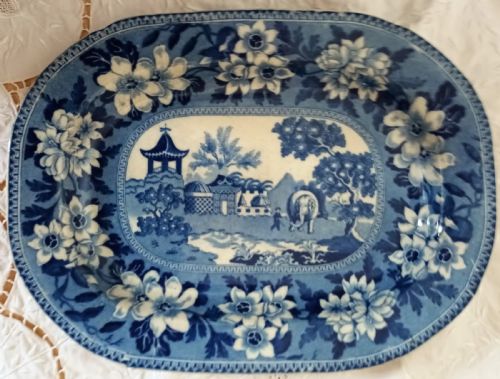
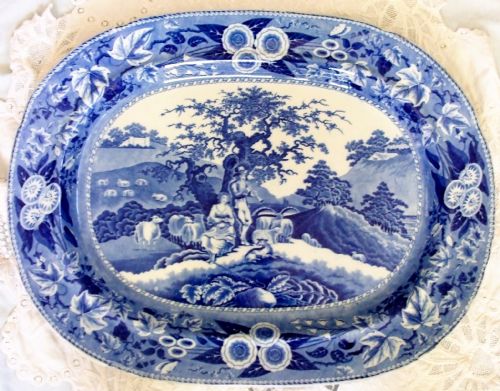
These substantial antique ceramic meat platter examples bring heavy earthenware and blue transfer print into domestic service with impressive scale.
Antique Ceramic Meat Platter
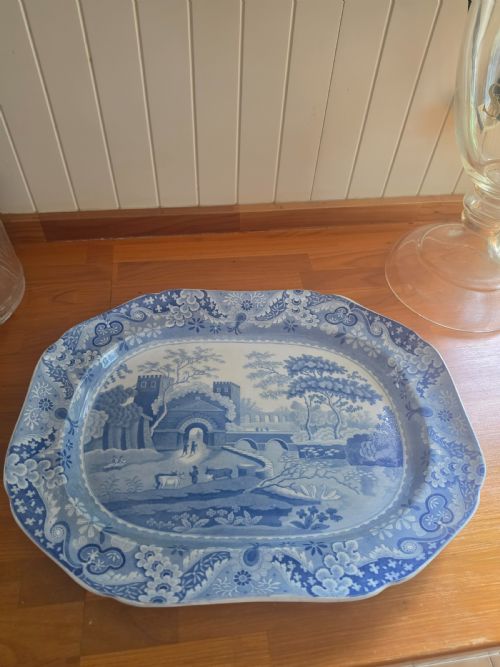
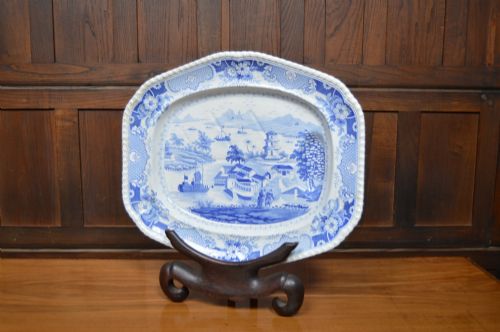
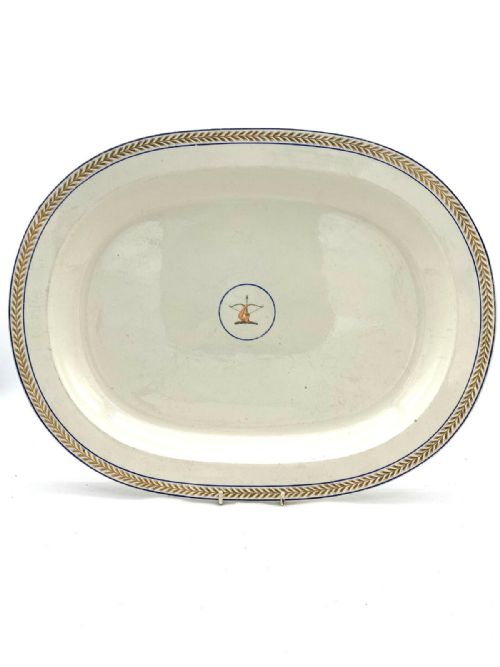
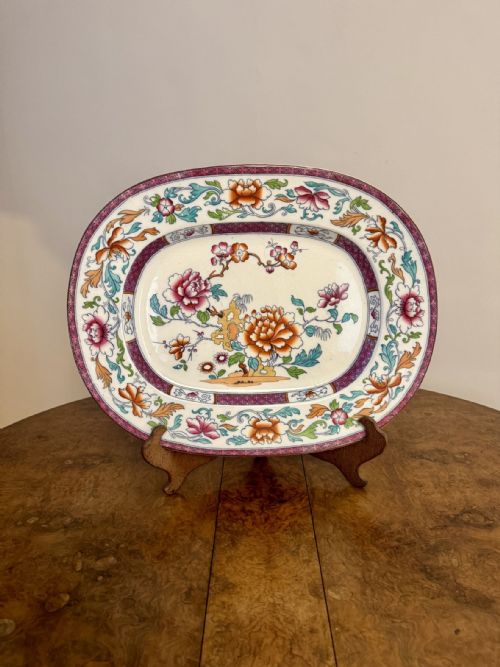
When searching for an antique ceramic meat platter, collectors encounter large serving vessels intended for carving and presenting joints at the dining table. The most frequent varieties met on this page belong to the Georgian and Victorian eras, alongside Chinese export porcelain pieces.
Many of these serving dishes feature deep wells and integrated drainers designed to catch juices from roasted game and poultry. Forms range from rectangular platters to expansive octagonal chargers decorated with pastoral scenes or oriental landscapes.
Materials and production
Potters utilised durable ironstone, creamware, and heavy earthenware bodies to support the considerable weight of large joints. Cobalt blue transfer printing dominated decoration, transferring intricate copperplate engravings onto the damp clay before glazing and firing.
Porcelain variants from Chinese export kilns relied on fine-paste bodies painted with underglaze blue or polychrome enamels such as Famille Rose. Ironstone formulations developed during the nineteenth century provided a tougher, denser alternative that resisted chipping during daily use.
Current listings feature earthenware, porcelain, and ironstone materials spanning the Georgian and Victorian eras.
Judging the standard
The distinction between ordinary utility wares and top-tier pieces rests on the clarity of the transfer print and the crispness of the moulded border. Richness in the cobalt pigment and freedom from firing warps separate master potteries from standard regional kilns.
Scale and complexity also dictate standing, with huge well-and-tree platters commanding greater presence than flat serving dishes. Complete assemblies incorporating matching ceramic drainers remain more desirable than plates missing their interior inserts.
Spode·Wedgwood·John Rogers and Son·Mason·Minton·Copeland and Garrett·Thomas Lakin·Don Pottery
The Antique Ceramic Meat Platter Glossary
- Transferware
- Earthenware or ironstone decorated by applying a paper impression taken from an engraved copperplate onto the ceramic body. This technique allowed factories to produce intricate pictorial scenes in quantity.
- Well and Tree
- A platter design featuring a recessed channel around the edge and a sloping well leading to a small reservoir. This layout collected meat juices efficiently during carving.
- Ironstone
- A dense, hard-wearing type of ceramic patented in the nineteenth century to imitate Chinese porcelain. It combined ball clay, china stone, and scoria.
- Meat Drainer
- A perforated ceramic insert that sat inside the platter to lift roasted joints above accumulated fats. These pieces are frequently separated from their primary dishes over time.
- Creamware
- A refined fine earthenware developed in the eighteenth century with a pale yellowish lead glaze. Josiah Wedgwood perfected this body, naming it Queen's Ware.
Antique Ceramic Meat Platter: Frequently Asked Questions
How were meat platters used?
These large vessels served as the centrepiece of the nineteenth-century dining table for presenting roasted joints of beef, mutton, or game. Carvers sliced meat directly upon the surface, allowing juices to drain into the lower wells.
Servants then carried the heavy ceramic pieces back to the kitchens once the meal concluded. Their substantial size accommodated large portions required for extended household dining.
Why do some platters have drainers?
Perforated ceramic inserts sat within the platter bed to keep roasted meats elevated above pooling fats and juices. This kept the meat tender and made carving cleaner at the table.
Finding a platter that retains its original matching drainer is uncommon due to centuries of separate handling and washing.
How do I display a large platter?
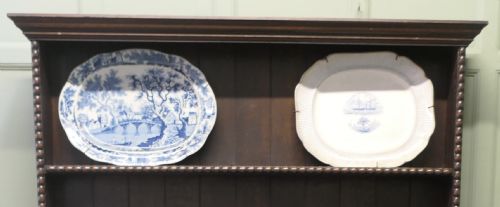
Heavy ceramic chargers and serving dishes require robust wall hangers or sturdy plate stands designed for substantial weight. Position them securely on sideboard surfaces or within deep shelving units to support their bulk.
Keep pieces away from high-traffic zones where passing elbows might dislodge the heavy earthenware.
How do I date an antique platter?
Makers' marks stamped or impressed into the ceramic base provide the most reliable indication of origin and manufacture period. Stylistic clues such as floral borders, Chinoiserie motifs, and transfer print subjects also narrow down the decade of production.
Examining the glaze texture and foot ring reveals whether the piece originates from eighteenth-century export kilns or later Victorian potteries.