


Antique Ceramic Meat Dish
An antique ceramic meat dish offers a sturdy centrepiece for a dining table, combining practical utility with rich transfer-printed decoration.
Antique Ceramic Meat Dish
When searching for an antique ceramic meat dish, collectors encounter large platters, ashets and serving dishes designed for carving and presenting joints at the table. These pieces span the eighteenth and nineteenth centuries, emerging from English potteries in Staffordshire as well as Chinese export kilns.
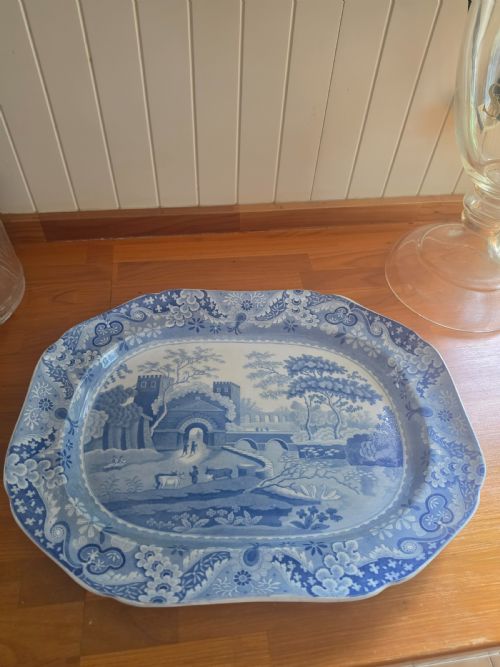
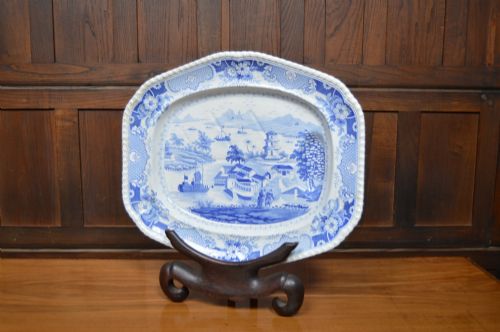
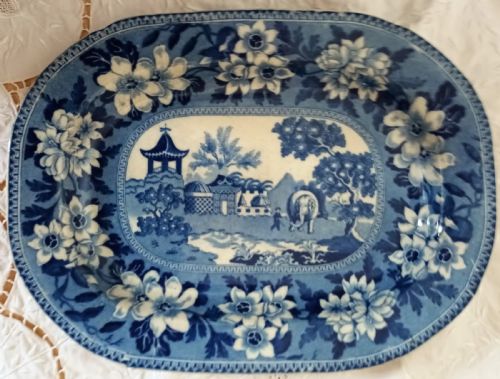
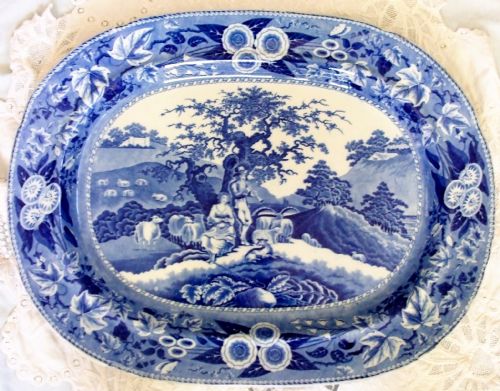
The most common examples on this page are blue and white transfer-printed earthenware and ironstone platters. They frequently feature pastoral scenes, topographical views, or Chinoiserie motifs borrowed from contemporary taste.
Materials and Technique
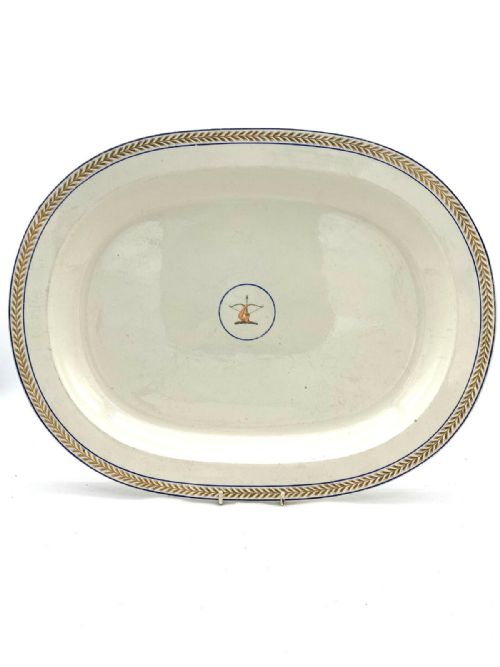
Potters utilised durable bodies such as creamware, earthenware and ironstone to support the weight of heavy joints of meat. Ironstone provided a particularly dense ceramic base that resisted chipping during daily kitchen use.
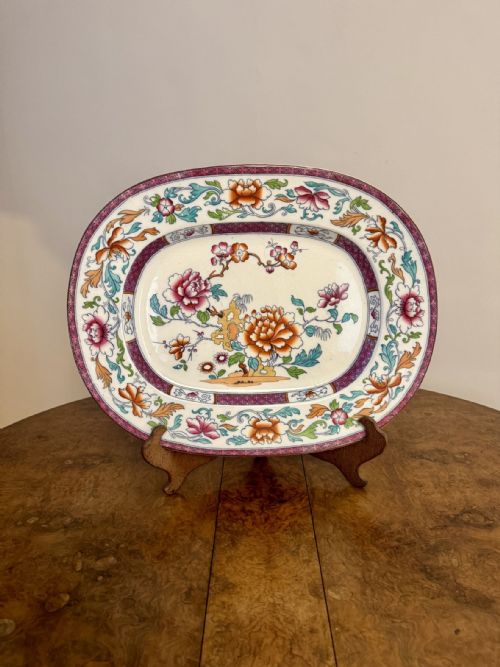
Decoration relied heavily on cobalt pigment applied via copperplate transfer printing beneath a clear glaze. Certain export wares incorporated enamel colours and gold leaf over the glaze for richer ornamentation.
Listings span earthenware, ironstone and porcelain across Georgian and Victorian periods, dominated by blue and white transfer printing.
The Measure of Quality
Quality rests on the crispness of the transfer print and the clarity of the underlying white glaze. Finer plates display sharp details in complex architectural or landscape patterns without blurring or smudging.
Form complexity also distinguishes standard examples from superior ones. Platters incorporating structural additions like gravy wells, strainers or well-and-tree designs indicate higher-tier production.
Spode·Wedgwood·John Rogers and Son·Minton·Copeland and Garrett·Don Pottery·Thomas Lakin
The Antique Ceramic Meat Dish Glossary
- Transferware
- Earthenware or porcelain decorated by pressing a paper design inked with cobalt pigment onto the unglazed biscuit surface. This technique allowed intricate pictorial scenes to be replicated rapidly across large production runs.
- Ironstone
- A heavy, vitrified earthenware patented to withstand rigorous culinary use while imitating porcelain. It forms a dense, durable body found in many large nineteenth-century platters.
- Well and tree
- A platter surface featuring an integrated channel running around the perimeter to collect juices, leading to a sunken well at one end. This design kept carved meat resting clear of its own runoff.
- Ashet
- A regional Scottish and northern English term for a large serving platter or dish used at the centre of a dining table. The word derives from the French assiette.
- Creamware
- A refined earthenware developed in Staffordshire possessing a warm, pale yellow tone beneath a transparent lead glaze. Wedgwood perfected this body during the eighteenth century.
Antique Ceramic Meat Dish: Frequently Asked Questions
What is a well and tree platter?
A well and tree platter includes channels carved into the ceramic surface that direct meat juices down toward a central or terminal well. This kept large joints elevated during carving so the meat remained dry.
Potters introduced this layout to improve table service for roast dinners during the Georgian and Victorian periods. The added drainage feature marks a more elaborate utilitarian production.
How do I date a blue and white meat dish?
Dating relies on examining the ceramic body, the shade of the blue pigment, and the registration marks or maker stamps on the underside. Early nineteenth-century pieces often display deep cobalt tones on earthenware or ironstone bodies.
Registry marks introduced in the Victorian era provide exact month and year codes for production. Unmarked pieces require stylistic comparison with known dated series and named topographical views.
Can I use these antique platters for serving food?
Most antique ceramic platters remain structurally sound for serving dry foods, bread, or cold cuts at modern dining tables. The hard lead or feldspathic glazes generally seal the earthenware body effectively against moisture.
Modern dishwashers and harsh detergents should be avoided to protect the historic glaze and delicate transfer printing from crazing or fading. Gentle hand washing preserves the surface integrity for everyday display.
What is Chinese export porcelain?
Chinese export porcelain comprises wares made in China specifically for European and American markets during the eighteenth and nineteenth centuries. These items often combined traditional Eastern forms with Western heraldic or floral motifs.
Nanking and Famille Rose patterns represent common styles exported to British buyers who favoured exotic tablewares. These pieces arrived via maritime trade alongside contemporary domestic Staffordshire pottery.