



Antique Ceramic Figural Ornament
These antique ceramic figural ornament pieces bring character to a room, showing nineteenth-century craftsmanship through glazed porcelain and earthenware figures.
Antique Ceramic Figural Ornament
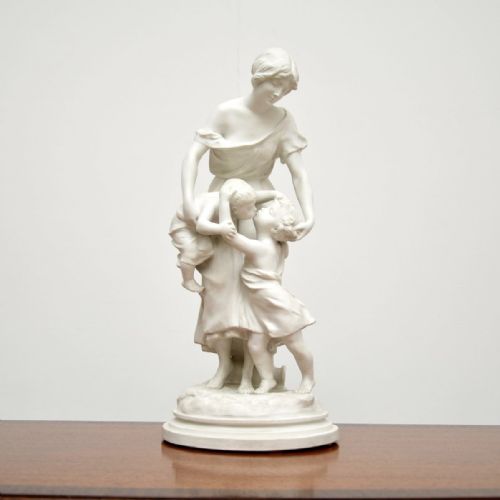
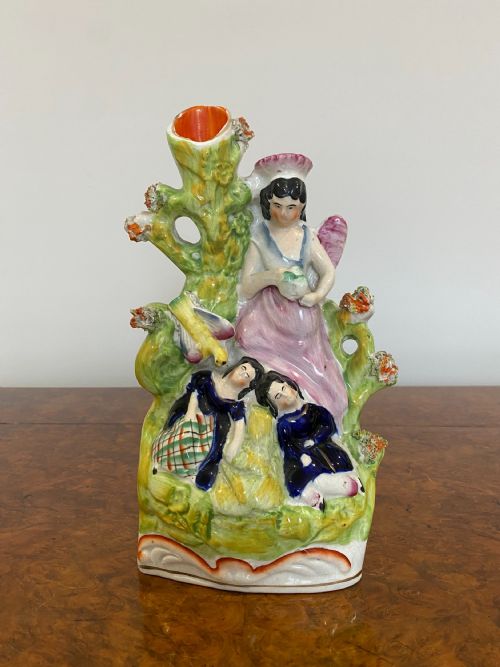
An antique ceramic figural ornament captures human, animal or allegorical subjects in three dimensions, usually taking the form of standalone figures, groups or sculptural vessels. These objects range from nineteenth-century Staffordshire flatbacks and Derby shoemakers to delicate French bisque groups and Victorian porcelain baskets.
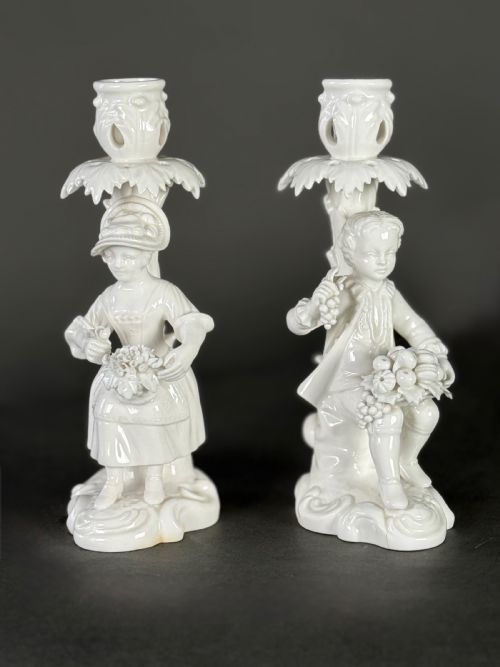
Buyers browsing this selection will most frequently encounter nineteenth-century works, spanning styles from Victorian and Rococo Revival to Georgian influences and Art Deco statuettes. Forms extend beyond simple shelf figures to incorporate candlesticks, flower carts, chariot vases and figurative groups.
Origins vary across British potteries, continental European manufacturers such as Meissen and Thuringia, and broader international works including Qing Dynasty pieces. The common thread is a moulded or sculpted ceramic base transformed into a decorative focal point through glazes, enamel or bare bisque surfaces.
Materials and production methods
Makers shaped these pieces using diverse ceramic bodies, including soft earthenware, hard-paste porcelain, parian and unglazed bisque porcelain. Each material dictated how finely the modeller could render facial expressions, drapery and botanical details before firing in the kiln.
Surface decoration involved hand-applied enamel colours, celadon glazes, yellow glazes and accents of gold leaf or gilt. Bisque pieces relied entirely on the crispness of the porcelain form and texture rather than coloured glazes to define the subject.
A solitary frog occasionally peers from a ceramic basket, reminding collectors that Victorian whimsy knew no bounds.
Assessing quality in figural ceramics
The sophistication of the composition also distinguishes the range, separating mass-produced decorative items from ambitious sculptural groups produced by established factories. Heavier, well-balanced bases and refined glazing indicate higher standards of workshop production.
Royal Worcester·Kister, Scheibe-Alsbach·Vion et Baury·Meissen·Copeland
The Antique Ceramic Figural Ornament Glossary
- Bisque porcelain
- Un-glazed white porcelain fired once to create a matte, marble-like surface. This finish became popular in the nineteenth century for highlighting sculptural detail.
- Flat back
- A ceramic figure modelled primarily for the front and sides with a flat, unpainted rear. Staffordshire potteries utilised this method so pieces sat flush against mantelpieces.
- Hard-paste porcelain
- A durable ceramic composition fired at high temperatures using kaolin and petuntse. European factories adopted this formula to produce robust figures and tableware.
- Celadon
- A pale grey-green transparent glaze originating in East Asian ceramics. The subtle tone highlights carved or moulded surface textures underneath.
- Parian
- A fine white porcelain resembling marble developed in the nineteenth century. Copeland and other potteries used it extensively for sculptural figure groups.
Antique Ceramic Figural Ornament: Frequently Asked Questions
What are antique ceramic figural ornaments?
These pieces are moulded and painted decorative objects depicting people, animals or allegorical scenes in ceramic materials.
They encompass nineteenth-century figures, vases, candlesticks and sculptural groups created across European and international potteries.
How were figural ceramics used historically?
Victorians placed these decorative ornaments on mantelpieces, side tables and within cabinet displays to project taste and status.
Some dual-purpose items, such as figural flower carts, chariot vases and candlesticks, combined sculptural beauty with domestic utility.
How do I care for antique porcelain figures?
Keep delicate ceramic ornaments out of direct sunlight to prevent enamel colours from fading over time.
Dust them gently with a soft, dry brush, avoiding water or harsh cleaning agents that might damage delicate gilt or bisque surfaces.
How can I tell nineteenth century figures apart?
Examine the base, glaze type and manufacturing marks to determine whether a piece originates from British potteries or continental European factories.
Stylistic cues such as Victorian flatbacks, Rococo curves or Art Deco lines help narrow down the period and regional origin.