


Antique Biscuit Porcelain Group
These antique biscuit porcelain group pieces offer unglazed fired ceramic beauty, prized for their matte finish and sculptural detail.
Antique Biscuit Porcelain Group
An antique biscuit porcelain group comprises multiple unglazed ceramic figures or sculptural compositions modelled together. These objects capture classical, mythological and domestic narratives in a matte white or tinted surface finish.
Buyers meet pieces from the Georgian era through to the early twentieth century. The selection spans English and continental European workshops producing figures, sculptural groups and decorative figures.
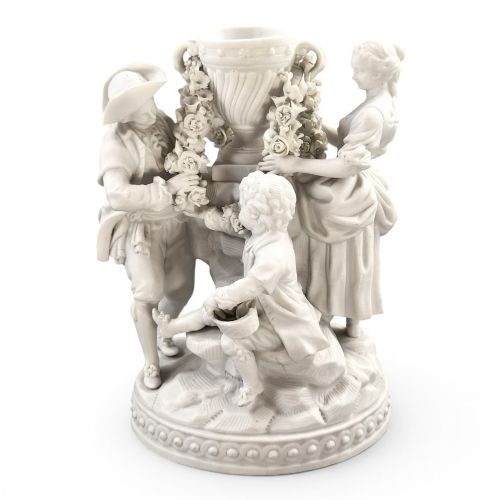
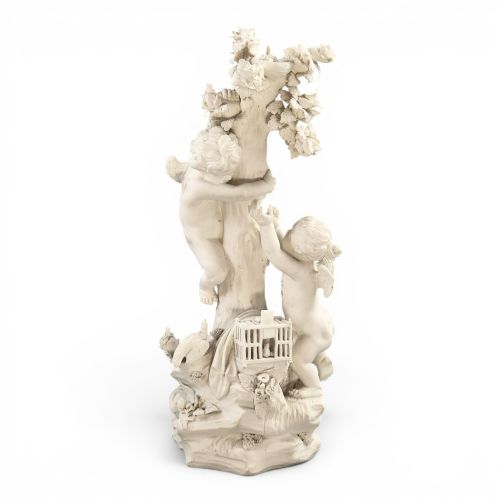
Stylistic influences range from Neoclassical and French Rococo Revival to Victorian Classicism and Art Nouveau. Figures depict allegorical subjects, literary scenes and animals modelled with intricate surface textures.
Materials and manufacture
Manufacturers shaped these works using soft-paste porcelain, hard-paste porcelain or parian ware left unglazed after firing. This biscuit or bisque state absorbs no shiny gloss, retaining a tactile, marble-like texture ideal for fine detail.
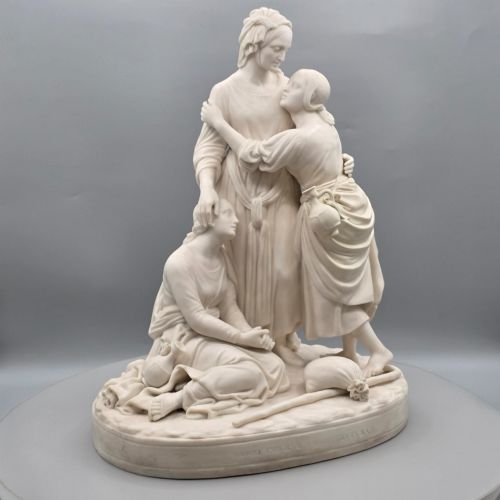
Hunting dogs and the Four Elements rub shoulders with Rebekah at the well in this varied gathering of unglazed ceramic company.
Assessing quality
The crispness of the unglazed surface defines the standard of the piece. Fine biscuit porcelain retains sharp undercut details and smooth contours without the blurring common in worn or secondary-moulded casts.
Minton·Derby·Triebner Ens and Co·Copeland·Royal Dux
The Antique Biscuit Porcelain Group Glossary
- Biscuit porcelain
- Unglazed ceramic fired once to vitrify the body and leave a matte, porous finish resembling marble. It is also frequently termed bisque porcelain.
- Parian ware
- A fine-grained white parian porcelain developed in the nineteenth century to imitate carved marble. It vitrifies at a lower temperature than standard porcelain, producing a dense, statuesque body.
- Soft-paste porcelain
- An artificial ceramic paste composed of clay and glass frits fired at lower temperatures than hard-paste porcelain. It has a warm, slightly softer texture often found in eighteenth-century pieces.
- Neoclassical
- A design style inspired by classical antiquity characterised by restrained elegance and mythological themes. It appears frequently in figures depicting classical deities and allegorical subjects.
- Rococo Revival
- A nineteenth-century revival of eighteenth-century asymmetry, scrollwork and naturalistic motifs. This style informs the flowing compositions and floral garlands seen on various sculptural groups.
Antique Biscuit Porcelain Group: Frequently Asked Questions
What is biscuit porcelain?
Biscuit porcelain is unglazed ceramic fired to a matte finish that resembles carved marble. The lack of surface glaze highlights the intricate modelling and sculptural detail of the figures.
Potters utilised this technique to achieve a soft, tactile surface quality distinct from traditional glossy tableware and decorative ceramics.
How were these figure groups used?
These sculptural groups served as decorative centrepieces for dining tables and drawing-room mantelpieces during the Georgian and Victorian periods. They displayed the owner's cultural literacy through classical mythology, literature and allegorical subjects.
Collectors arranged them in prominent display cabinets alongside other fine porcelain and decorative objects to demonstrate refined taste.
How do I date an antique group?
Dating relies on stylistic markers such as Neoclassical drapery, Victorian classicism or Art Nouveau forms, combined with paste composition. Eighteenth-century pieces utilise soft-paste porcelain, whereas nineteenth-century works frequently employ parian ware.
Maker marks, impressed numbers and title inscriptions stamped into the unglazed base provide further evidence of origin and period.
How should I clean my biscuit porcelain?
Because the ceramic surface is unglazed and porous, it easily absorbs oils and dirt from hands. Dust the piece gently with a soft, dry brush rather than using water or liquid cleaners.
Avoid abrasive cloths or chemical solvents that can lodge in the fine crevices of the unglazed porcelain body and stain the matte finish.