
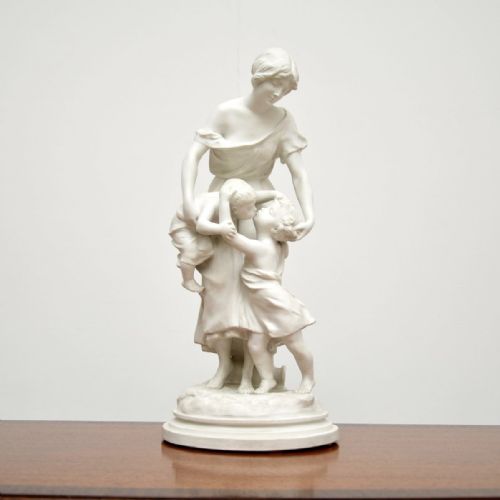


Victorian Figural Porcelain Sculpture
These Victorian figural porcelain sculpture pieces bring nineteenth-century figurative artistry into a room with modelled clay and coloured enamel.
Victorian Figural Porcelain Sculpture
A victorian figural porcelain sculpture represents human and mythological figures shaped in ceramic materials during the nineteenth century. These works appear as single decorative figures, paired groups, large centrepieces, and sculptural scenes spanning the Victorian era and the year nineteen hundred and ten.
The objects derive from various European traditions, encompassing French Rococo revival designs, Art Nouveau contours, and Rococo revival aesthetics. Forms range from intimate porcelain figurines to substantial figural groups depicting musicians, children, and classical subjects.
Buyers frequently encounter parianware, bisque figures, and glazed ceramic compositions bearing detailed enamel work and gold leaf accents. These pieces function primarily as decorative interior objects designed for display on mantelpieces, tables, and cabinets.
How they were made
Makeries shaped hard-paste porcelain, ceramic bodies, and bisque porcelain into complex forms before applying intricate glazes and enamel decoration. The resulting matte or glossy surfaces highlight the precision of nineteenth-century modelling techniques.
Many items incorporate applied gold leaf and gilding to accentuate sculptural details, drapery, and architectural elements within the groups. These metallic finishes require careful firing to adhere permanently to the ceramic body.
Fortune-tellers and infant Tritons populate these ceramic groups, proving that Victorian mantelpieces were surprisingly dramatic places.
What varies in quality
The finesse of the modelling marks the primary distinction between standard production and superior work. Sculptures exhibiting crisp facial expressions, detailed hands, and deeply undercut drapery demonstrate greater technical competence in the clay.
Application of enamel colour and gold leaf reveals the skill of the studio decorator. Controlled brushwork and subtle shading elevate a piece above simpler, heavier glazing applications.
Royal Worcester Porcelain·Eugene Clauss of Paris·Vion et Baury·Royal Dux Bohemia·Copeland
The Victorian Figural Porcelain Sculpture Glossary
- Bisque porcelain
- Unglazed porcelain fired once to produce a matte, porous surface resembling marble. This finish became popular in the nineteenth century for classical and sentimental figural groups.
- Parian ware
- A fine-grained, unglazed porcelain developed in Britain to imitate carved marble. It takes its name from the white marble quarried on the Greek island of Paros.
- Hard-paste porcelain
- A dense ceramic compound composed of kaolin and petuntse fired at high temperatures. It yields a durable, vitrified body that resists scratching and absorbs minimal moisture.
- Enamel
- A vitrescible composition applied to ceramic surfaces to add colour before secondary firing. It melts into a glassy layer upon heating.
- Centrepiece
- A large decorative object placed in the middle of a dining table or sideboard. These works often incorporate figures and vessels combined into a single composition.
Victorian Figural Porcelain Sculpture: Frequently Asked Questions
What is parian sculpture?
Parian sculpture uses an unglazed British porcelain developed to imitate carved white marble. The material allows for sharp detail in human figures and classical drapery.
Items made from this substance usually date from the Victorian period and display a matte texture distinct from glossy glazed ceramics.
What is a porcelain group?
A porcelain group consists of two or more figures modelled together in a single sculptural composition. These pieces often depict narrative scenes, musicians, or mythological subjects.
Such works required advanced kiln support during firing to prevent the complex limbs and extensions from sagging.
Where were these figures displayed?
Victorian households placed these sculptural objects on mantelpieces, central tables, and enclosed cabinets. Large centrepieces served as decorative focal points for dining rooms and formal spaces.
Smaller figures occupied smaller ledges and side tables where guests could inspect the enamel and gilt details.