


Antique Ceramic Dog Statuette
An antique ceramic dog statuette brings domestic charm to a room, capturing canine character in enduring porcelain, earthenware and glaze.
Antique Ceramic Dog Statuette
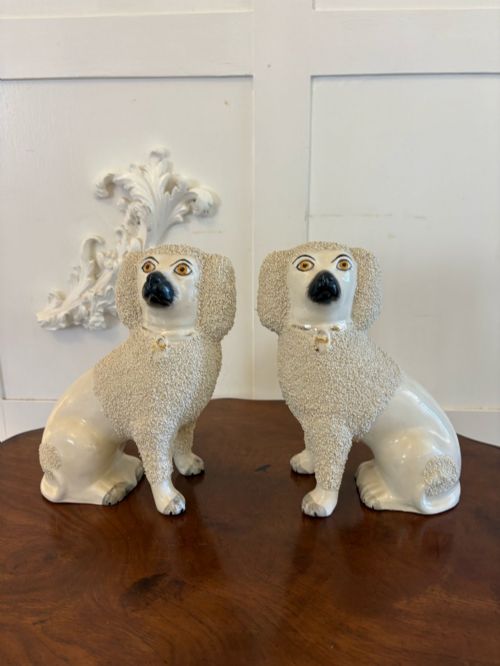
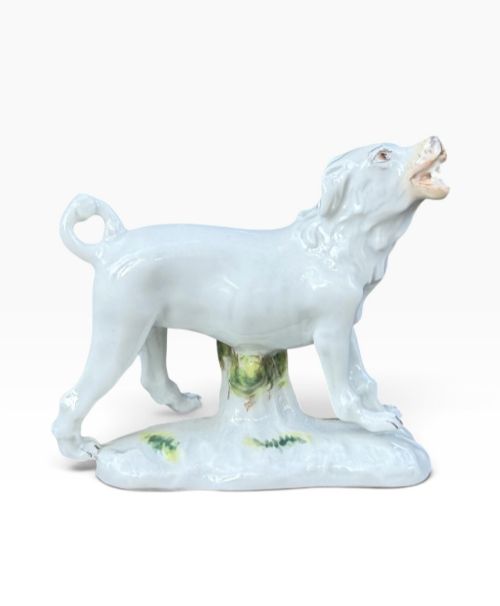
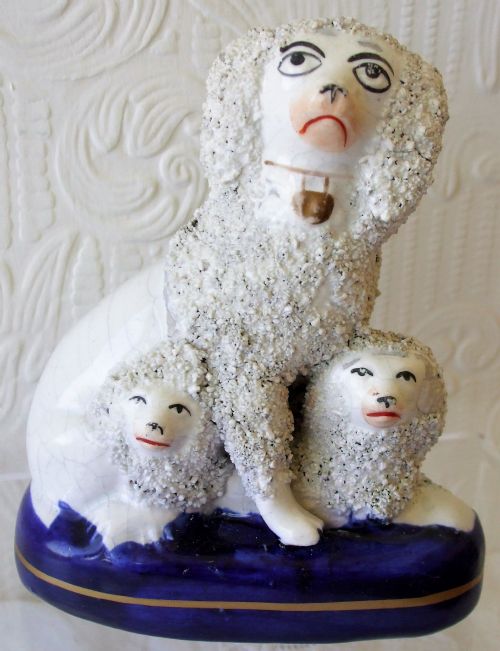
An antique ceramic dog statuette encompasses sculptural figures and decorative ornaments modelled across the eighteenth, nineteenth and early twentieth centuries. These pieces take the form of Staffordshire poodles and whippets, Meissen groups, Chinese Foo dogs and Japanese puppies, reflecting diverse domestic and mythological roles.
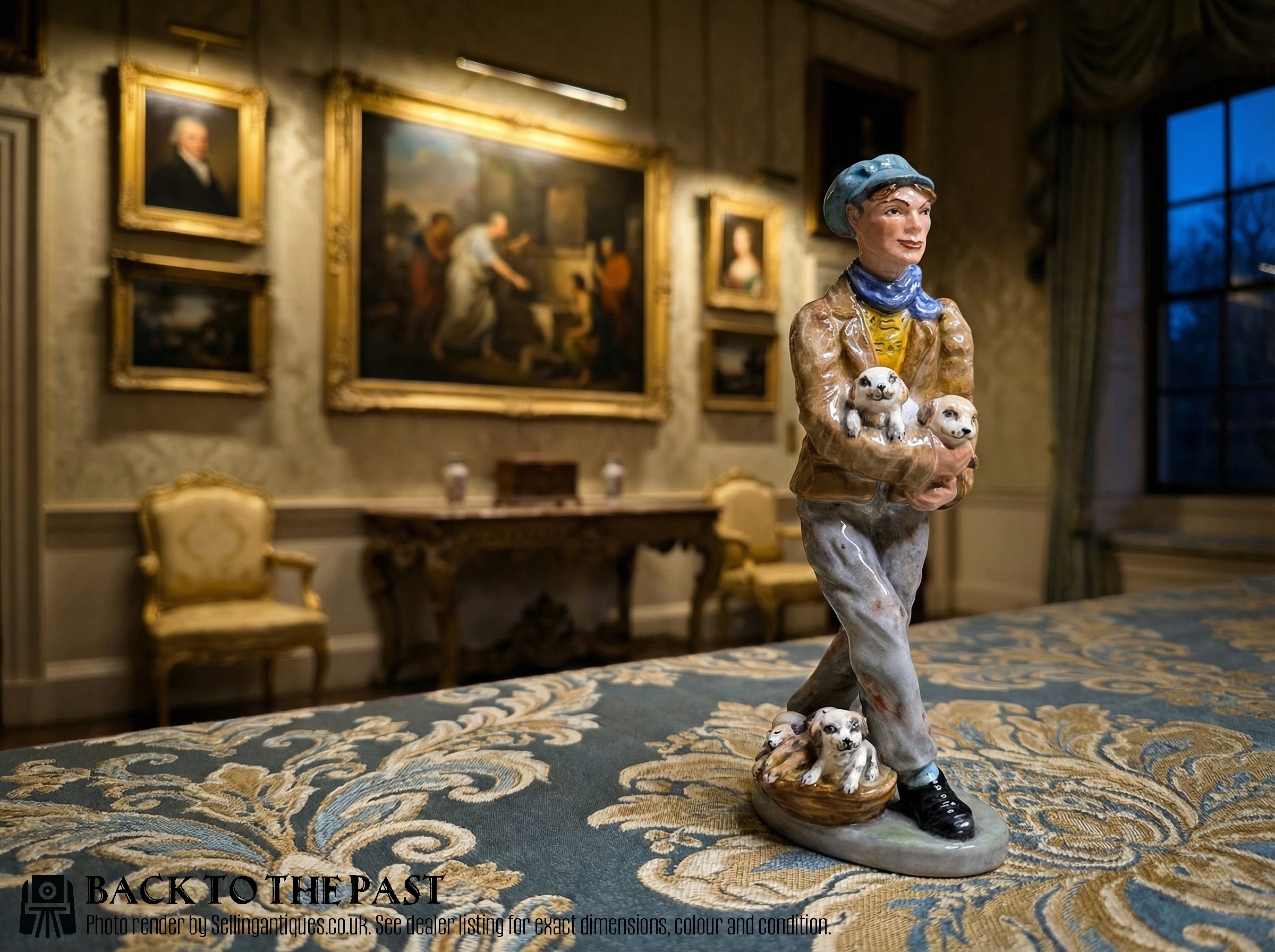
The selections encountered here range from Georgian porcelain figures and pairs of Victorian Staffordshire pottery to continental continental pieces and Edwardian china. Buyers will find individual seated dogs, quill holders, and complex figure groups featuring animals alongside human companions.
How they were made
Makers shaped these figures from earthenware, soft-paste porcelain and standard porcelain, applying lead glaze, enamel and gilding to finish the surfaces. Potters utilised modelling and moulding techniques to capture realistic or stylized animal forms, often finishing details with delicate gold leaf.
Firing methods varied according to the ceramic body, with continental factories such as Meissen and Derby employing high-heat porcelain techniques while Staffordshire potters favoured earthenware with vibrant glaze coatings.
Materials represented across the inventory include earthenware, soft-paste porcelain, enamel, gold leaf and lead glaze.
What varies in quality
The distinction between ordinary and superior pieces rests upon the precision of the modelling, the clarity of the facial expressions and the finesse of the hand-painting. Skill in applying enamel, glaze and gilding determines whether a piece displays crisp detail or softer, more blurred definition.
Artistic ambition also separates standard decorative items from works originating in established factories, where anatomical accuracy, balanced compositions and sophisticated period styling elevate the overall execution.
Meissen Porcelain·Derby Porcelain·Wedgwood and Co Ltd·Royal Capodimonte Factory
The Antique Ceramic Dog Statuette Glossary
- Staffordshire pottery
- Ceramic wares produced in the Staffordshire region of England, famous for earthenware figures like poodles and whippet quill holders. These pieces typically feature hand-painted details over a white or tinted glaze.
- Soft-paste porcelain
- A ceramic material composed of clay and glass frit, fired at lower temperatures than hard-paste porcelain. It was widely used in eighteenth-century European factories for detailed decorative figures.
- Enamel
- Opaque vitreous material fused to ceramic surfaces during firing to provide vibrant colours. Enamels allow for precise decoration on porcelain figures and groups.
- Lead glaze
- A shiny coating containing lead oxide applied to earthenware to waterproof the body and enhance surface reflection. This finish gives many nineteenth-century animal figures their characteristic gloss.
- Quill holder
- A functional ceramic desk accessory incorporating a receptacle for ink or pens alongside a decorative sculptural subject. Whippet figures frequently served this practical purpose on writing desks.
Antique Ceramic Dog Statuette: Frequently Asked Questions
How do I identify a Staffordshire dog?
Staffordshire dogs are typically made from earthenware rather than porcelain, featuring hand-painted markings and a glossy lead glaze. They often appear in pairs, such as poodles or whippet quill holders, originating from nineteenth-century English kilns.
Closer inspection reveals typical craquelure in the glaze and hollow bases characteristic of slip-cast or pressed Staffordshire production methods.
What is a whippet quill holder?
A whippet quill holder is a nineteenth-century ceramic desk accessory that combines a sculptural dog figure with a practical channel or rest for writing quills and pens. These pieces sat upon desks in Victorian studies, blending decorative appeal with everyday utility.
The ceramic dog serves as the central ornament while the base incorporates the necessary fittings for stationery.
How should I display porcelain figures?
Porcelain figures benefit from stable placement within enclosed cabinets or upon secure shelves away from direct sunlight and heavy foot traffic. Their delicate enamel and gold leaf decorations require gentle dusting with a soft brush rather than liquid cleaners.
Keeping them in stable environmental conditions protects the ceramic body and glaze from thermal shock.
How do I date an antique dog?
Dating relies upon observing the ceramic medium, glaze characteristics, factory marks and stylistic details associated with periods like the Georgian era or Victorian times. Georgian pieces often employ soft-paste porcelain, while Victorian examples frequently utilise heavier earthenware bodies with bright enamel.
Comparison with documented models from factories like Meissen or Derby provides further chronological context.