



Antique Ceramic Couple Figures
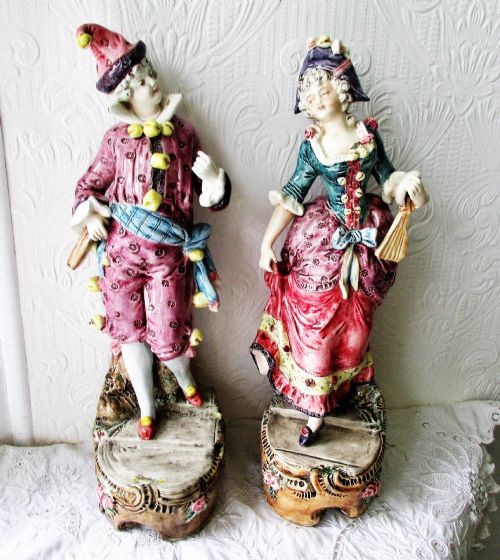
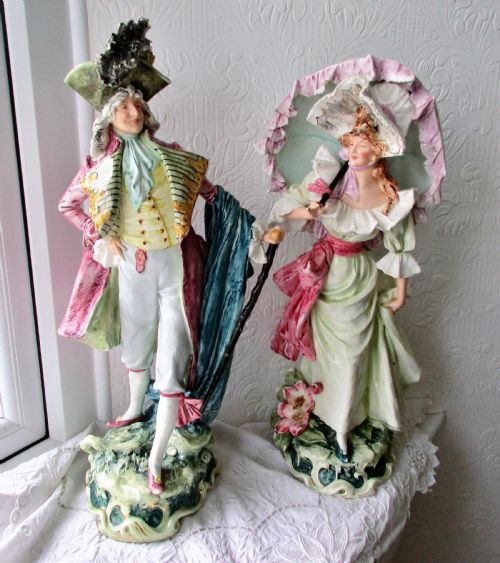
These antique ceramic couple figures capture romantic pairs, musicians and country folk across Victorian English earthenware and continental porcelain.
Antique Ceramic Couple Figures
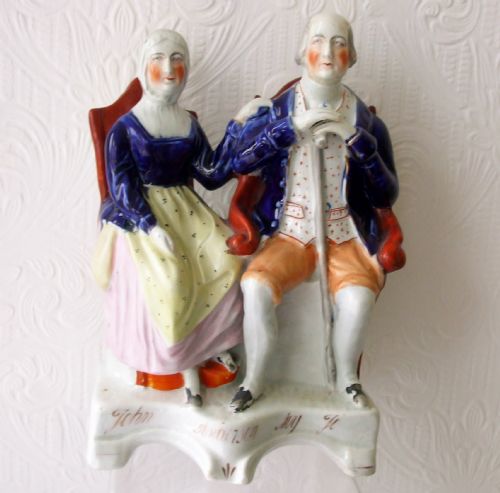
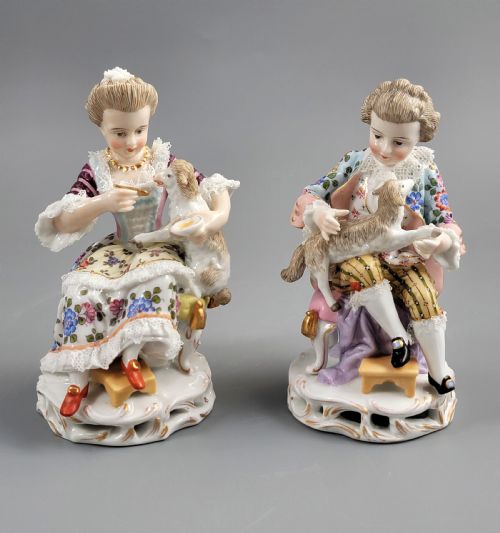
When you search for antique ceramic couple figures, you encounter a diverse range of sculptural forms including Staffordshire flatbacks, spill vases and continental porcelain groups. These pieces typically depict romantic pairs, gallant ladies with their companions, harvesters and musicians cast in pairs or single grouped compositions.
The English examples lean heavily toward Staffordshire pottery figures such as Scottish laird groupings and theatrical portraits. Meanwhile, continental makers from Germany and France contribute finely modelled hard-paste porcelain and biscuit figures that often emulate earlier Derby styles or neoclassical subjects.
How they were made
Continental factories such as Meissen, Sitzendorf and Volkstedt employed specialised biscuit and glazed porcelain techniques. English potteries relied on earthenware bodies finished with bright colour palettes suited to Staffordshire flatback production.
Fishermen, harvesters and courting couples stand shoulder to shoulder, frozen mid-romance by Victorian kilns.
What varies in quality
The standard of modelling separates ordinary figures from exceptional sculptural works. Superior pieces display crisp facial expressions, deeply undercut drapery and precise hand-painted details rather than heavy, indistinct glazes.
The application of enamel and gilding dictates the visual depth of a figure. Master porcelain manufactories achieved subtlety in tone and fine texture in lace or foliage, whereas lesser workshops produced simpler, flatter decoration.
Bourdois & Bloch Paris·Letu & Mauger Paris·C. G. Schierholz·Vion et Baury·Royal Capodimonte Factory·Carl Thieme Potschappel·Triebner Ens & Co·Rozenburg
The Antique Ceramic Couple Figures Glossary
- Flatback
- A Staffordshire pottery figure designed with an unglazed or minimally finished flat rear surface intended for display against a wall or mantelpiece. These figures formed a staple of Victorian household ornamentation.
- Bisque Porcelain
- Unglazed white porcelain fired to a matte, tactile finish that resembles marble. It allows sculptural details to remain sharp and prominent without the softening effect of a glossy glaze.
- Spill Vase
- A hollow ceramic figure incorporating an integrated cylindrical holder for wooden taper matches. Placed near a fireplace, they combined domestic utility with figurative decoration.
- Hard-paste Porcelain
- A durable ceramic paste composed of kaolin and petuntse fired at very high temperatures. It produces a ringing tone when struck and a bright, vitrified body.
- Faience
- Tin-glazed earthenware produced across Europe with opaque coloured glazes. The technique permits hand-painted surface designs beneath or over the fired glaze layer.
Antique Ceramic Couple Figures: Frequently Asked Questions
What subjects do these figures usually show?
The subjects span romantic pairs, gallant ladies with companions, shepherds and shepherdesses, harvesters and theatrical characters. English Staffordshire pieces often portray country couples, Scottish lairds and historical or literary portraits.
Continental porcelain groups frequently depict musicians, children with animals or mythological pairings. These figures served as decorative mantel ornaments in nineteenth-century interiors.
How do I distinguish English Staffordshire from continental porcelain?
English Staffordshire pieces are typically heavier earthenware pottery featuring bright, hand-applied enamel colours and flat unglazed backs designed for mantel shelves. They possess a rustic folk art charm characteristic of nineteenth-century domestic production.
Continental porcelain figures from factories like Meissen, Sitzendorf or Volkstedt utilise hard-paste or bisque porcelain with intricate moulding, fine facial detailing and often factory marks on the underside. They are glazed or left as matte biscuit across the entire sculpture.
What is a spill vase figure?
A spill vase figure is a ceramic sculpture that incorporates an upright cylindrical tube alongside the human figures. In nineteenth-century parlance, a spill was a thin slip of wood used to transfer a flame from a hearth fire to a candle or pipe.
These combination pieces allowed households to keep taper spills close at hand while displaying decorative portrait figures or pastoral couples on the mantelpiece.
How should I display antique ceramic figures?
Display these figures on stable, level surfaces away from heavy foot traffic or vibration. Mantelpieces, enclosed display cabinets and sturdy console tables provide secure environments for ceramic and porcelain sculptures.
Keep them out of direct sunlight to protect hand-painted enamel colours and gilt highlights from fading over time. Handle them carefully by supporting the base rather than delicate protruding elements like arms or musical instruments.