




Antique Centre Ottoman
These antique centre ottoman pieces are substantial upholstered seats designed to anchor a room, offering both decorative presence and practical versatility for the modern interior.
Antique Centre Ottoman
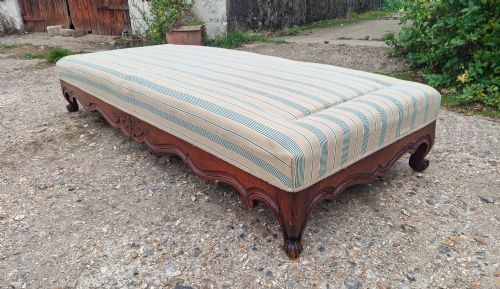
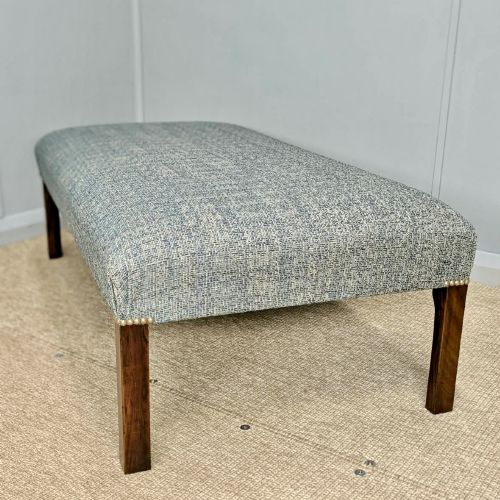
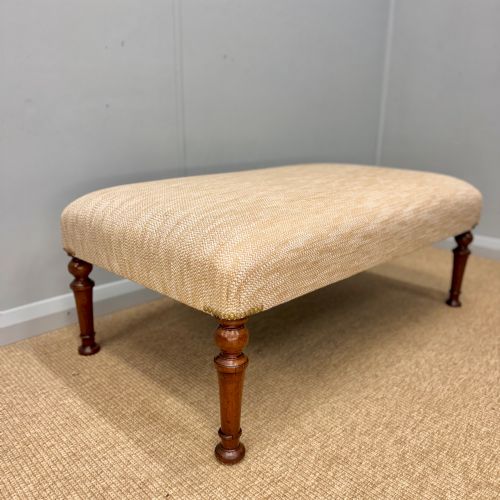
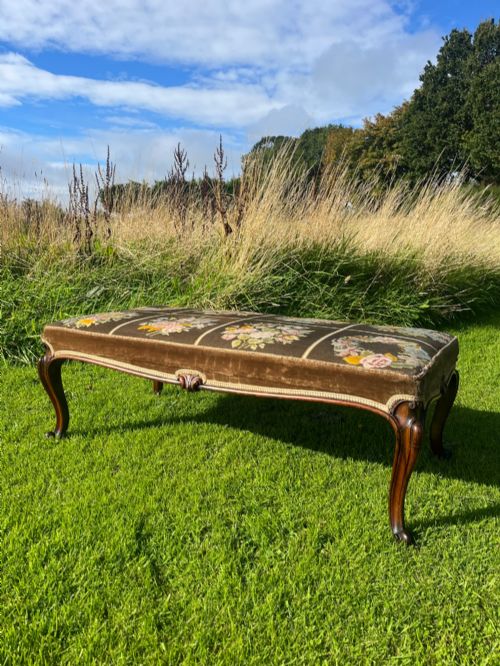
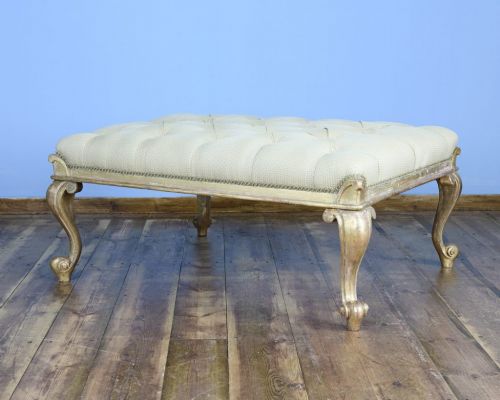
An antique centre ottoman functions as a major seating form designed to stand independently in the middle of a room rather than against a wall. The pieces appearing here span the Georgian, William IV, and Victorian eras, alongside later revival styles such as Louis XV, Jacobean, and George III.
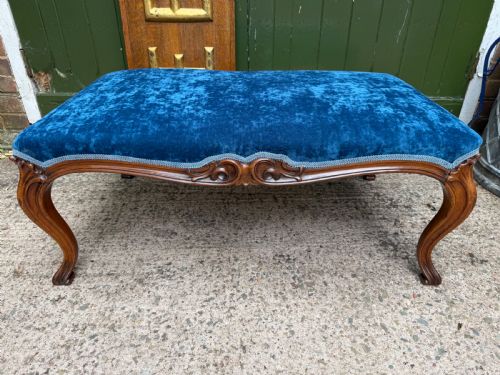
Most examples take the form of large stools, footstools, or window seats often described simply as centre stools. They emerge in substantial proportions, intended to draw the eye and provide generous upholstered surfaces.
Makers shaped these forms from woods including mahogany, rosewood, walnut, oak, and giltwood. Upholstery choices vary from buttoned leather and tapestry to plush velvet.
How they were made
Cabinetmakers constructed the supportive frames using dense timbers like mahogany, rosewood, and oak, often incorporating carved details or parcel gilt accents. These foundational structures required sturdy joinery to support heavy everyday use as seating.
Upholstery methods involved deep buttoning, traditional webbing, and stuff-over techniques using materials such as leather, velvet, and tapestry. Artisans finished these surfaces by hand, ensuring the textile edges met the wooden frames precisely.
Antique Centre Ottoman Retail Price Guide 2026
Typical asking prices for centre ottoman among the pieces listed under this phrase on Sellingantiques today, from the lower quarter to the upper quarter. They describe what is for sale here now, not the wider market.
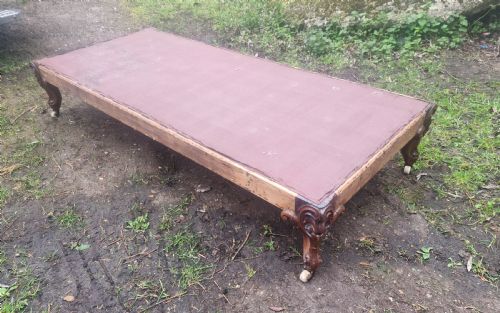
Several Victorian pieces wait patiently in bare frames, ready for a modern upholsterer to give them a completely new lease of life.
What varies in quality
The distinction between standard and superior pieces rests in the ambition of the timber carving and the architectural balance of the frame. Heavy rosewood and finely giltwood structures command greater visual weight than simpler oak or mahogany counterparts.
Surface execution also dictates value, particularly where parcel gilt touches or intricate woodwork survive in crisp condition. The choice of original or period-appropriate upholstery materials, such as buttoned leather or fine tapestry, shapes the overall character.
The Antique Centre Ottoman Glossary
- Centre stool
- A large, freestanding seat designed to be viewed from all sides in the middle of a room. These pieces function as versatile seating or low tables.
- Parcel gilt
- Woodwork highlighted with thin applications of gold leaf on specific carved details. This technique adds contrast against dark timbers like rosewood or mahogany.
- Buttoned leather
- Upholstery secured with deep indentations held by fabric-covered buttons. This method creates a geometric diamond pattern across the leather surface.
- Giltwood
- Timber coated entirely with gold leaf over a prepared gesso ground. It appears frequently on revival pieces influenced by French court tastes.
Antique Centre Ottoman: Frequently Asked Questions
Where should an antique centre ottoman be placed?
These pieces suit placement in the middle of a large drawing room or library where they can be approached from all sides. Their substantial scale allows them to function as a focal point.
They also serve effectively at the foot of a bed or beneath a wide window as an extended seat.
How do I care for antique wood and leather?
Maintain timber surfaces by applying a traditional beeswax polish sparingly and buffing with a soft cloth. Avoid placing the furniture in direct sunlight to protect the finish.
Treat leather upholstery with a suitable conditioner to keep the hide supple and prevent cracking over time.
Can these ottomans be used as coffee tables?
Many large stools and centre ottomans adapt well to holding trays for drinks and books. Their firm upholstered surfaces provide a practical alternative to rigid wooden tables.
Ensure any tray used has a stable base to protect the fabric or leather beneath.
How do I distinguish between Victorian and Georgian styles?
Georgian and George III style examples typically display restrained classical proportions and disciplined mahogany or walnut carving. They reflect architectural balance and symmetry.
Victorian pieces often embrace heavier proportions, rosewood framing, and exuberant revival details such as deep buttoning or rococo curves.