
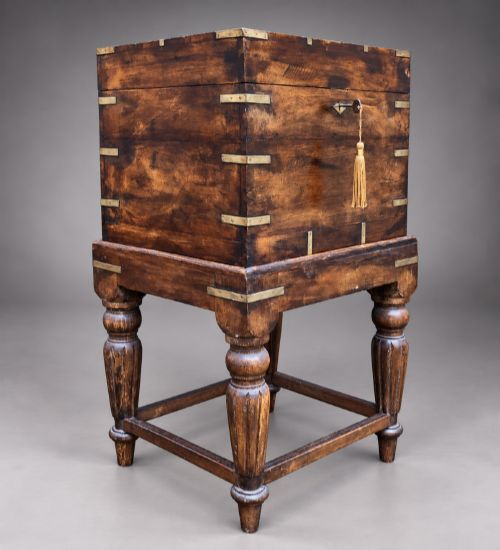
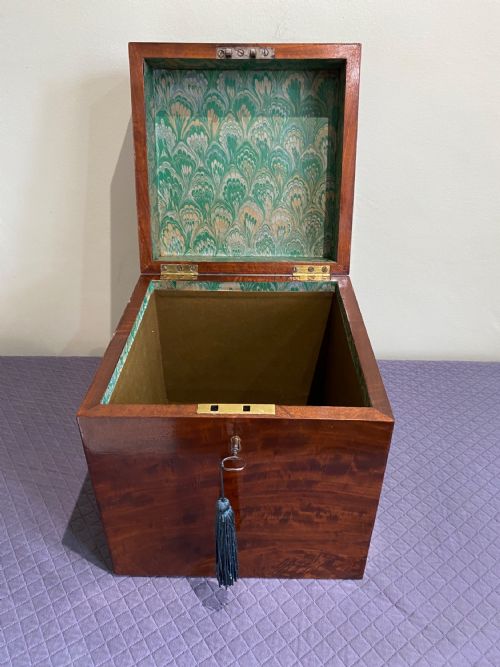
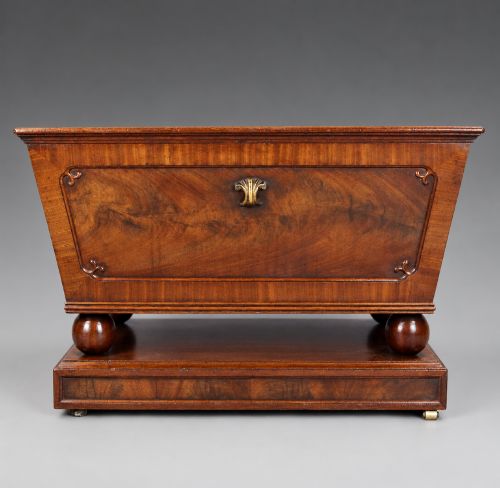
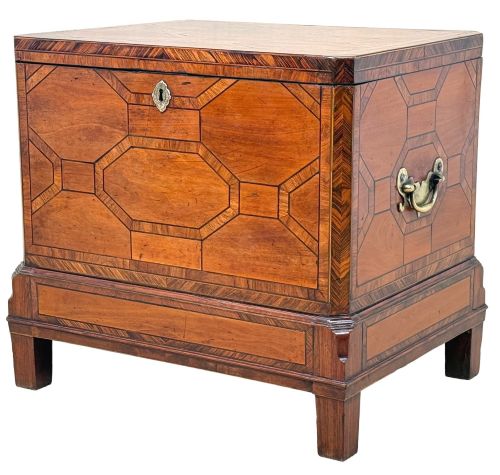
Antique Cellarette Chest
An antique cellarette chest holds bottles securely at table height, bringing refined mahogany and brass craftsmanship straight from the Georgian dining room into a modern interior.
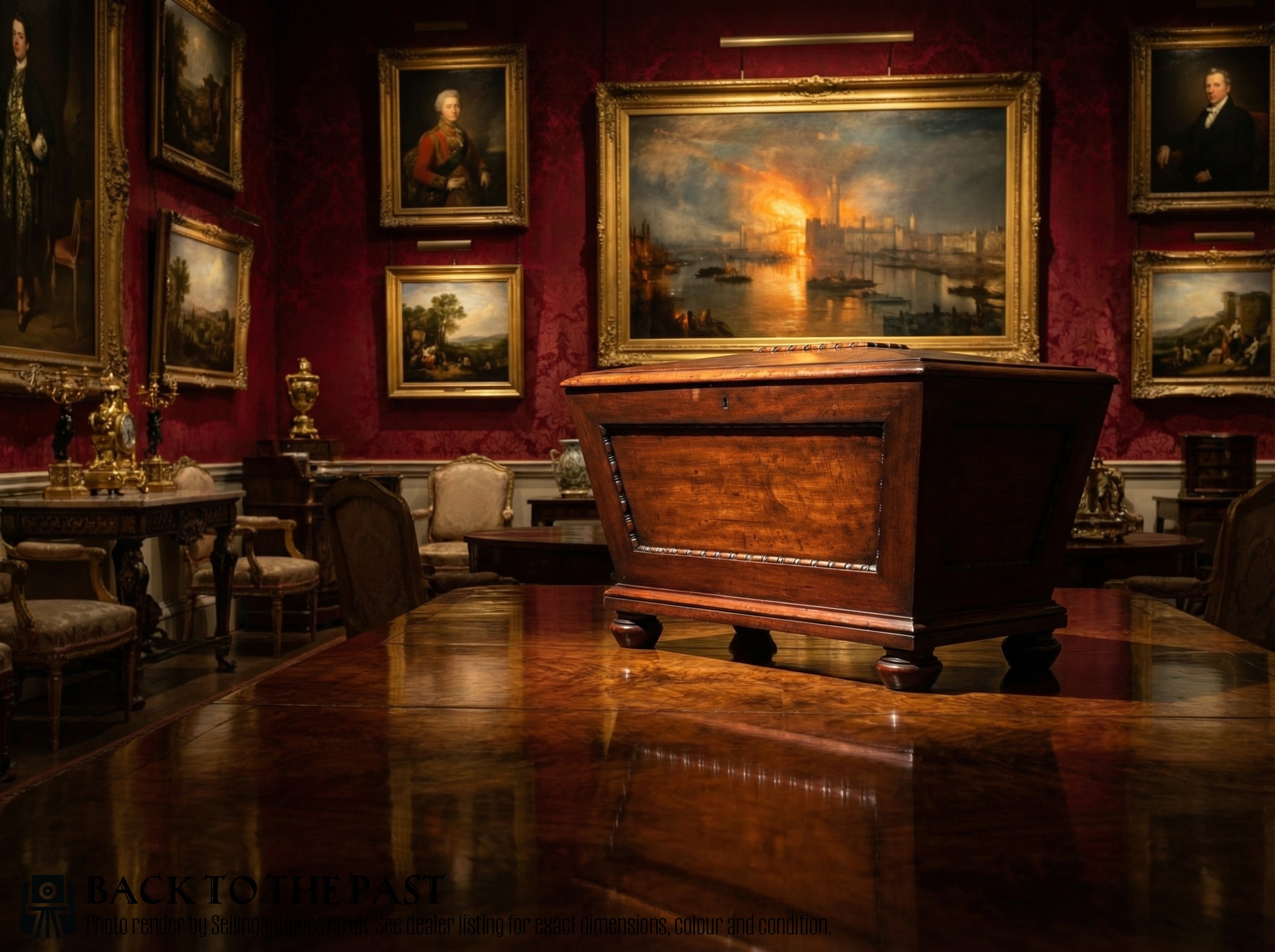
Antique Cellarette Chest
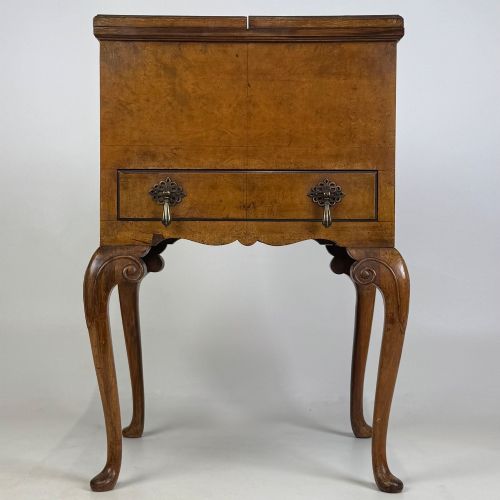
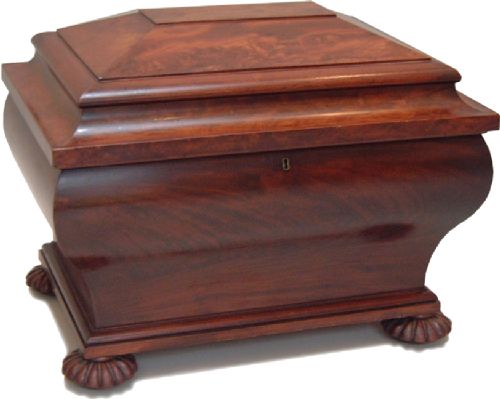
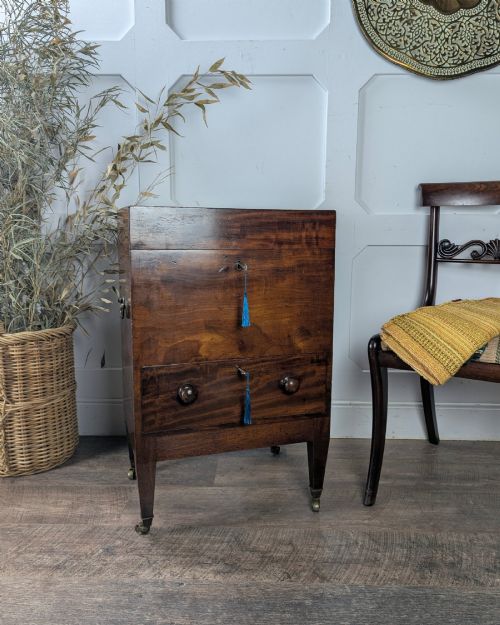
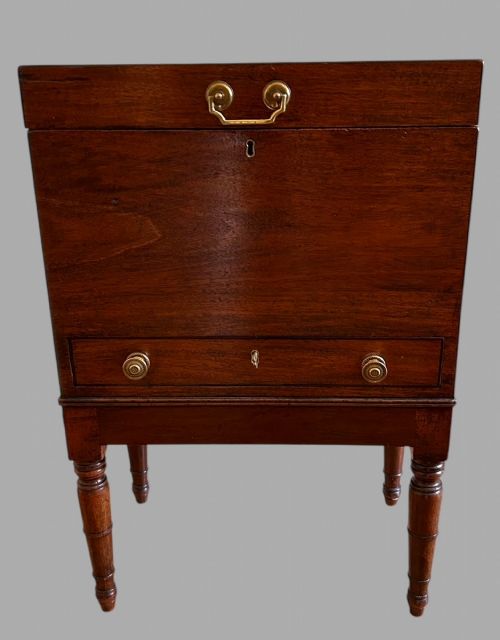
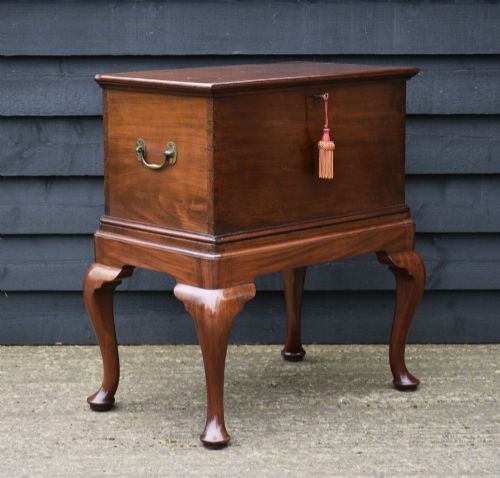
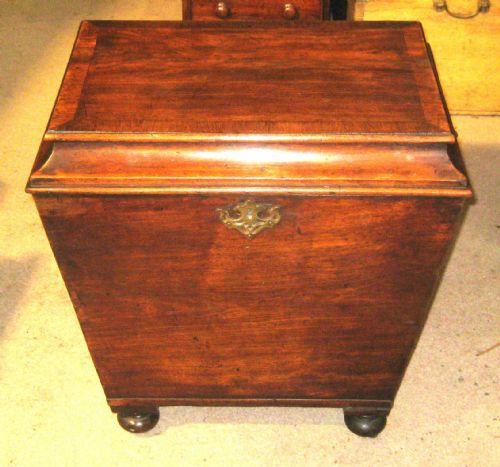
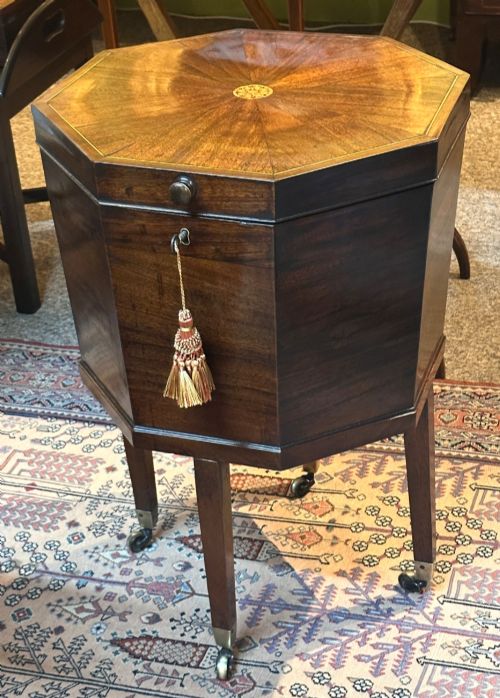
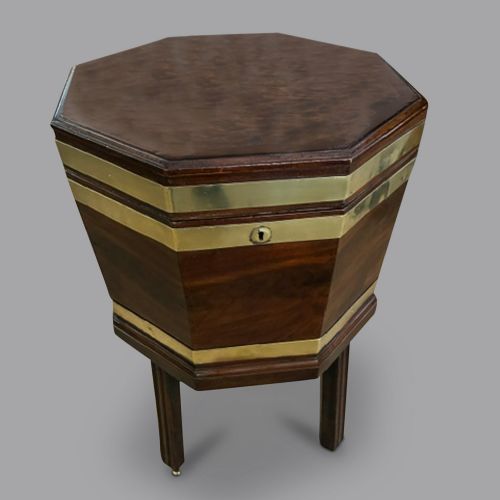
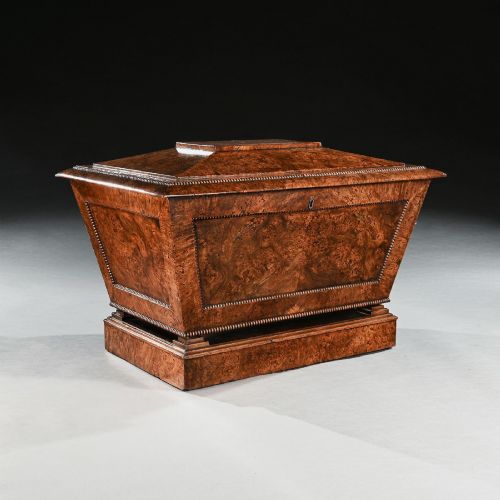
When you search for an antique cellarette chest, you encounter sturdy timber storage boxes and wine coolers designed to hold bottles and decanters safely near the dining table. These pieces span the Georgian, Regency and Victorian eras, taking forms such as octagonal boxes, sarcophagus shapes and pedestals.
Mahogany remains the dominant wood across the selections, often appearing as flame mahogany, alongside satinwood, pollard oak and walnut. Many examples include original brass fittings, lead linings and stands that elevate the heavy storage body off the floor.
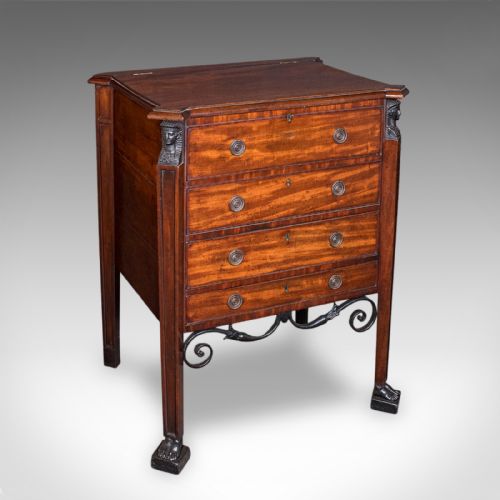
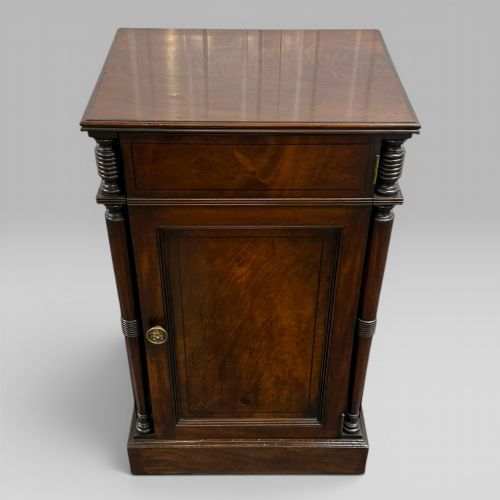
The objects serve primarily as wine coolers and decanter boxes, though related forms include campaign chests, plate-warmer pedestals and cocktail cabinets. Pieces originate from English workshops as well as Anglo-Indian and French makers, showing diverse regional interpretations of classic furniture forms.
What varies in quality
The distinction between standard examples and superior pieces rests on the choice of timber figure, such as highly figured flame mahogany or pollard oak, paired with crispness in the cabinet work. Maker attribution to known workshops like Gillows or Edwards and Roberts also elevates the standing of a piece.
Hardware integrity separates average items from the best survivals, specifically the retention of original brass binding, working locks, castors and internal lead liners. Secondary details like fine stringing, ormolu mounts and well-executed stands reflect higher workshop standards.
Design influences span traditional Georgian and Regency styles through to Egyptian taste and French Louis XVI revival forms.
Edwards and Roberts·Gillows·Gillingtons
The Antique Cellarette Chest Glossary
- Cellarette
- A lockable container or chest designed specifically for holding wine bottles and decanters near the dining table. These vessels often featured internal divisions and metal linings.
- Sarcophagus form
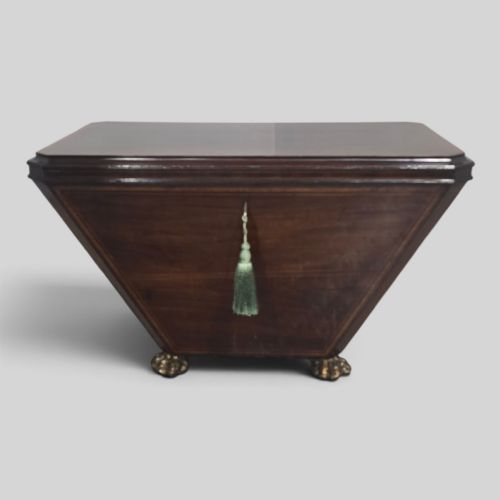
- A distinct nineteenth-century styling characterised by a tapered, tomb-like box shape with heavy moulded edges. This style frequently appeared on Regency wine coolers.
- Flame mahogany
- A veneer cut from the fork of the mahogany tree where the branch meets the trunk, producing a rippling, flame-like grain pattern. Cabinet makers utilised this timber on prominent exterior panels.
- Pollard oak
- Timber taken from pollarded oak trees, known for dense, knotty burr formations that create highly decorative surfaces. It appeared on late Regency and George IV period furniture.
- Lead liner
- A protective sheet metal insert fitted inside the base of a wine cooler to hold ice and water without rotting the surrounding wood. Surviving original liners are uncommon.
- Tantalus
- A locking wooden frame holding decanters visible behind bars, preventing guests from accessing the spirits without a key. These items often combined games compartments and crystal storage.
Antique Cellarette Chest: Frequently Asked Questions
What is an antique cellarette chest?
An antique cellarette chest is a specialised wooden container built to store wine bottles, decanters and spirits safely within arm's reach of the dining table. They date predominantly from the Georgian and Regency periods.
These pieces range from simple octagonal boxes on stands to elaborate sarcophagus-shaped coolers lined with lead for ice and bottled contents.
How were cellarettes used historically?
Dining rooms in grand houses often lacked sideboards large enough for all beverages, so cellarettes sat on the floor or on dedicated stands to keep wine cool near guests. Servants loaded the internal wells with ice and water.
Locks on the lids prevented unauthorized access to expensive imported wines and spirits between meals, keeping the contents secure.
How do I style a cellarette in a modern home?
A cellarette functions well as a low side table or a statement storage piece in a living room, study or dining space. The flat top surface accommodates lamps, books or decorative objects.
The interior compartments remain useful for storing contemporary bottles, bar accessories or glassware while displaying traditional woodwork.
How can I tell Georgian from Regency examples?
Georgian pieces, particularly from the George III era, often feature straight lines, fine mahogany veneers and simpler bracket feet or octagonal shapes. They tend to look restrained and architectural.
Regency examples lean towards heavier classical revival forms like the sarcophagus shape, incorporating bold brass lion paw feet, ormolu mounts and pollard oak finishes.