
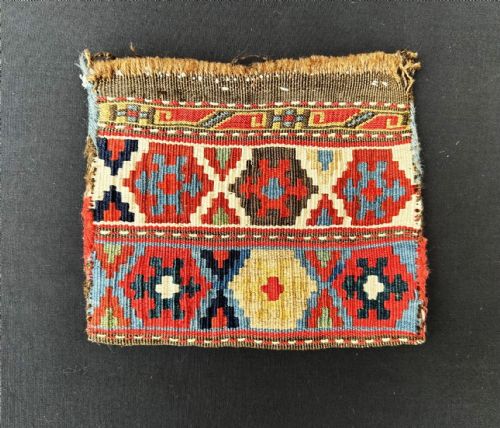


Antique Caucasian Rug Bag
An antique caucasian rug bag brings nomadic textile artistry into a modern room through woven storage forms.

Antique Caucasian Rug Bag
The format typically survives as a flatwoven panel or structured container designed to hang from pack animals or furnish a tent interior. Buyers frequently encounter Shahsavan soumak techniques and Jaf Kurd saddlebag faces dating from the eighteen-seventies through nineteen-hundreds.
How they were made
These textiles rely on hand-spun wool foundations combined with natural vegetable dyes that produce distinct palettes across the surviving examples. Artisans utilised soumak wrapping techniques, kilim flatweaving, and pile knots to construct durable containers capable of enduring daily nomadic migration.
Weavers sourced local wool materials and processed them by hand before applying traditional patterning such as bird and dragon motifs, geometric panels, and stripe variations. The integration of cotton for structural elements appears alongside all-wool constructions in specific regional outputs.
Listings span production dates from eighteen-fifty through nineteen-twenty, featuring hand-spun wool and natural vegetable dyes.
What varies in quality
The distinction between standard examples and exceptional pieces rests upon the crispness of the drawing and the complexity of the weave structure. Finer soumak work featuring intricate bird and dragon iconography demonstrates superior technical execution compared to simpler utilitarian panels.
Depth and saturation of natural vegetable dyes alter the visual impact of each piece, where well-preserved hues elevate the artistic merit. The completeness of original saddlebag pairs or intact mafrash storage boxes also defines the upper tier of the surviving range.
The Antique Caucasian Rug Bag Glossary
- Mafrash
- A large rectangular storage container used by nomads for bedding and household goods, usually constructed from four side panels and a base. These complete pieces form substantial storage modules in tribal households.
- Soumak
- A flatweaving technique where pattern threads wrap over and under the warp threads in a brocade-like manner, creating a ribbed surface texture. This method allows for precise geometric and figurative designs without pile.
- Khorjin
- The traditional Persian and Caucasian term for a pair of saddlebags designed for transport on animals. They often divide into two matching compartments joined by a central web.
- Bag Face
- The decorative front panel of a storage bag or saddlebag that survived after the plain back panel deteriorated or was cut away. Collectors prize these surviving faces for their concentrated design work.
- Shahsevan
- A confederation of nomadic tribes originating from the Moghan region of Azerbaijan known for distinctive soumak weaving and intricate storage bags. Their work frequently incorporates dramatic animal and bird motifs.
Antique Caucasian Rug Bag: Frequently Asked Questions
What were antique caucasian rug bags used for?
Nomadic tribes utilised these woven containers to pack bedding, clothing, and household provisions during seasonal migrations across the Caucasus and northern Persia.
They functioned as functional saddlebags, storage chests, and smaller vanity pouches that hung inside tents for daily organisation.
How do I display a rug bag in my home?
Many collectors mount complete bag faces or mafrash panels on walls as textile art to protect the fragile wool from heavy floor traffic.
Smaller formats often find new life as decorative cushions or pillows when backed with complementary fabrics.
What is the difference between a soumak bag and a kilim bag?
Soumak bags feature a wrapped weft-faced structure that creates a textured, raised pattern on the front face resembling embroidery.
Kilim bags utilise a flat tapestry weave without wrapping, resulting in a smooth fabric on both sides.
How can I tell a Shahsavan bag from a Kurd bag?
Shahsavan weaving typically showcases precise soumak technique with geometric motifs, birds, and dragons originating from the Moghan region.
Jaf Kurd examples often display distinct repeating boteh designs or simpler geometric field patterns with plain weave backs.