
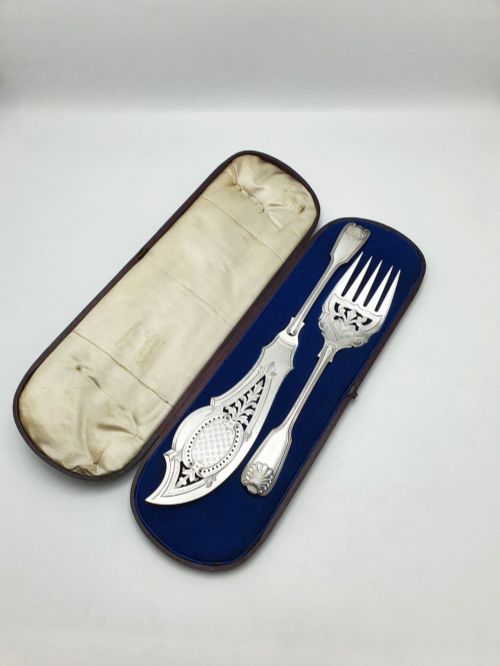
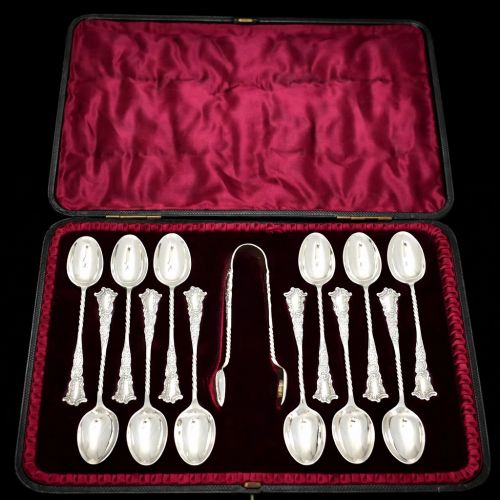
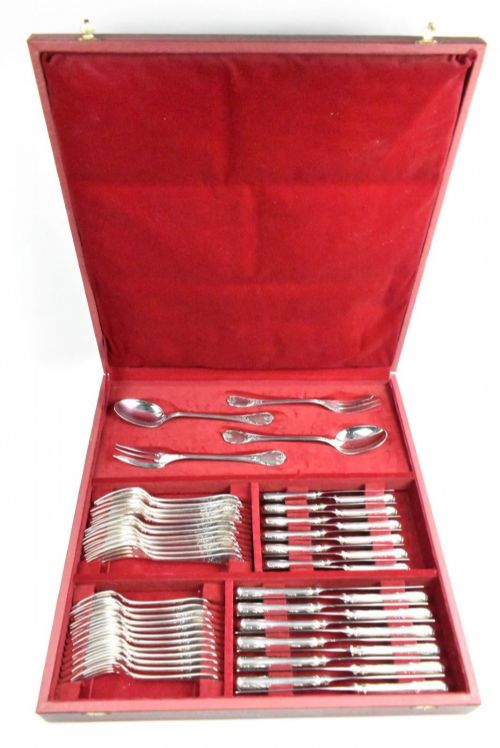

Antique Cased Flatware
Antique cased flatware brings together fitted boxes and silver or plated cutlery designed for special occasions.
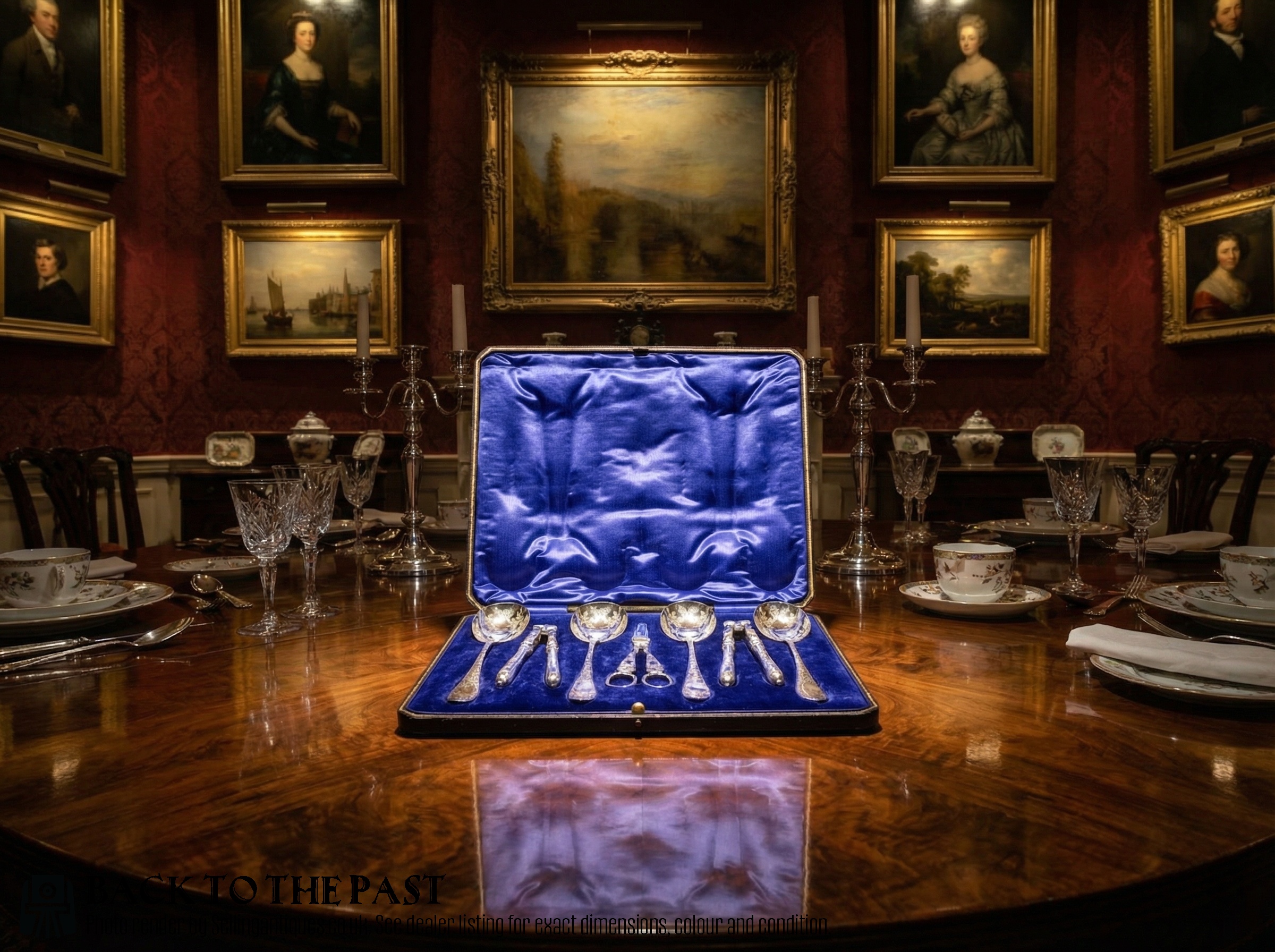
Antique Cased Flatware
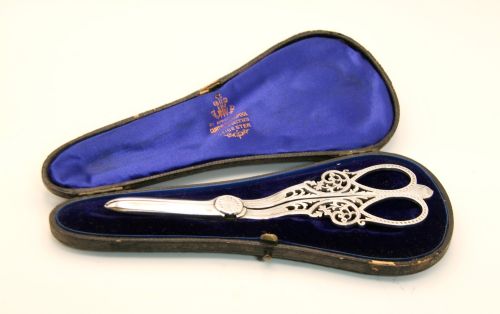
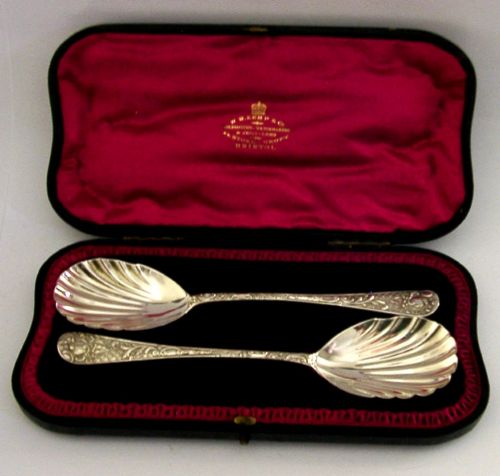
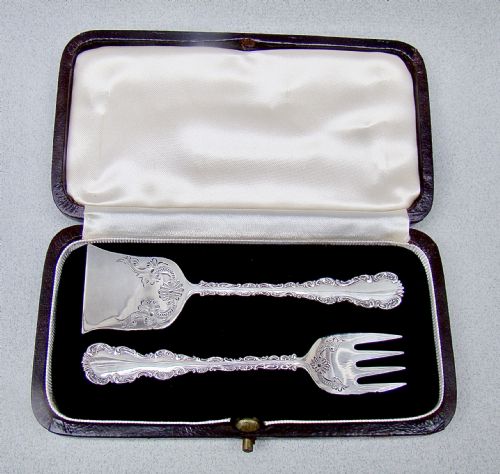
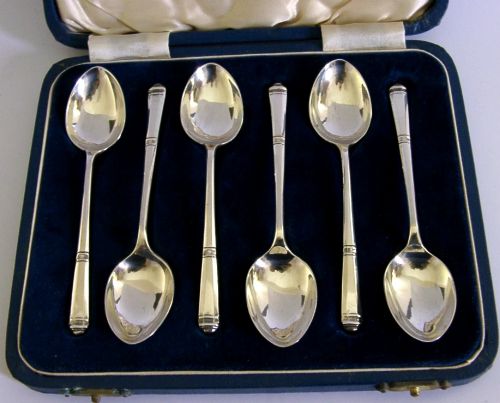
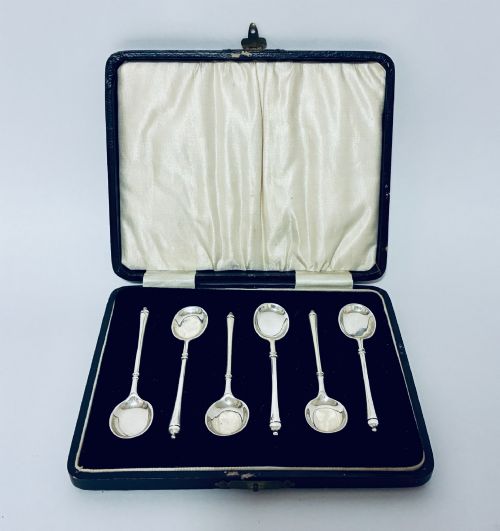
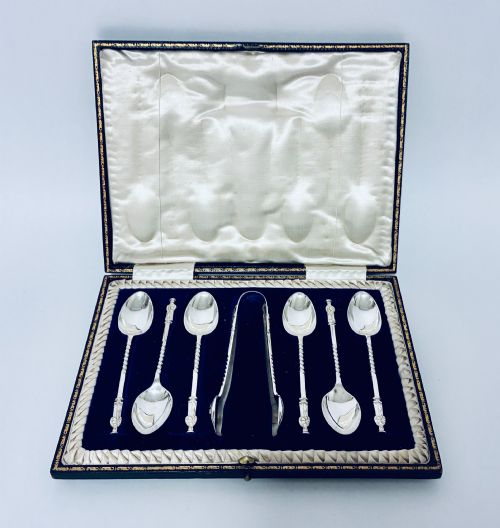
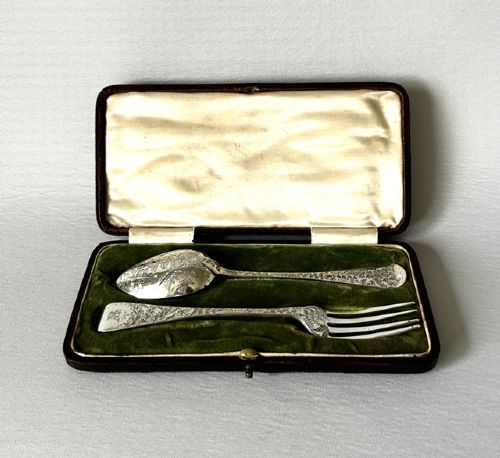
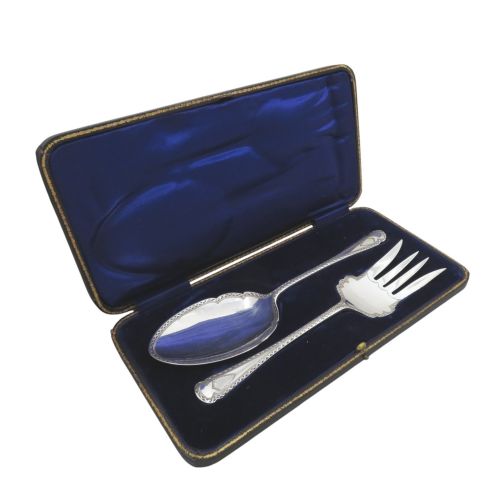
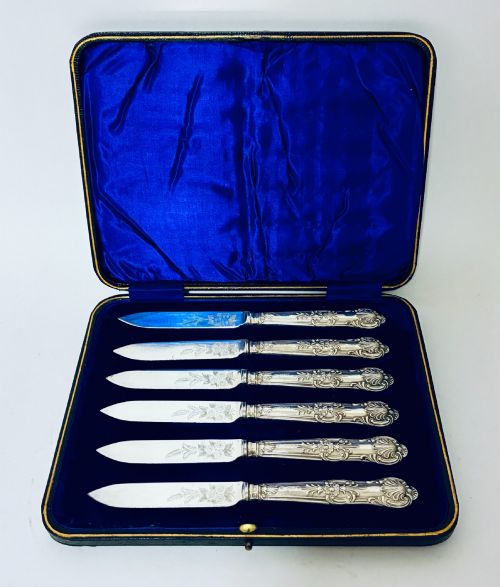
When you search for antique cased flatware, you encounter specialised cutlery and serving utensils housed in dedicated presentation boxes. The pieces range from small sets of teaspoons and fruit knives to larger fish servers, christening sets, and complete dining services.
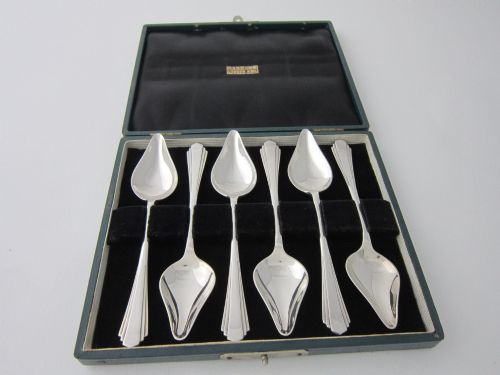
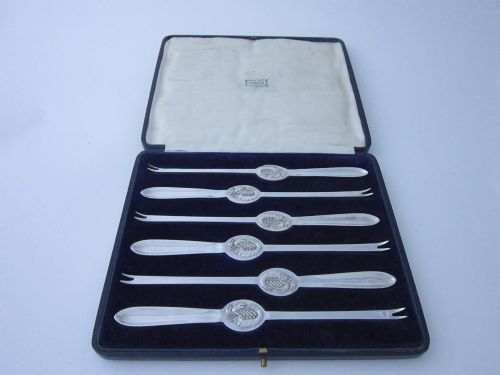
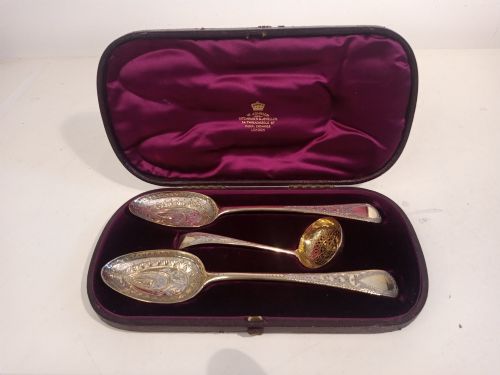
You are most likely to meet Victorian and Edwardian examples on this page, alongside pieces from the 1900s, 1920s, and 1930s. The forms vary from simple butter knives and grapefruit spoons to elaborate berry spoons, sardine servers, and lobster picks.
The sets typically combine solid sterling silver or silver plate with fitted wooden cases lined in velvet, silk, satin, or leatherette. Some items incorporate organic elements such as mother-of-pearl handles or enamel decoration.
Materials and construction
The metal components rely on solid sterling silver or silver plate over a base metal, shaped through casting, stamping, and engraving. Handles frequently utilise mother-of-pearl or incorporate decorative enamel work.
The protective cases are constructed from sturdy wood covered in leatherette or textured materials, then lined internally with soft velvet, satin, or silk to cushion each individual utensil in custom slots.
Materials documented across the collection include velvet, silk, leatherette, satin, and mother-of-pearl alongside traditional metals.
Factors of quality
Quality rests in the weight and substance of the metal, the crispness of the chased or engraved ornamentation, and the preservation of the original fitted case. Complete sets with matching hallmarks across every utensil command greater regard than assembled groups.
The interior lining and structural integrity of the presentation box matter significantly, as does the maker's mark stamped into the silver. Finer sets show careful attention to functional details like cast silver blades and secure retaining clips.
Henry Wilkinson·Christofle Marly·Suckling Ltd·John Locker·William Devenport
The Antique Cased Flatware Glossary
- Sterling silver
- A silver alloy containing 92.5 percent pure silver by mass, standard for quality British tableware.
- Silver plate
- A layer of silver applied to a base metal core, offering the appearance of solid silver at a different scale.
- Mother-of-pearl
- The iridescent inner layer of mollusc shells, utilised for decorative knife and fork handles.
- Leatherette
- A simulated leather material employed to cover the exterior of protective cutlery cases.
- Hallmark
- An official stamp applied by an assay office to indicate metal purity, origin city, and date.
- Apostle spoon
- A spoon featuring the figure of an apostle or saint at the top of the handle, often produced in sets.
Antique Cased Flatware: Frequently Asked Questions
What is cased flatware used for?
These sets were traditionally kept for formal dining, festive teas, and gift-giving occasions rather than daily family meals. They provided a secure, organised way to store specialised implements like fish servers and dessert knives.
Today, they serve both as functional dining accessories and as historical objects that reflect nineteenth and twentieth-century dining habits.
How do I clean tarnished silver flatware?
Cleaning requires gentle polishing with a dedicated silver cloth or a mild, non-abrasive silver dip designed to remove tarnish without harming the underlying metal. Avoid harsh scrubbing or abrasive brushes that can damage delicate engraving or wear down thin silver plating.
Store the cleaned pieces back in their original lined slots to slow down future tarnishing from air exposure.
Are these sets safe to use for food?
Most solid silver and good quality silver-plated flatware remains entirely suitable for serving food after a careful wash. It is sensible to check that silver-plated pieces do not have worn spots revealing the base metal underneath.
Hand washing is essential, as modern dishwashers use aggressive detergents and heat that can ruin silver surfaces and antique box linings.
How can I identify the age of a set?
Age is primarily determined by examining the hallmarks stamped onto the metal, which indicate the assay office, standard, and date letter. Stylistic clues such as Art Deco geometric lines or Victorian floral engraving also help narrow down the period.
The construction and materials of the fitted presentation box offer further supporting evidence for the date of manufacture.