
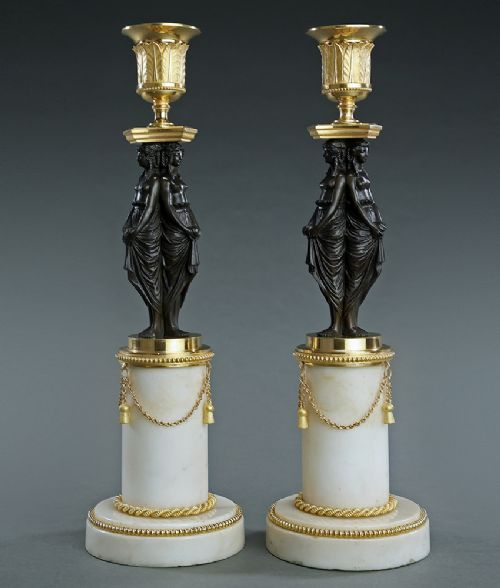


Antique Caryatid Candlesticks
Antique caryatid candlesticks are sculptural supports taking the human form to hold a light, bringing neoclassical architectural gravity directly to a table.
Antique Caryatid Candlesticks
When searching for antique caryatid candlesticks, a buyer encounters figural lighting rooted in classical antiquity, dominated by the 19th Century, Georgian, and Regency periods. The forms include single candlesticks, matched pairs, candelabra, and occasional table lamps adapted from earlier standards.
The visual vocabulary draws heavily on French Empire, Louis XVI, and French Restauration styles, alongside Grand Tour souvenirs and Continental interpretations. Figures are typically depicted as draped maidens or classical figures supporting the bobeche on their heads or raised hands.
Most examples appearing in current listings combine bronze, gilt bronze, ormolu, and patinated bronze, frequently paired with marble plinths, carved hardwood, or biscuit porcelain shafts. These sculptural supports translate ancient stone architecture into portable decorative metalwork.
How they were made
Patinated bronze figures were treated with chemical solutions to achieve deep brown or black surfaces that contrast sharply against gilded socle bases and candle nozzles. Carved wooden examples utilise traditional joinery and hand-carving techniques on hardwood bases to support the upright figural shaft.
Marble bases and socles were turned on a lathe and polished by hand, then pinned securely to the metalwork using threaded central rods and bolts. Biscuit porcelain shafts, appearing on Grand Tour pieces, were fired unglazed to mimic antique marble statuary.
The documented styles on this page range from French Empire and Louis XVI to Regency, Grand Tour, and French Restauration designs.
What varies in quality
The integration of mixed media defines the architectural success of the piece, particularly how cleanly bronze figures meet marble socles or wooden bases without visible gaps or poor alignment. Weight and stability matter immensely; top-tier items feel substantial and balanced, standing entirely true on their mounting bases.
Thomas Hope·J.C. Klinkosch
The Antique Caryatid Candlesticks Glossary
- Caryatid
- A carved female figure acting as a structural support in place of a column or pilaster. In lighting, this figure bears the weight of the candle socket or drip pan.
- Ormolu
- Finely ground high-carat gold applied to a bronze base using a mercury amalgamation technique. This historic process produces a durable, rich golden surface typical of French Empire metalwork.
- Patinated Bronze
- Bronze treated with chemical agents to darken the surface to a rich brown, black, or greenish hue. This dark finish creates visual contrast against bright gilt bronze mounts.
- Socle
- A short plinth or pedestal supporting a statue, vase, or candlestick. It provides a stable architectural foundation for the figural shaft above.
- Grand Tour
- The 19th-century practice where wealthy travellers collected art and antiquities across Europe. Souvenirs from these journeys frequently included small bronzes and caryatid designs.
- Bobeche
- A removable collar or drip pan designed to catch melted wax before it runs down the shaft of the candlestick. It sits directly beneath the nozzle.
Antique Caryatid Candlesticks: Frequently Asked Questions
What is a caryatid candlestick?
A caryatid candlestick is a lighting device featuring a sculpted human figure, usually a draped classical maiden, functioning as the central column supporting the candle socket.
These pieces draw on ancient Greek architecture, translating stone temple supports into portable bronze, brass, or wooden table ornaments.
How do I date an Empire period candlestick?
Dating relies on examining the casting quality, the richness of the mercury gilding, and the specific neoclassical iconography present in the design.
Pieces from the early 19th century typically exhibit sharp hand-chasing on the bronze and heavy, solid construction characteristic of French workshops.
Where were Grand Tour candlesticks made?
Grand Tour pieces were produced by skilled European workshops, primarily in Italy and France, to satisfy the demands of travellers visiting classical sites.
These items frequently combined materials like marble bases with biscuit porcelain or patinated bronze figures to mimic ancient archaeological finds.
Can antique candlesticks be used for lighting?
Most antique candlesticks accommodate standard taper candles, though some 19th-century examples have been converted into table lamps over time.
When using them with real wax, care should be taken to protect original gilt or patinated surfaces from drips and heat.