


French Empire Caryatids
French empire caryatids bring sculptural female figures into lighting, furniture, and decorative metalwork.
French Empire Caryatids
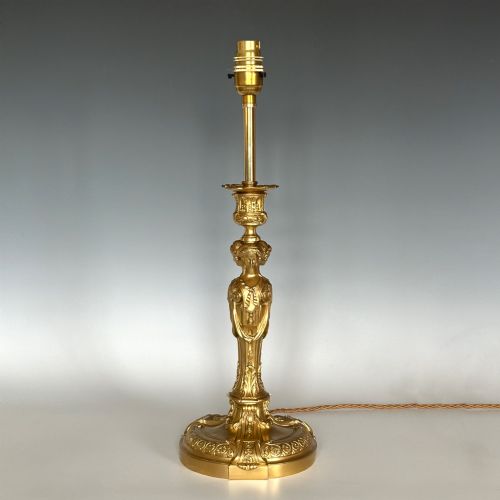
French empire caryatids integrate classical female architectural supports into decorative objects such as candlesticks, candelabras, and console tables.
These pieces appear across the nineteenth century in styles including French Empire, Regency, and Neoclassical.
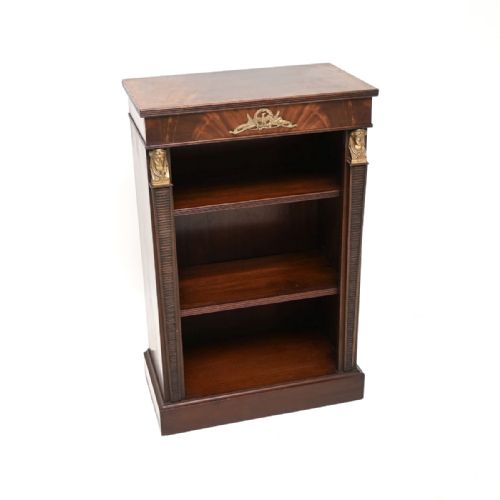
The selection ranges from gilt bronze and ormolu lighting to mahogany bookcases and console tables accented with figural mounts.
Materials and Construction
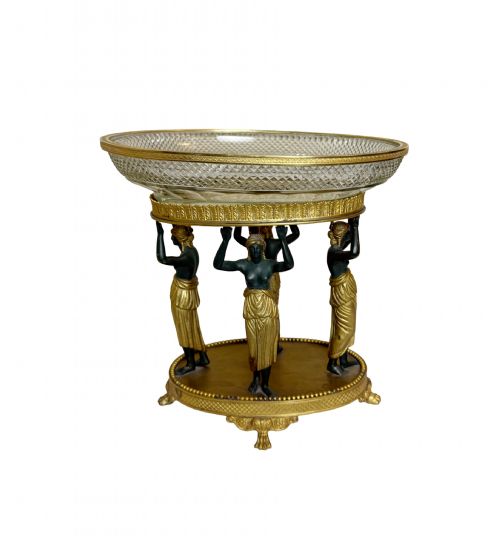
Items rely heavily on combination of patinated bronze and gilt bronze or ormolu to create contrast between the dark figure and bright metal details.
Cabinetry utilises flame mahogany and giltwood, while structural mounts incorporate cast brass and marble elements.
Foundry work and carving shape the distinct architectural figures that define these nineteenth-century items.
Some nineteenth-century makers clearly enjoyed turning everyday lighting into miniature classical architecture guarded by metal maidens.
Assessing Quality and Execution
Timber selection in mahogany pieces and the weight of the cast metal components distinguish finer examples from standard decorative work.
The French Empire Caryatids Glossary
- Caryatid
- A sculpted female figure serving as an architectural support in place of a column or pilaster.
- Ormolu
- Gilded bronze achieved through the application of a mercury and gold amalgam to a bronze base.
- Patinated bronze
- Bronze treated chemically to darken the surface and create a contrasting finish against gilt metal.
- Athenienne
- A tripod stand supporting a decorative bowl or urn, often styled with classical figural mounts.
- Gueridon
- A small circular table supported by a central column or figural supports.
French Empire Caryatids: Frequently Asked Questions
What is a caryatid?
A caryatid is a sculpted human female figure used as a structural support column in architecture and decorative arts.
In French Empire design, these figures appear on candlesticks, lamps, and furniture supports.
How do I date these pieces?
Dating relies on stylistic markers associated with the nineteenth century, including Empire, Regency, and Neoclassical motifs.
Material composition and casting techniques further help place objects within periods like the 1850s or 1880s.
Where were these objects placed?
These decorative items functioned primarily in formal nineteenth-century interiors, resting on mantelpieces, console tables, and pedestals.
Lighting pieces brought ambient illumination while displaying classical sculptural motifs.
What metals are typically used?
Objects commonly combine patinated bronze for the figures with gilt bronze or ormolu for highlights and mounts.
Brass and marble also appear frequently in bases and structural elements.