




Antique Carved Whatnot
An antique carved whatnot brings tiered display space to a room, offering open shelving for books, ceramics and decorative objects.
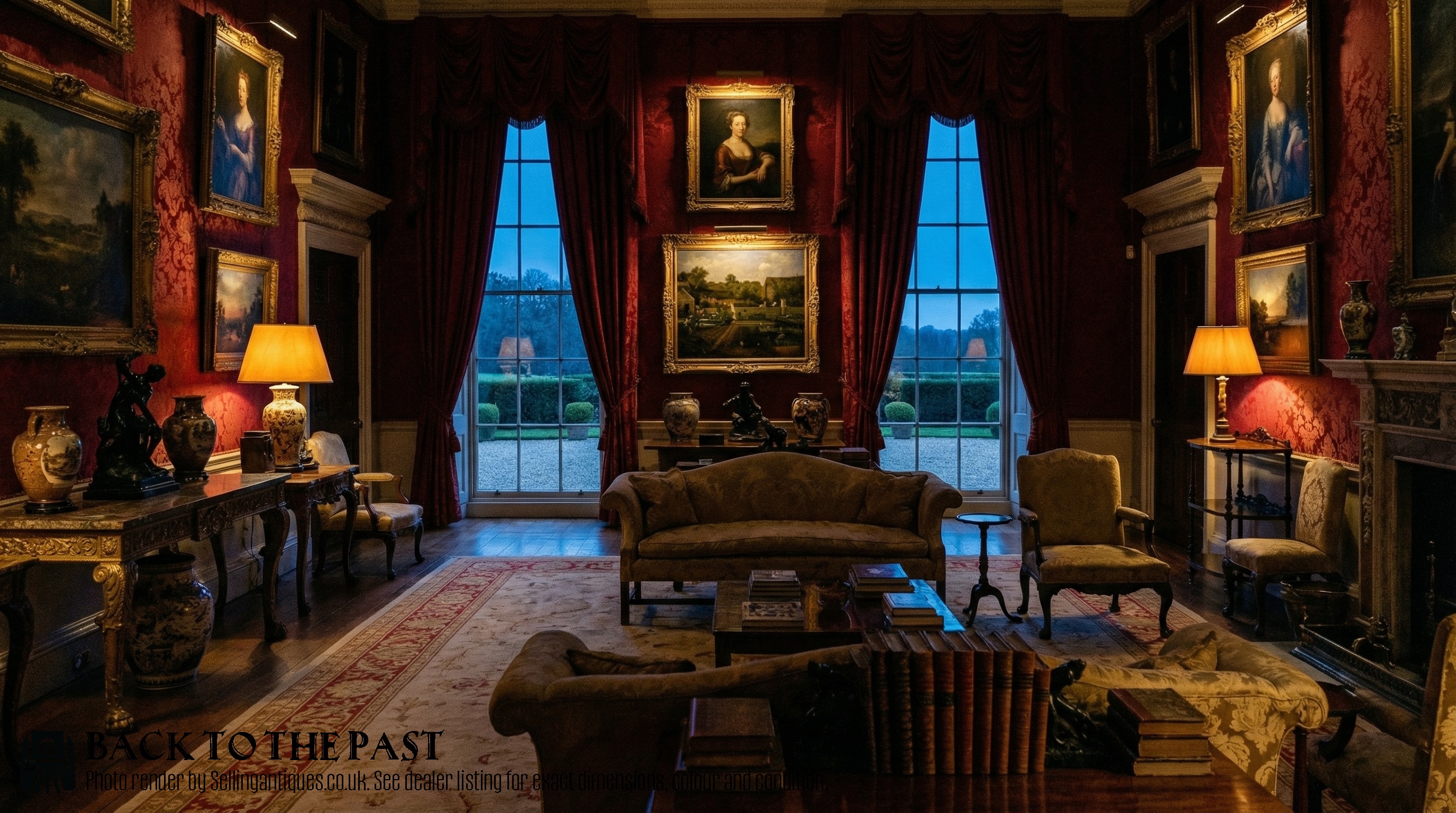
Antique Carved Whatnot
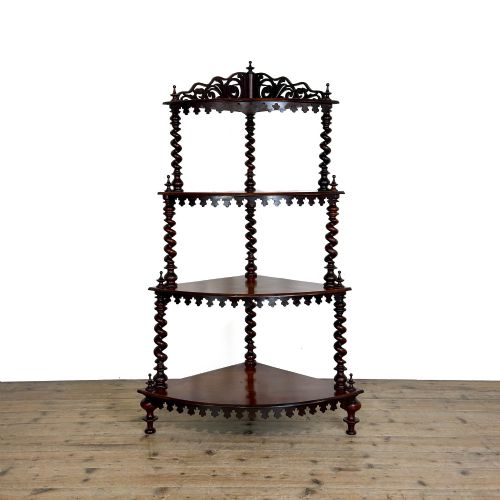
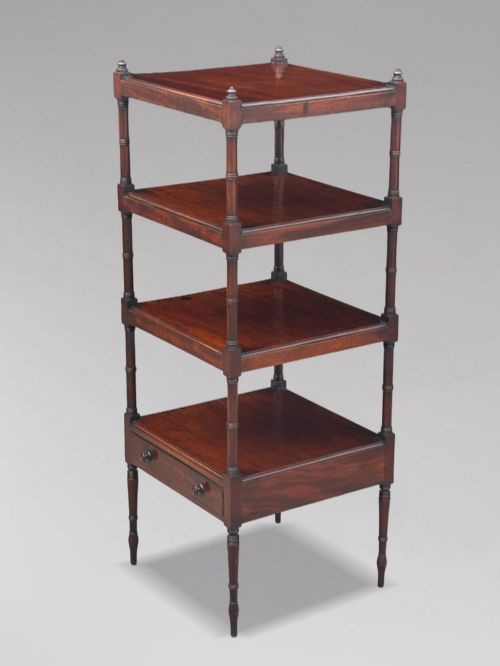
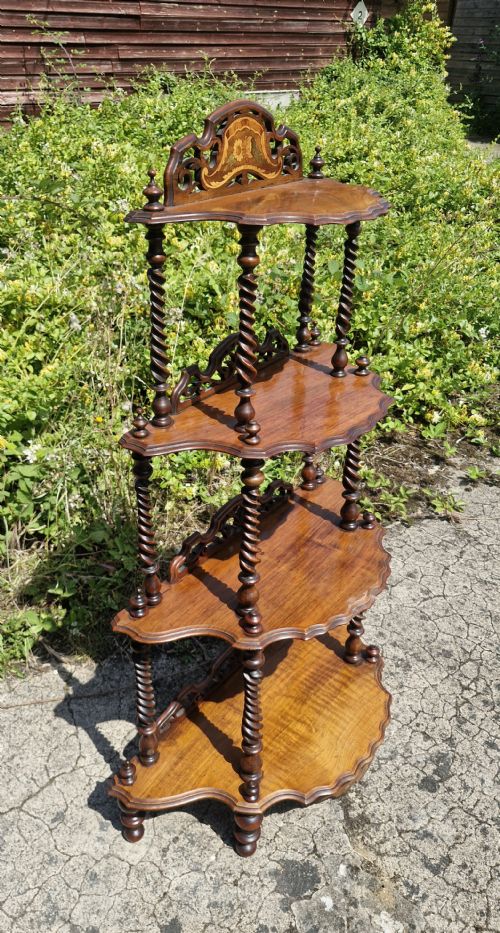
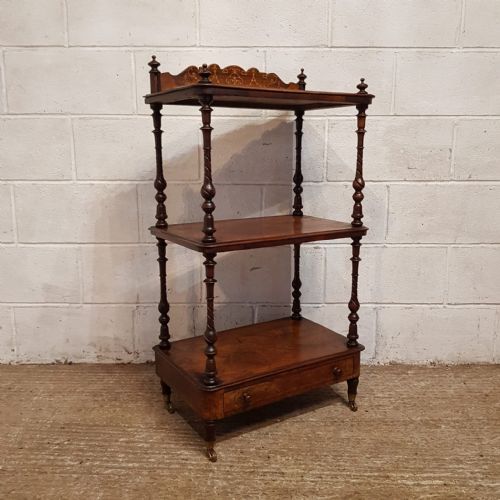
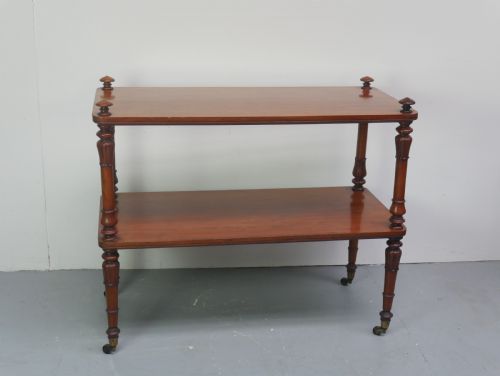
An antique carved whatnot is a multi-tiered display stand designed for holding books, ornaments and small domestic items. These pieces appear most frequently from the Victorian period and the nineteenth century, constructed as freestanding items or corner units.
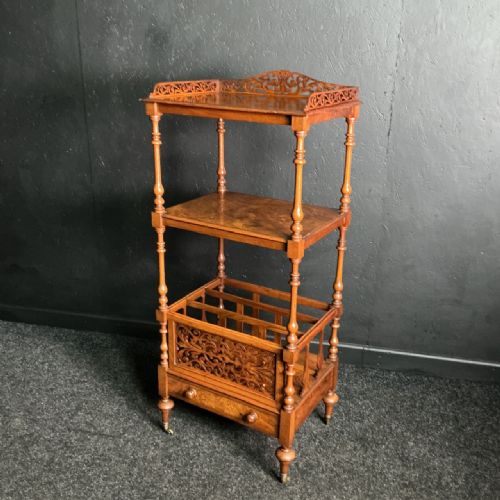
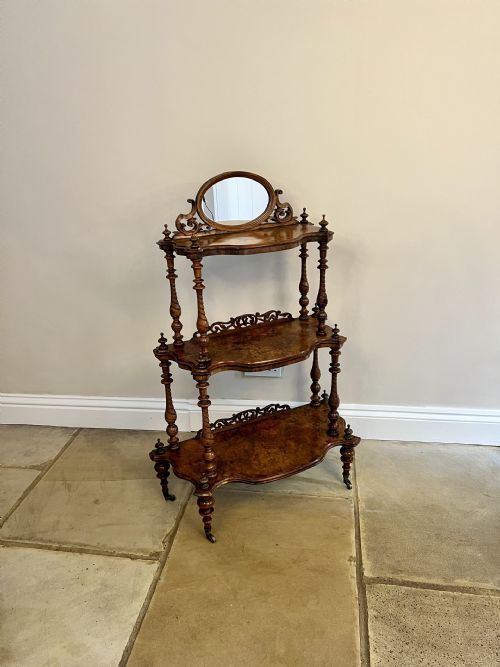
The evidence shows forms ranging from simple three-tier shelves to elaborate pieces incorporating mirrors, drawers and music stands. Walnut, burr walnut and mahogany dominate the offerings, alongside rosewood and ebonised wood.
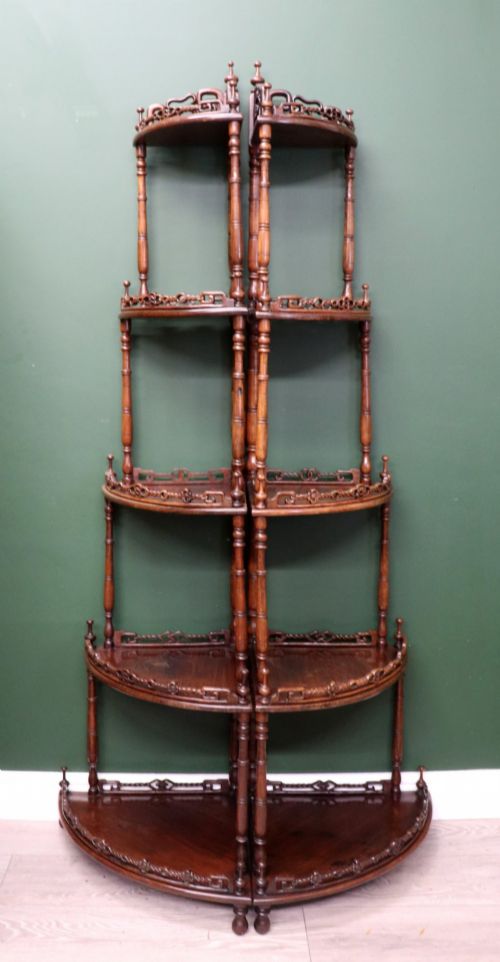
Makers and designers produced these units in various styles, including Regency, William IV, Anglo-Indian and Victorian Rococo Revival. Corner shelves and étagères provide practical alternatives for smaller rooms while maintaining the tiered structure.
Materials and Construction
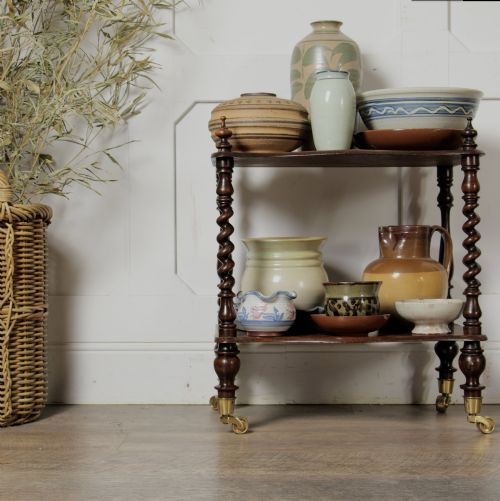
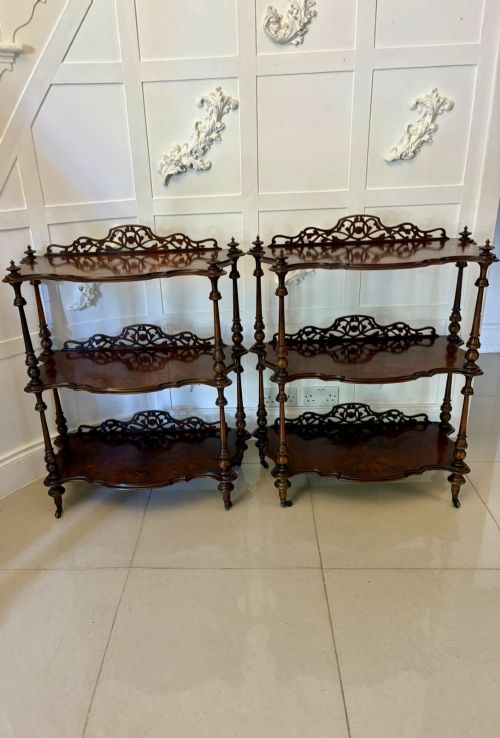
Makers utilised dense timbers such as mahogany, rosewood and burr walnut, often selecting figured veneers to create patterned surfaces on the shelves and top panels. Turned supports, barley twist columns and carved wooden details structure the vertical height between tiers.
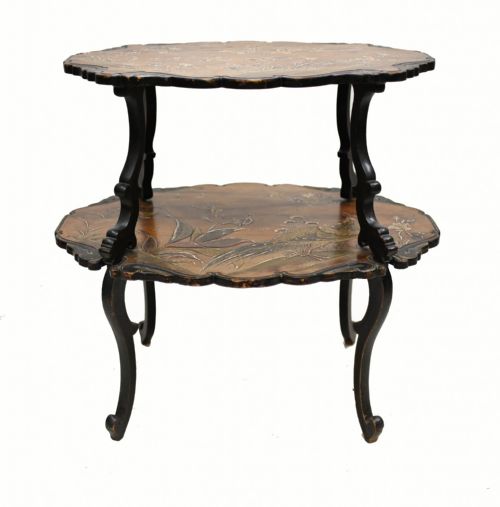
Secondary elements include brass fittings, ceramic castors and mirrored glass backs set into the wooden frames. Japanning and inlay appear on specific stylistic examples, adding contrasting colour and decorative motifs to the wood.
Some nineteenth-century makers doubled their utility by attaching music stands and drawers to the display tiers, ensuring endless places to hide sheet music.
Distinctions in Execution
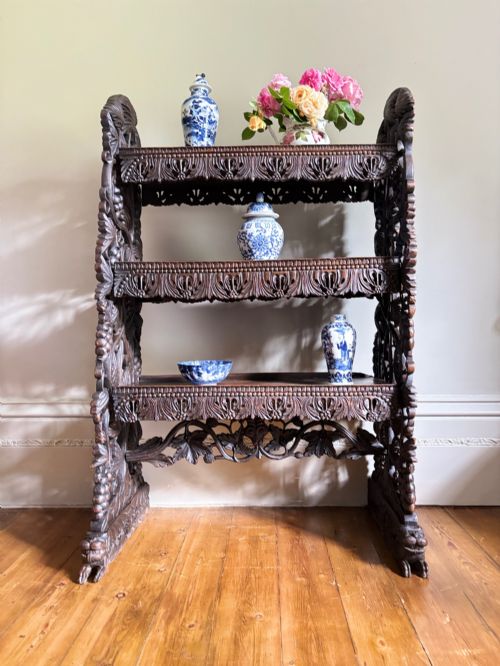
The distinction between standard domestic pieces and exhibition quality work lies in the choice of timber veneer and the depth of the carving. Finely figured burr walnut and intricately carved mirror backs separate high-end examples from plain mahogany units.
Structural integrity depends on the rigidity of the turned supports and the tight fitting of the shelf joints. Superior pieces exhibit balanced proportions, refined turning on the columns and careful attention to secondary details such as small drawers and integrated brass castors.
Gillows
The Antique Carved Whatnot Glossary
- Étagère
- A piece of furniture consisting of a set of open shelves for displaying small articles. This term often applies interchangeably with a whatnot.
- Canterbury
- A low stand with partitioned sections for sheet music or books, frequently combined with a whatnot tier above. They often include a small work top or drawer.
- Japanning
- A type of European finish that emulates Japanese lacquer work. It involves the application of heat-dried varnishes and paints on wood.
- Barley twist
- A type of turning resembling a spiralling rope. This decorative technique appears frequently on the vertical supports of nineteenth-century stands.
Antique Carved Whatnot: Frequently Asked Questions
What is an antique whatnot used for?
An antique whatnot serves primarily as an open display stand for ornaments, ceramics and books. The multiple tiers allow for vertical storage without dominating the floor space of a room.
Historically, these pieces occupied drawing rooms and parlours where families showcased their collection of decorative objects. Today, they function similarly in domestic interiors for holding lamps, plants and curated collections.
How do I date a Victorian whatnot?
Dating a whatnot involves examining the timber, construction methods and stylistic markers recorded in the evidence. Victorian pieces from the mid-nineteenth century frequently utilise burr walnut and rosewood, while earlier Regency examples often feature rosewood with specific classical proportions.
Later Victorian versions from the 1880s sometimes incorporate mirrors, drawers and more eclectic design influences. Comparing the turning on the columns and the joinery helps narrow down the decade of production.
Where should I place a corner whatnot?
A corner whatnot fits directly into the angle of a room, making use of otherwise vacant wall space. These units provide display tiers without protruding into the main walking area of the room.
They work well in smaller sitting rooms, hallways or bedrooms where a freestanding rectangular shelf unit might prove too bulky. Placing one in a corner draws the eye upward and balances the room's layout.
What is the difference between a whatnot and an étagère?
While both terms describe multi-tiered display furniture, an étagère frequently leans towards lighter, more decorative French-influenced designs. A whatnot often emphasises functional shelving for books and general display items.
In practice, nineteenth-century makers and modern dealers use both terms interchangeably for tiered open shelving units. The physical construction remains similar across both designations.