
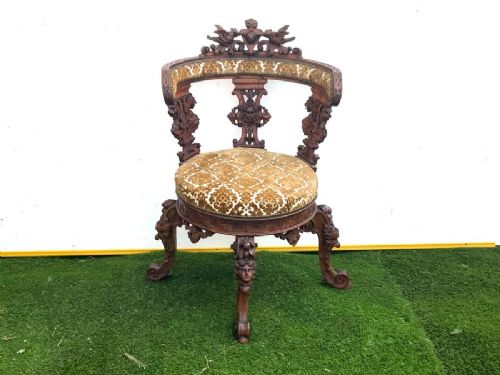
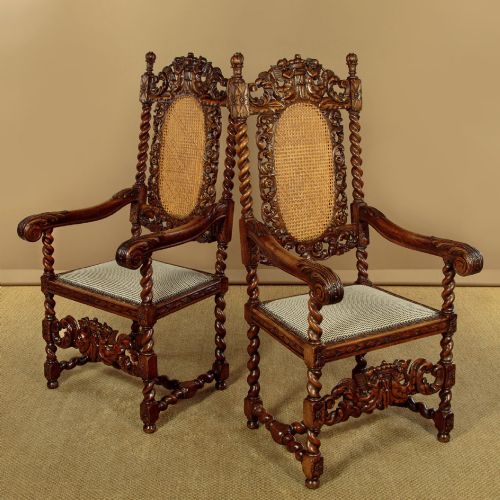
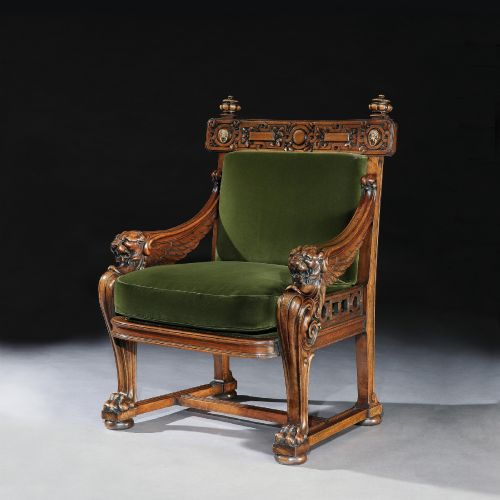
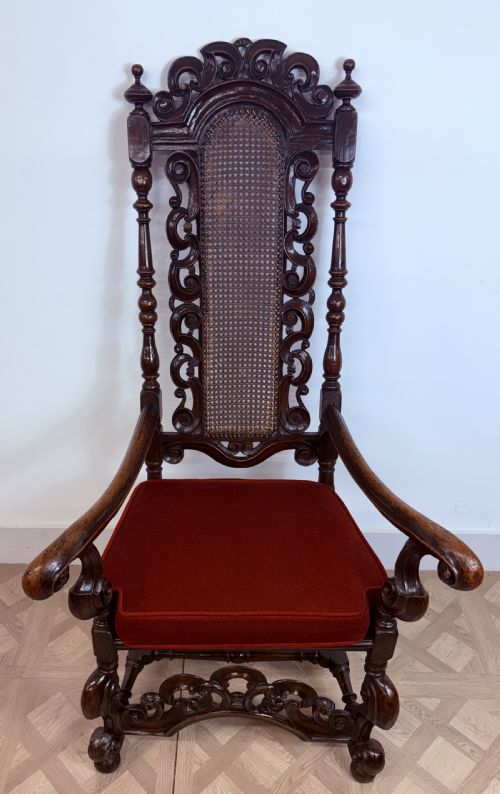
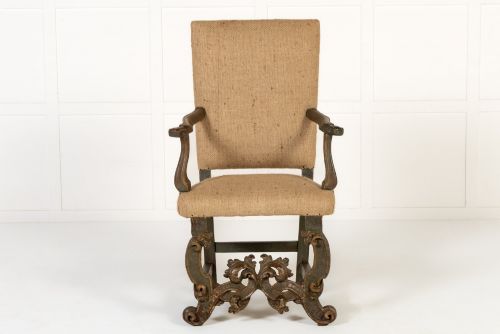


Antique Carved Walnut Throne
An antique carved walnut throne brings undeniable scale and dramatic presence to a room, turning a simple seating arrangement into a historic focal point.
Antique Carved Walnut Throne
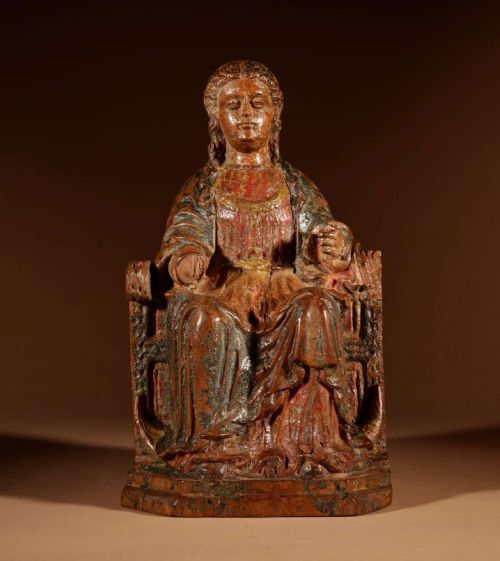
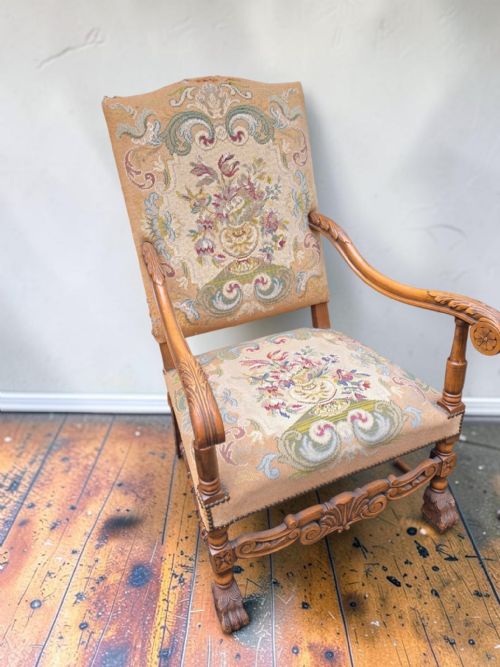
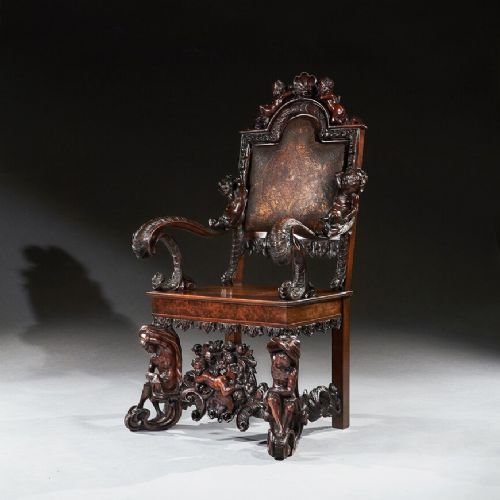
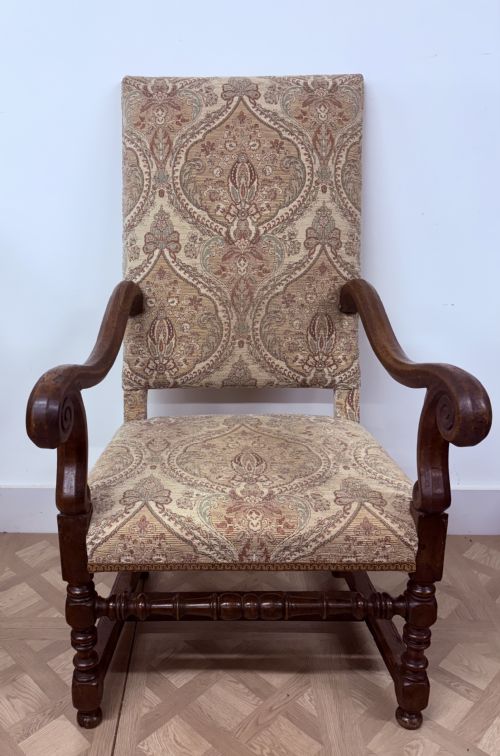
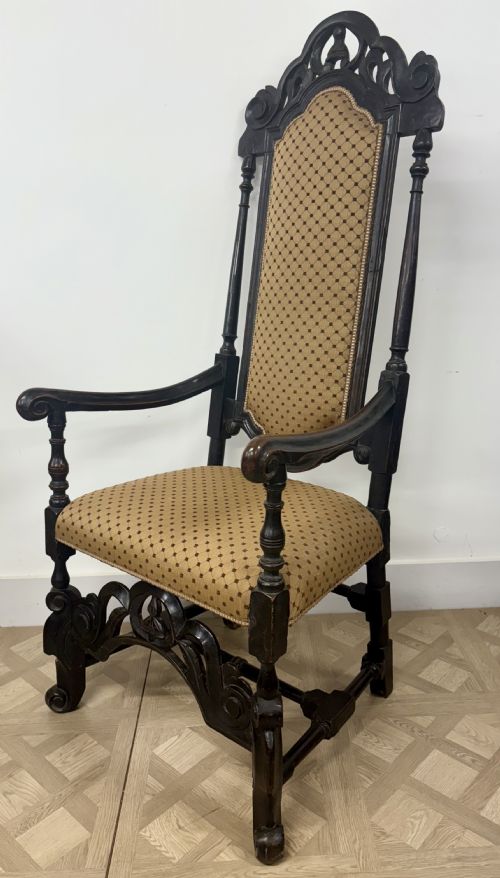
When you search for an antique carved walnut throne, you encounter large, commanding armchairs and high-backed seats designed for ceremony, audience, or high-status domestic use. These pieces embody grand architectural aspirations, often drawing on Renaissance, Baroque, and Carolean design traditions.
The versions most likely to meet you on this page span the sixteenth century through to the nineteenth century, with a strong representation of nineteenth-century revival pieces alongside genuine seventeenth-century examples. Forms range from heavy French and Italian armchairs to English high-backed models and sculptural seating.
Originating largely from continental Europe and Britain, these chairs serve as imposing statement pieces rather than casual seating. They frequently feature deep carving, high backs, and substantial armrests intended to project authority and status.
How they were made
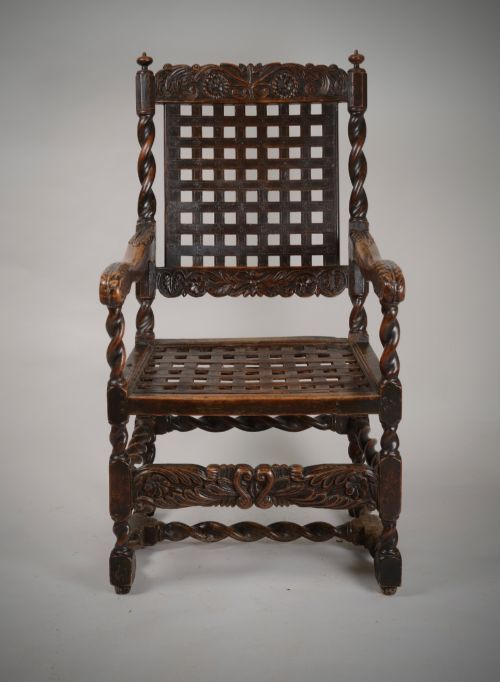
Cabinet makers utilised dense, richly grained walnut timber as the primary structural and decorative medium, allowing for deep, crisp carving that holds its definition over centuries. This wood was often shaped into complex scrollwork, figural motifs, and high-relief panels.
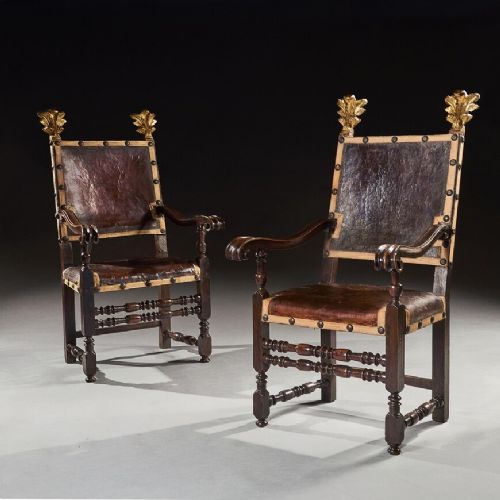
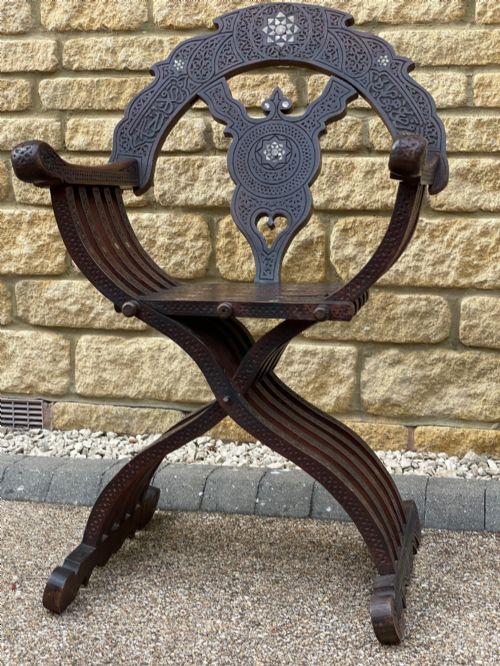
Upholstery and decorative elements historically involved luxury textiles such as leather, velvet, tapestry, and fabric, secured with brass detailing or left exposed to highlight the joinery. Skilled artisans combined solid framing techniques with intricate surface ornamentation, occasionally incorporating parcel-gilding or mother-of-pearl inlay to enhance the visual weight of the chair.
Upholstered elements across these selections include period textiles, heavy tapestries, tooled leather, and cane work.
What varies in quality
The distinction between ordinary production and exhibition-grade pieces rests entirely in the depth, precision, and artistic ambition of the carving. Master carvers achieved remarkable dimensionality in figures, foliage, and monopodia supports, whereas lesser examples rely on shallower, repetitive mechanical stamping or hurried execution.
Proportion and architectural harmony also dictate the standing of a piece; the finest chairs maintain balanced tension between their monumental height, arm placement, and structural integrity. Original surfaces and period-appropriate upholstery materials elevate a piece far above heavily altered or poorly converted examples.
Andrea Brustolon·Thomas Hope
The Antique Carved Walnut Throne Glossary
- Carolean
- Pertaining to the reign of Charles II in Britain, characterised by rich walnut framing, high backs, and elaborate scrollwork. Pieces from this era often display dynamic Baroque influences.
- Monopodia
- A furniture support formed from a single animal leg, frequently carved as a lion's paw emerging from foliage. This classical motif appears prominently on revival armchairs.
- Parcel-gilding
- A decoration technique where specific carved details or highlights are selectively covered in gold leaf. This contrasts sharply with the dark tone of the walnut beneath.
- Fauteuil
- An open-armed upholstered chair with exposed wooden framing, standard in French furniture design. Walnut examples often showcase refined carving along the arms and crest rail.
Antique Carved Walnut Throne: Frequently Asked Questions
How were antique thrones used?
These imposing seats were primarily reserved for figures of authority, heads of households, or dignitaries during formal audiences and ceremonies. They occupied central positions in great halls or reception rooms to project status and power.
Over later centuries, wealthy collectors repurposed them as library chairs, hall seats, or dramatic focal points in domestic interiors rather than daily practical seating.
How do I date a walnut throne?
Dating relies heavily on analysing the carving style, joinery methods, and the structural silhouette of the walnut frame. Seventeenth-century examples typically display robust scrollwork and pegged joints, whereas nineteenth-century revival pieces often incorporate machine assistance alongside hand-carving.
Comparing the decorative vocabulary, such as Renaissance motifs versus Baroque exuberance, helps align the piece with its specific period of manufacture.
Where should I place a large armchair?
A monumental chair requires a room with sufficient scale, high ceilings, and floor space to prevent the piece from overwhelming the environment. It functions best as a standalone statement piece against a plain wall or framing a fireplace.
Avoid placing these chairs in narrow corridors or cramped corners where their architectural presence and wide arms cannot be properly appreciated.
Are these chairs comfortable to sit in?
These seats were built for formal posture and visual authority rather than relaxed lounging. The high backs and rigid wooden or upholstered structures encourage an upright stance.
While some examples feature padded upholstery or leather cushioning, they remain fundamentally sculptural and historic objects designed for brief periods of seating.