





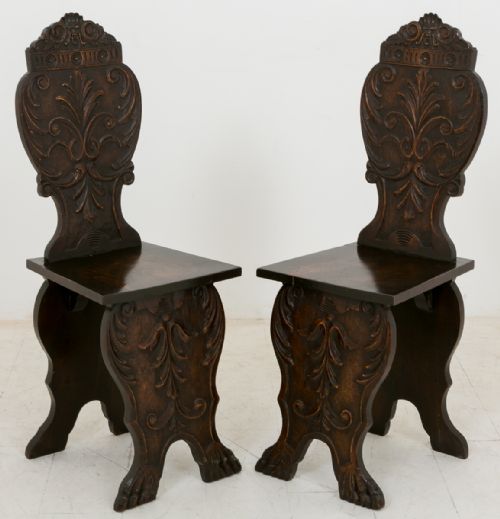
Antique Sgabello Chair
An antique sgabello chair is a sculptural wooden seat designed for a hallway, offering high-backed presence and historic character.
Antique Sgabello Chair
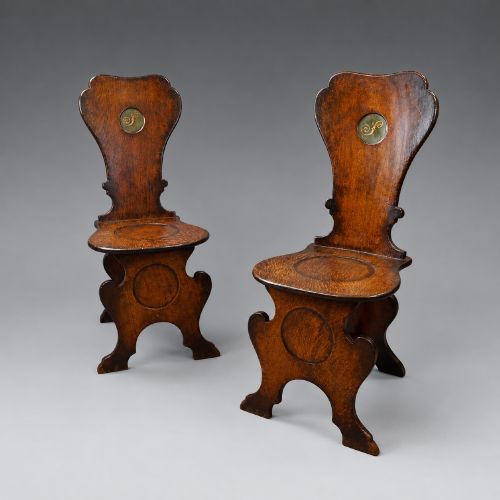
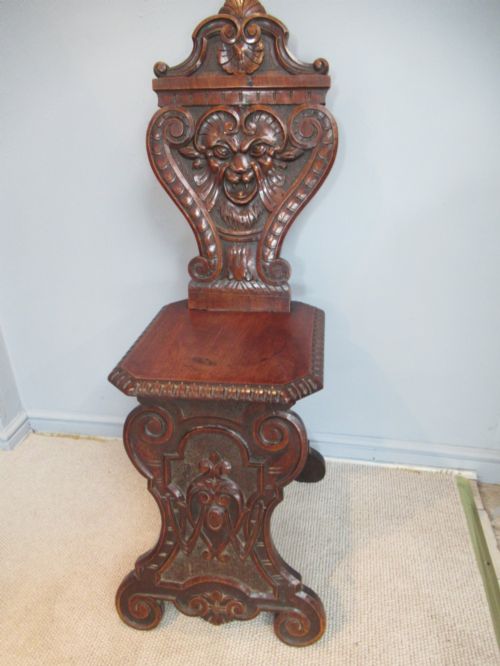
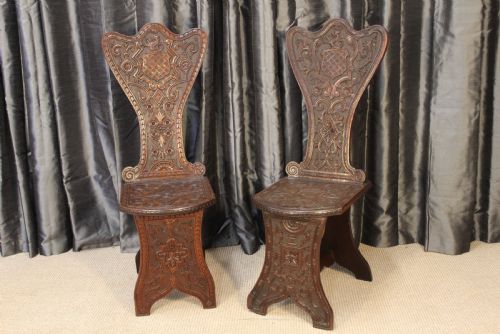
An antique sgabello chair is a distinctive wooden seat defined by an upright back, a solid panel or trestle base, and often elaborate carving. Originally developed in Italy, these pieces function as striking hall chairs, accent chairs, or occasional seating within a room. Collectors encounter variations spanning the Georgian period and the nineteenth century, including specific Italian Renaissance Revival interpretations.
The material selection for these chairs relies heavily on sturdy timbers such as walnut, oak, mahogany, and fruitwood. Makers frequently employed carved decoration, painted finishes, bone inlay, or applied velvet upholstery to elevate the appearance of the timber. Forms range from single accent pieces to matched pairs designed for grand entryways.
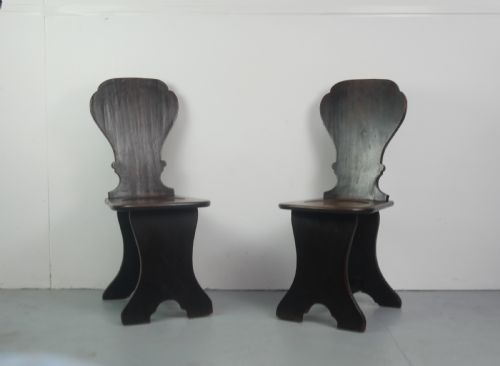
Most examples available to collectors date from the nineteenth century, often reflecting a nineteenth-century taste for Italian Renaissance Revival or Flemish styles. Earlier Georgian versions also appear, demonstrating eighteenth-century craftsmanship in mahogany and fruitwood. Buyers select these items to introduce architectural form and historical weight to domestic interiors.
How they were made
Makers constructed antique sgabello chairs using dense hardwoods like walnut, oak, mahogany, and fruitwood, which provided the necessary structural stability for heavy carving. Carpenters joined the upright back directly to the solid trestle base or seat panel, ensuring the chair could withstand placement in a hallway. Lime wood and painted wood occasionally appear where finer, more intricate relief carving was required.
Surface ornamentation involved hand-carving deep relief motifs directly into the timber, sometimes supplemented by painted wood finishes or contrasting bone inlay. Certain nineteenth-century interpretations incorporated velvet elements for added texture against the polished hardwood frame. These techniques required skilled woodworking traditions passed down through generations of cabinet makers.
Some nineteenth-century makers could not resist adding bone inlay to their carved wooden chairs just to catch the eye in a dim hallway.
What varies in quality
The depth, precision, and artistry of the hand-carving define the upper tier of antique sgabello chairs, distinguishing skilled sculptural work from mechanical or plain production. Chairs that retain their original timber surfaces, whether walnut, oak, or mahogany, command greater appreciation than those with heavy later alterations.
Proportion and structural integrity also separate fine examples from simpler pieces, particularly in the balance between the upright back and the trestle base. The presence of integrated decorative elements such as bone inlay or well-executed painted details adds further distinction to individual chairs.
The Antique Sgabello Chair Glossary
- Sgabello
- A light, portable wooden chair with a high back and a trestle base instead of legs. Originating in Renaissance Italy, it was typically used in halls and entryways.
- Trestle base
- A support structure consisting of vertical boards or panels connected by a stretcher. This form provides the distinctive solid footing characteristic of sgabello chairs.
- Renaissance Revival
- A nineteenth-century architectural and decorative style that drew inspiration from fifteenth and sixteenth-century Italian design. This aesthetic heavily influenced Victorian makers of carved hall furniture.
- Fruitwood
- Dense timber harvested from fruit-bearing trees such as pear or apple, used by cabinet makers for detailed turning and carving. It offers a smooth grain and warm tone.
Antique Sgabello Chair: Frequently Asked Questions
What is an antique sgabello chair?
An antique sgabello chair is a historic wooden seat featuring a high decorated back and a solid trestle base rather than conventional legs. These pieces were traditionally placed in hallways to display family crests or sculptural carving.
Today, collectors use them as accent chairs or decorative hall seating. They bridge the gap between functional furniture and sculptural art.
Where were sgabello chairs placed?
Historically, these chairs stood in grand hallways, entryways, or along gallery walls where their carved profiles could be admired by visitors. Because they were relatively light and portable, servants moved them around as needed.
In modern homes, they function well in narrow hallways, landings, or as standalone accent pieces in a living room. Their slim profile allows them to fit into spaces where bulky armchairs cannot go.
How do I date an antique sgabello chair?
Dating involves examining the wood species, tool marks, and stylistic indicators such as whether the piece is an eighteenth-century Georgian example or a nineteenth-century revival. The style of the carving often points directly to the period of manufacture, such as nineteenth-century Italian Renaissance Revival.
Comparing the construction methods to known examples from the 1850s or 1880s helps narrow down the timeframe. Patina and wear patterns on the timber also provide reliable clues to the age of the chair.
What woods were used for sgabello chairs?
Makers relied on durable hardwoods capable of holding crisp, deep relief carvings. Walnut, oak, and mahogany appear frequently across the available inventory.
Alternative timbers such as fruitwood and lime wood also occur, particularly on specific continental pieces. Each wood species ages differently, developing a distinct patina over the centuries.