
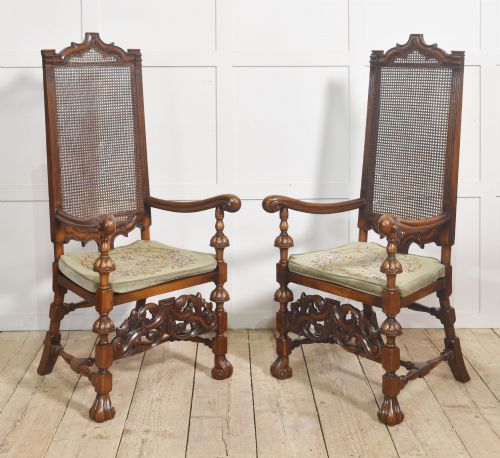


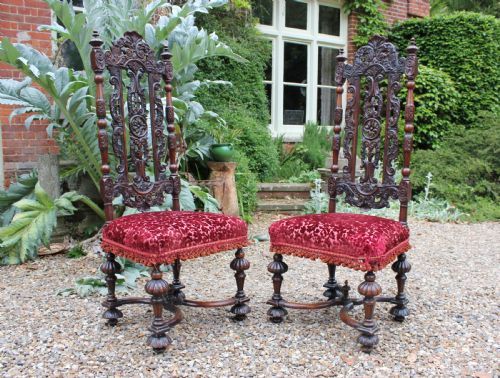


Ornate Walnut Hall Chair
An ornate walnut hall chair brings rich architectural carving and deep timber grain to an entrance, offering a striking seat that commands attention.
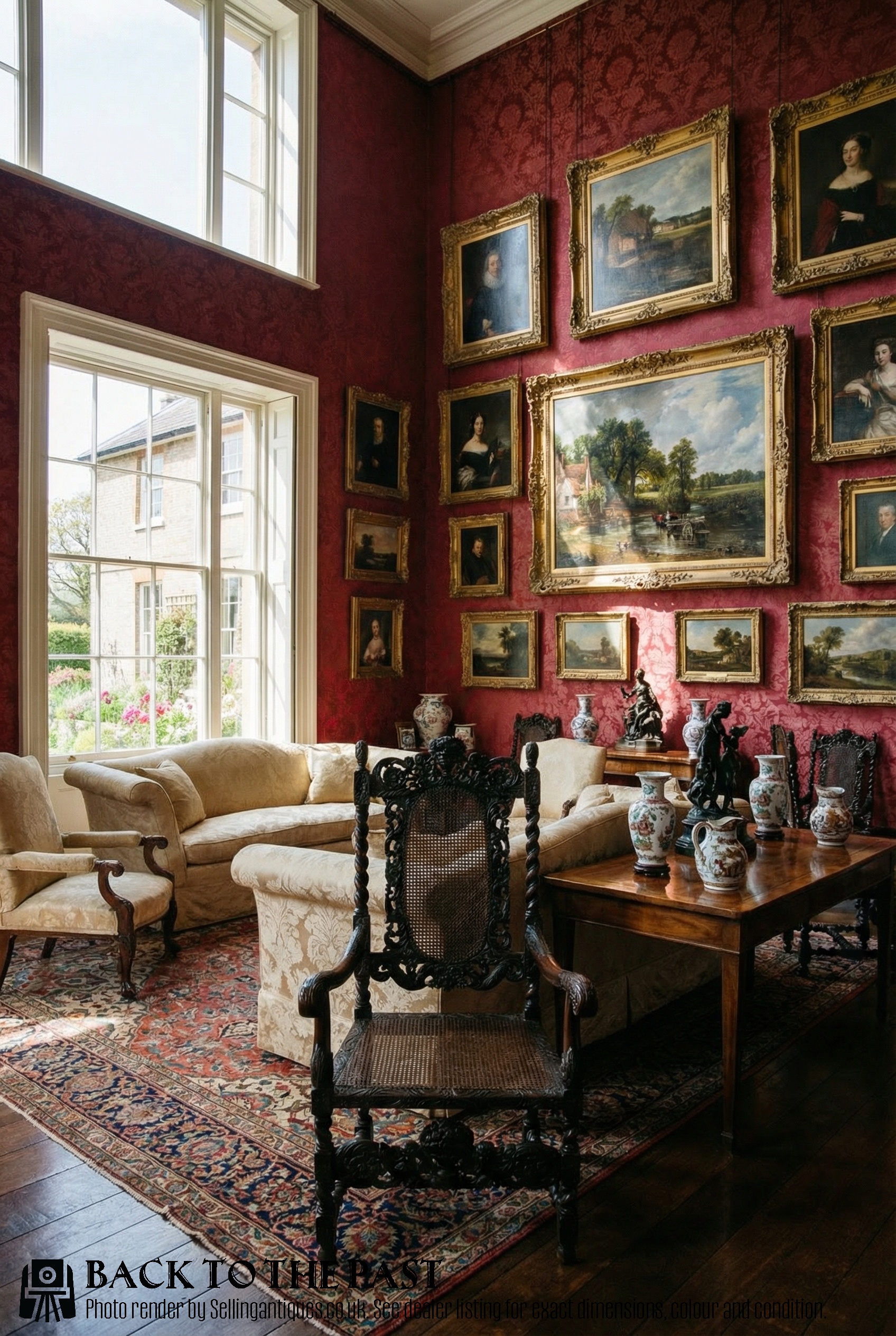
Ornate Walnut Hall Chair
An ornate walnut hall chair is a substantial timber seat designed for an entrance or hallway, drawing on historic design vocabularies like Renaissance Revival, Baroque, and Rococo Revival. These pieces present high backs and rigid frames intended primarily for display and brief posture rather than long-term relaxation.
The selection here spans the nineteenth century alongside earlier eighteenth-century examples, incorporating related forms such as side chairs, open armchairs, high-backed chairs, sgabello chairs, and hall benches. Walnut serves as the primary timber throughout, often heavily carved or paired with contrasting inlays to project domestic status.
Regional variations emerge clearly across the inventory, ranging from Italian bone-inlaid works and Swiss marquetry musical chairs to Flemish decorative carvings and Continental side chairs. Buyers encounter everything from austere high-backed seats to sculptural sgabello forms that anchor a hallway with architectural presence.
How they were made
The construction of these seats relies on solid walnut, a timber chosen for its stable grain and deep colour, which takes intricate hand-carving exceptionally well. Cabinetmakers shaped the heavy frames using traditional joinery before applying deep relief carving to the crest rails, splats, and legs.
Surface enrichment extends beyond timber carving to include intricate wood inlay, bone inlay, and marquetry work, particularly visible on Swiss and Italian pieces. Upholstered elements incorporate velvet, textile, tapestry, and fabric, often secured with decorative metal mechanisms or tinned studs.
One exceptional nineteenth-century Swiss chair manages to combine heavy walnut marquetry with a built-in musical mechanism.
What varies in quality
Quality in an ornate walnut hall chair rests in the crispness and depth of the hand-carving, where sharp relief work distinguishes master workshops from routine production. The choice and execution of secondary materials, such as precision bone inlay or complex marquetry, further separate standard decorative items from exceptional examples.
Structural integrity of the walnut frame dictates longevity, particularly given the stress placed on high backs and slender legs during period use. Surviving original textiles, tapestries, and intact mechanical elements add significant textural authenticity to the piece.
The Ornate Walnut Hall Chair Glossary
- Sgabello
- A lightweight wooden chair featuring a high back and solid trestle supports instead of conventional legs, popular during the Italian Renaissance.
- Marquetry
- The art of applying thin veneers of wood and other materials to a structural panel to create decorative pictures and geometric patterns.
- Renaissance Revival
- A nineteenth-century design movement that drew inspiration from sixteenth-century architectural and decorative motifs.
- Carolean Revival
- A Victorian stylistic movement mimicking the rich carving, twisted columns, and ornate crowns of the late seventeenth-century Restoration period.
- Crest rail
- The horizontal top member of a chair back, frequently serving as the focal point for elaborate cresting or carving.
Ornate Walnut Hall Chair: Frequently Asked Questions
Where did people place hall chairs?
Hall chairs stood primarily in grand entrance halls, vestibules, and stair landings rather than everyday living spaces. Their rigid wooden construction suited brief seating while visitors waited.
Today, they function brilliantly in narrow corridors, as statement pieces in bedrooms, or positioned purely for visual impact against a plain wall.
How do I care for walnut furniture?
Walnut benefits from stable room environments away from direct heat sources and strong sunlight, which can dry out the timber and fade the finish. Regular dusting with a soft, dry cloth preserves the polished surface.
Avoid commercial silicone sprays and instead use appropriate micro-crystalline waxes sparingly to nourish the antique wood grain.
Are these chairs comfortable to sit on?
Most historic hall chairs prioritise architectural display and upright posture over ergonomic comfort, featuring flat wooden seats or stiff upholstered pads. Models with arms and fabric cushions offer slightly more ease than rigid wooden panels.
Buyers typically select these pieces for their sculptural presence and historical significance rather than lounging.
How do I identify a Renaissance Revival piece?
Renaissance Revival pieces display classical architectural elements such as columns, pilasters, strapwork, and heavy foliate carving derived from sixteenth-century models. Makers utilised dark walnut to echo the weighty dignity of the original historic period.
These items often feature high, straight backs and solid proportions that distinguish them from lighter eighteenth-century designs.